Bill · H.R. 7287· House(119-HR-7287)
Lewis and Clark Regional Water System Expansion Feasibility Study Act
- Introduced
- 1/30/2026
- Last activity
- 4/29/2026 — Subcommittee Hearings Held
- Sponsored by
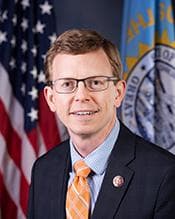
- Dusty Johnson
- Cosponsors
- - 3 - 0
- Introduced
- In Committee
What this bill would do
This bill, known as the Lewis and Clark Regional Water System Expansion Feasibility Study Act, directs the Secretary of the Interior to study a proposed water project. The goal of the study is to determine if it is feasible to expand the capacity and reach of the Lewis and Clark Regional Water System. This expansion would supply water to municipal, rural, and industrial users in Iowa, Minnesota, and South Dakota. The Secretary must coordinate with the non-Federal project entity and various authorities during this process. Following the study, a feasibility report containing a construction recommendation and cost-sharing details must be submitted to Congress and made public.
Yes· 3 of 6
Would people in rural areas be better off under this?+5
The bill specifically targets the expansion of water supply to serve rural users in the tri-state area.
Does this make what the government does easier for the public to see?+5
The bill requires the Secretary to make the feasibility report and all associated study documents publicly available.
Does this invest in rural communities?+4
The bill focuses on expanding the reach and capacity of a regional water system to serve rural areas.
The opposite
No question was scored the opposite.
Who it would affect, and how
Potential Positive Impacts for People
-
Water Supply Expansion: The proposed rural water supply project aims to supply municipal, rural, and industrial water to expand the reach and capacity of the Lewis and Clark Regional Water System in Iowa, Minnesota, and South Dakota (Section 2, Subsection 2).
-
Transparency for Citizens: The Secretary is required to make the feasibility report and all associated study documents publicly available (Section 3, Subsection a, paragraph 2, subparagraph B).
Potential Negative Impacts for People
-
Financial Burden on Non-Federal Entities: If the project is authorized, the non-Federal share of construction costs must be at least 25 percent of the total costs (Section 3, Subsection a, paragraph 2, subparagraph A, clause ii).
-
Cost Analysis Requirements: The determination of the non-Federal share will be based on an analysis of the financial capability to pay for construction as well as operations, maintenance, and replacement costs (Section 3, Subsection a, paragraph 2, subparagraph A, clause ii).
Groups and Interests Ranking
Every group the model scored this bill for, from -10 to +10. Hover a score for the reason it gave.
- Demographic And Interest Groups
- Good For Rural Residents+5Good For Business Owners+3
- Economy And Finance
- Improves Economic Growth+3Increases Job Creation+3
- Governance And Ideology
- Improves Government Transparency+5
- Environment Energy And Infrastructure
- Improves Rural Development+4
- 4/29/2026
- Subcommittee Hearings Held
- 4/22/2026
- Referred to the Subcommittee on Water, Wildlife and Fisheries.
- 3/5/2026
- 1 Cosponsor added.
- 2/24/2026
- 1 Cosponsor added.
- 1/30/2026
- Referred to the House Committee on Natural Resources.
- 1 Cosponsor added.
- Introduced in House
One bill Congress.gov lists as related to this one — companions in the other chamber, earlier versions, and bills this one absorbed or was folded into.
 Randy Feenstra
Republican · Iowa
 Michelle Fischbach
Republican · Minnesota
 Brad Finstad
Republican · Minnesota