
A Democratic bill with 6 Democratic cosponsors · See all 7 cosponsors
Last activity — Read twice and referred to the Committee on Agriculture, Nutrition, and Forestry.
In committee
Introduced and handed to a committee in the chamber it started in.
The committee holds it, and most bills are never heard from again. A hearing or a committee vote would be news; silence is the usual outcome, and it kills the bill without anyone voting against it.
Its path through Congress
- Introduced
- In Committee
What this bill would do
This bill, titled the "COLAs Don't Count Act of 2026," aims to amend the Food and Nutrition Act of 2008. The primary purpose is to improve the cost of living adjustment exclusion from income under the supplemental nutrition assistance program. It includes specific changes to how income is handled in various paragraphs of the existing Act. These changes include updating specific dates and adding supplementary payments to the list of exclusions. The Act is scheduled to take effect on October 1, 2027.
Yes· 3 of 9
- Scored +5
Would households on low incomes be better off under this?
The bill's changes to income exclusions directly increase the net benefit available to low-income households participating in SNAP.
- Scored +5
Is this likely to lift people out of poverty?
The bill improves the cost of living adjustment exclusion from income for SNAP recipients, which helps maintain purchasing power for low-income households.
- Scored +4
Would people over 65 be better off under this?
By including supplementary Social Security payments in the income exclusion for SNAP, the bill provides greater financial stability for seniors receiving such benefits.
The opposite
No question was scored the opposite.
Who it would affect, and how
Potential Positive Impacts for People
-
Improved income exclusion: The bill aims to improve the cost of living adjustment exclusion from income under the supplemental nutrition assistance program (Section 2).
-
Inclusion of supplementary payments: The bill adds supplementary payments described in section 1616(a) of the Social Security Act to the list of exclusions (Section 2, paragraph 19).
Potential Negative Impacts for People
- No negative impacts are explicitly stated in the provided text.
Groups and Interests Ranking
Every group the model scored this bill for, from -10 to +10. Tap or hover a score for the reason it gave.
- Demographic And Interest Groups
- Would households on low incomes be better off under this? — The bill's changes to income exclusions directly increase the net benefit available to low-income households participating in SNAP. Would retired people be better off under this? — The expansion of income exclusions for supplementary payments directly benefits retirees who rely on Social Security and SNAP. Would people over 65 be better off under this? — By including supplementary Social Security payments in the income exclusion for SNAP, the bill provides greater financial stability for seniors receiving such benefits. Would Black Americans be better off under this? — Increasing food assistance protections benefits low-income demographics that statistically include higher proportions of Black Americans. Would Asian Americans be better off under this? — Increasing food assistance protections benefits low-income demographics that statistically include higher proportions of Asian Americans. Would Hispanic Americans be better off under this? — Increasing food assistance protections benefits low-income demographics that statistically include higher proportions of Hispanic Americans. Would Native Americans be better off under this? — Increasing food assistance protections benefits low-income demographics that statistically include higher proportions of Native Americans. Would white Americans be better off under this? — Increasing food assistance protections benefits low-income demographics that statistically include higher proportions of White Americans.
- Social Issues And Justice
- Is this likely to lift people out of poverty? — The bill improves the cost of living adjustment exclusion from income for SNAP recipients, which helps maintain purchasing power for low-income households.
- 1/14/2026
- 1 Cosponsor added.
- 1/8/2026
- Read twice and referred to the Committee on Agriculture, Nutrition, and Forestry.
- 6 Cosponsors added.
- Introduced in Senate
One bill Congress.gov lists as related to this one — companions in the other chamber, earlier versions, and bills this one absorbed or was folded into.
 Martin Heinrich
Democrat · New Mexico
 Edward Markey
Democrat · Massachusetts
 Alex Padilla
Democrat · California
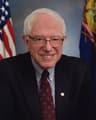 Bernie Sanders
Independent · Vermont
 Adam Schiff
Democrat · California
 Jeanne Shaheen
Democrat · New Hampshire
 Ron Wyden
Democrat · Oregon