
Edward Markey (D-MA)
States' Right to Regulate AI Act
A Democratic bill with 9 Democratic cosponsors · See all 10 cosponsors
Last activity — Read twice and referred to the Committee on Commerce, Science, and Transportation.
In committee
Introduced and handed to a committee in the chamber it started in.
The committee holds it, and most bills are never heard from again. A hearing or a committee vote would be news; silence is the usual outcome, and it kills the bill without anyone voting against it.
Its path through Congress
- Introduced
- In Committee
What this bill would do
This bill is known as the States' Right to Regulate AI Act. It stops any federal money from being used to carry out, run, or enforce a specific executive order. The executive order is titled Ensuring a National Policy Framework for Artificial Intelligence. It was issued on December 11, 2025. The bill was introduced in the Senate by Senator Markey and several other senators. It was then sent to the Committee on Commerce, Science, and Transportation.
Yes
- Scored +6
Does this leave more decisions to the states?
By preventing federal interference via the executive order, the bill aims to preserve state-level authority to regulate artificial intelligence.
- Scored +5
Does this put more rules on large technology companies?
The bill restricts federal implementation of an executive order concerning AI policy, indirectly supporting state-level regulatory efforts.
The opposite
- Scored -5
Does this give the federal government more power?
The bill curtails executive authority by prohibiting federal funds from enforcing a specific presidential executive order.
Who it would affect, and how
Potential Positive Impacts for People
- Protection of funds: Under Section 2, no federal funds can be used to implement, administer, or enforce the specified executive order on artificial intelligence. This might be seen as positive for people who want to prevent federal spending on that specific executive order.
Potential Negative Impacts for People
- Restriction on federal actions: Based on Section 2, the prohibition of federal funds for the executive order means the government cannot use money to carry it out. This could be viewed as negative by individuals or groups who supported the goals of the executive order and wanted federal resources used to implement it.
Groups and Interests Ranking
Every group the model scored this bill for, from -10 to +10. Tap or hover a score for the reason it gave.
- Education And Technology
- Does this put more rules on large technology companies? — The bill restricts federal implementation of an executive order concerning AI policy, indirectly supporting state-level regulatory efforts.
- Governance And Ideology
- Does this leave more decisions to the states? — By preventing federal interference via the executive order, the bill aims to preserve state-level authority to regulate artificial intelligence. Does this give the federal government more power? — The bill curtails executive authority by prohibiting federal funds from enforcing a specific presidential executive order.
- 12/17/2025
- Read twice and referred to the Committee on Commerce, Science, and Transportation.
- 10 Cosponsors added.
- Introduced in Senate
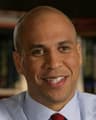 Cory Booker
Democrat · New Jersey
 Richard Durbin
Democrat · Illinois
 Amy Klobuchar
Democrat · Minnesota
 Ben Luján
Democrat · New Mexico
 Alex Padilla
Democrat · California
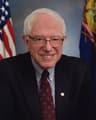 Bernie Sanders
Independent · Vermont
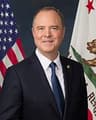 Adam Schiff
Democrat · California
 Chris Van Hollen
Democrat · Maryland
 Ron Wyden
Democrat · Oregon
 Peter Welch
Democrat · Vermont