
Jeff Merkley (D-OR)
Prohibiting Unauthorized Military Action in Venezuela Act of 2025
A Democratic bill with 8 Democratic cosponsors · See all 9 cosponsors
Last activity — Read twice and referred to the Committee on Foreign Relations.
In committee
Introduced and handed to a committee in the chamber it started in.
The committee holds it, and most bills are never heard from again. A hearing or a committee vote would be news; silence is the usual outcome, and it kills the bill without anyone voting against it.
Its path through Congress
- Introduced
- In Committee
What this bill would do
This bill, titled the "Prohibiting Unauthorized Military Action in Venezuela Act of 2025," aims to stop the unauthorized use of U.S. military forces in hostilities involving Venezuela. It prohibits using funds from the Department of Defense or any other government agency for such hostilities. The only exceptions allow for military action if there is a specific statutory authorization passed after this Act or a congressional authorization following the War Powers Resolution. The bill defines hostilities as any use of lethal or potentially lethal force, including remote deployment. It also clarifies that these restrictions do not prevent self-defense, the protection of U.S. personnel, counternarcotics operations, or humanitarian aid.
Yes· 3 of 4
- Scored +2
Does this favour talking over confrontation abroad?
By restricting unilateral military action, the bill favors diplomatic and statutory processes over unauthorized hostilities.
- Scored +1
Does this reduce what is spent on the military?
The bill prohibits the use of funds for military hostilities in Venezuela without explicit congressional authorization.
- Scored +1
Would veterans be better off under this, taking everything together?
The bill aims to prevent unauthorized military conflicts, which can reduce the exposure of service members to hostilities.
The opposite
- Scored -1
Does this give the federal government more power?
The bill limits the executive branch's ability to deploy military force without specific congressional statutory authorization.
Who it would affect, and how
Potential Positive Impacts for People
-
Prevents Unauthorized Hostilities: By prohibiting the use of funds for hostilities without specific statutory or congressional authorization, the bill limits the ability of the government to engage in conflict in Venezuela (Section 2(a)).
-
Allows for Humanitarian Aid: The bill ensures that the United States can still provide humanitarian assistance to the people of Venezuela (Section 2(b)(4)).
-
Maintains Security Operations: The bill allows for continued lawful counternarcotics operations that do not constitute hostilities (Section 2(b)(3)).
-
Protects National Defense: The rules allow the U.S. to act in self-defense against armed attacks or threats of imminent attacks, as well as to defend U.S. Armed Forces and personnel (Section 2(b)(1) and (2)).
Potential Negative Impacts for People
- Restrictions on Military Action: The bill prohibits the use of funds for any situation involving lethal or potentially lethal force, including remote deployment, unless specific legal exceptions are met (Section 2(a) and Section 2(c)).
Groups and Interests Ranking
Every group the model scored this bill for, from -10 to +10. Tap or hover a score for the reason it gave.
- National Security And Foreign Policy
- Does this favour talking over confrontation abroad? — By restricting unilateral military action, the bill favors diplomatic and statutory processes over unauthorized hostilities. Does this reduce what is spent on the military? — The bill prohibits the use of funds for military hostilities in Venezuela without explicit congressional authorization.
- Demographic And Interest Groups
- Would veterans be better off under this, taking everything together? — The bill aims to prevent unauthorized military conflicts, which can reduce the exposure of service members to hostilities.
- Economy And Finance
- Does this reduce what the federal government spends? — The bill limits future government spending on military hostilities in Venezuela unless specifically authorized by Congress.
- Governance And Ideology
- Does this give the federal government more power? — The bill limits the executive branch's ability to deploy military force without specific congressional statutory authorization.
- 12/16/2025
- 1 Cosponsor added.
- 12/15/2025
- 1 Cosponsor added.
- 12/10/2025
- 1 Cosponsor added.
- 12/9/2025
- 4 Cosponsors added.
- 12/4/2025
- Read twice and referred to the Committee on Foreign Relations.
- 2 Cosponsors added.
- Introduced in Senate
 Angela Alsobrooks
Democrat · Maryland
 Tammy Baldwin
Democrat · Wisconsin
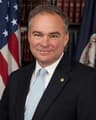 Timothy Kaine
Democrat · Virginia
 Andy Kim
Democrat · New Jersey
 Edward Markey
Democrat · Massachusetts
 Bernie Sanders
Independent · Vermont
 Chris Van Hollen
Democrat · Maryland
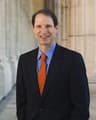 Ron Wyden
Democrat · Oregon
 Peter Welch
Democrat · Vermont