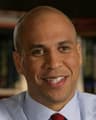
Cory Booker (D-NJ)
Ending Forced Arbitration of Race Discrimination Act of 2025
A Democratic bill with 9 Democratic cosponsors · See all 9 cosponsors
Last activity — Read twice and referred to the Committee on the Judiciary.
In committee
Introduced and handed to a committee in the chamber it started in.
The committee holds it, and most bills are never heard from again. A hearing or a committee vote would be news; silence is the usual outcome, and it kills the bill without anyone voting against it.
Its path through Congress
- Introduced
- In Committee
What this bill would do
This bill, titled the "Ending Forced Arbitration of Race Discrimination Act of 2025," aims to amend title 9 of the United States Code. It focuses on changing how disputes involving race discrimination are handled. Specifically, it seeks to address the use of predispute arbitration agreements and joint-action waivers for these types of disputes. The act would allow individuals or class representatives to bypass arbitration for claims involving race, color, or national origin. These changes would apply to any dispute or claim that arises or accrues on or after the date the act is enacted.
Yes· 3 of 10
- Scored +7
Would Black Americans be better off under this?
The bill empowers individuals to pursue racial discrimination claims in court rather than being forced into private arbitration.
- Scored +7
Would Hispanic Americans be better off under this?
The bill empowers individuals to pursue racial discrimination claims in court rather than being forced into private arbitration.
- Scored +7
Would Asian Americans be better off under this?
The bill empowers individuals to pursue racial discrimination claims in court rather than being forced into private arbitration.
The opposite
No question was scored the opposite.
Who it would affect, and how
Potential Positive Impacts for People
-
Choice in Dispute Resolution: Under Section 2(a), people alleging race discrimination, harassment, or retaliation can elect not to follow a predispute arbitration agreement. This gives the person alleging the conduct the power to choose how their dispute is handled (Section 2(a), Sec. 502).
-
Protection for Class Actions: The bill protects the rights of named representatives in a class or collective action. They can elect to avoid arbitration agreements or joint-action waivers when dealing with race discrimination disputes (Section 2(a), Sec. 502).
-
Court Oversight: The bill ensures that a court, rather than an arbitrator, determines whether the law applies to an agreement and whether that agreement is valid or enforceable (Section 2(a), Sec. 502(b)).
Potential Negative Impacts for People
- No specific negative impacts are explicitly detailed in the provided text.
Groups and Interests Ranking
Every group the model scored this bill for, from -10 to +10. Tap or hover a score for the reason it gave.
- Demographic And Interest Groups
- Would Black Americans be better off under this? — The bill empowers individuals to pursue racial discrimination claims in court rather than being forced into private arbitration. Would Asian Americans be better off under this? — The bill empowers individuals to pursue racial discrimination claims in court rather than being forced into private arbitration. Would Hispanic Americans be better off under this? — The bill empowers individuals to pursue racial discrimination claims in court rather than being forced into private arbitration. Would Native Americans be better off under this? — The bill empowers individuals to pursue racial discrimination claims in court rather than being forced into private arbitration. Would white Americans be better off under this? — The bill empowers individuals to pursue racial discrimination claims in court rather than being forced into private arbitration. Would households on low incomes be better off under this? — By allowing class actions and bypassing arbitration, the bill may better support low-income individuals in seeking legal recourse. Would union members be better off under this? — The bill enhances the ability of workers to pursue collective action regarding race discrimination.
- Social Issues And Justice
- Does this narrow racial gaps in how people are treated? — The bill strengthens the ability of individuals to challenge racial discrimination by allowing them to bypass forced arbitration and proceed through the court system.
- Governance And Ideology
- Does this protect the right to fair treatment by the courts? — The bill ensures that courts, rather than private arbitrators, determine the validity and enforceability of arbitration agreements.
- Economy And Finance
- Does this give people more protection from unfair business practices? — The bill provides more protection by allowing individuals to bypass mandatory arbitration in racial discrimination disputes.
- 11/20/2025
- Read twice and referred to the Committee on the Judiciary.
- 9 Cosponsors added.
- Introduced in Senate
One bill Congress.gov lists as related to this one — companions in the other chamber, earlier versions, and bills this one absorbed or was folded into.
 Richard Blumenthal
Democrat · Connecticut
 Christopher Coons
Democrat · Delaware
 Richard Durbin
Democrat · Illinois
 Kirsten Gillibrand
Democrat · New York
 Mazie Hirono
Democrat · Hawaii
 Alex Padilla
Democrat · California
 Chris Van Hollen
Democrat · Maryland
 Sheldon Whitehouse
Democrat · Rhode Island
 Elizabeth Warren
Democrat · Massachusetts