Bill · S. 3211· Senate(119-S-3211)
Recognizing the Role of Direct Support Professionals Act
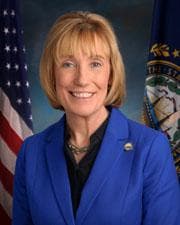
- Introduced
- 11/19/2025
- Last activity
- 9/14/2026 — Placed on Senate Legislative Calendar under General Orders. Calendar No. 567.
- Sponsored by
- Maggie Hassan
- Cosponsors
- - 7 - 2
- Introduced
- On Calendar
What this bill would do
This bill is known as the Recognizing the Role of Direct Support Professionals Act. It requires the Director of the Office of Management and Budget to consider creating a separate occupational code for direct support professionals during the next revision of the Standard Occupational Classification system. The bill notes that these professionals help individuals with intellectual and developmental disabilities live independently and face a high national turnover rate of 39 percent. If the Office of Management and Budget decides not to create a separate code, the Director must submit an explanatory report to specific congressional committees within one month. Finally, the bill explicitly states that no additional funds are authorized to be appropriated to carry it out.
Yes· 3 of 5
Would people with disabilities be better off under this?+5
Aims to improve the tracking and recognition of the professionals providing their critical daily support.
Does this expand the rights of people with disabilities?+4
Recognizes and validates the specific care needs of people with intellectual and developmental disabilities through professional classification.
Does this make what the government does easier for the public to see?+2
Requires a report to Congress if the requested occupational code is not established.
The opposite
No question was scored the opposite.
Who it would affect, and how
Potential Positive Impacts for People
- Recognition and Data Collection: Section 2, Findings, points out that establishing a discrete occupational category will help States and the Federal Government better interpret labor shortages and collect data on the high turnover rate of direct support professionals, as well as recognize these professionals for their critical work and correct an inaccurate representation in the current system.
Potential Negative Impacts for People
- No Negative Impacts Identified: Based strictly on the provided text, there are no specific sections or provisions that outline negative consequences or burdens for individuals or groups of people in the United States.
Groups and Interests Ranking
Every group the model scored this bill for, from -10 to +10. Hover a score for the reason it gave.
- Demographic And Interest Groups
- Good For People With Disabilities+5
- Social Issues And Justice
- Improves Disability Rights+4
- Governance And Ideology
- Improves Government Transparency+2Increases Federal Power+1
- Healthcare
- Improves Healthcare Access+2
- 9/14/2026
- Committee on Homeland Security and Governmental Affairs. Reported by Senator Paul with an amendment in the nature of a substitute. Without written report.
- Placed on Senate Legislative Calendar under General Orders. Calendar No. 567.
- 8/6/2026
- Committee on Homeland Security and Governmental Affairs. Ordered to be reported with an amendment in the nature of a substitute favorably.
- 3/19/2026
- 1 Cosponsor added.
- 3/2/2026
- 1 Cosponsor added.
- 2/4/2026
- 1 Cosponsor added.
- 2/3/2026
- 1 Cosponsor added.
- 11/19/2025
- Read twice and referred to the Committee on Homeland Security and Governmental Affairs.
- 6 Cosponsors added.
- Introduced in Senate
2 bills Congress.gov lists as related to this one — companions in the other chamber, earlier versions, and bills this one absorbed or was folded into.
 Lisa Blunt Rochester
Democrat · Delaware
 Susan Collins
Republican · Maine
 Christopher Coons
Democrat · Delaware
 Kirsten Gillibrand
Democrat · New York
 Mark Kelly
Democrat · Arizona
 Angus King
Independent · Maine
 Andy Kim
Democrat · New Jersey
 Lisa Murkowski
Republican · Alaska
 Jeanne Shaheen
Democrat · New Hampshire
 Chris Van Hollen
Democrat · Maryland