
A Republican bill with 12 Republican cosponsors · See all 12 cosponsors
Last activity — Read twice and referred to the Committee on the Judiciary.
In committee
Introduced and handed to a committee in the chamber it started in.
The committee holds it, and most bills are never heard from again. A hearing or a committee vote would be news; silence is the usual outcome, and it kills the bill without anyone voting against it.
Its path through Congress
- Introduced
- In Committee
What this bill would do
This bill is known as the Flight Risk Reduction Act. It changes how the United States handles defendants who are awaiting trial and are not U.S. citizens or lawful permanent residents. Specifically, the bill sets up a rule that assumes these individuals pose both a danger to the community and a serious risk of running away. Because of this assumption, the default expectation is that they will be detained before their trial happens. A defendant can fight this presumption, but they must do so using clear and convincing evidence. However, the bill explicitly states that having family ties or employment inside the United States cannot be used to overcome this assumption.
Yes
- Scored +5
Does this tighten control of the border?
Establishes stricter pretrial detention standards for non-citizens and non-permanent residents, aligning with border and immigration enforcement goals.
- Scored +4
Does this give the federal government more power?
The bill mandates a uniform federal pretrial detention presumption for non-citizens across all jurisdictions.
The opposite
- Scored -8
Would immigrants be better off under this?
Non-citizens and lawful permanent residents face a severe legal disadvantage with a mandatory presumption of pretrial detention and restricted ability to contest it.
- Scored -5
Does this protect the right to fair treatment by the courts?
Imposes a legal presumption of dangerousness and flight risk on non-citizens while barring family or employment ties from being used to rebut it.
Who it would affect, and how
Potential Positive Impacts for People
- Section 2: This section establishes a clear rule that non-citizens and non-lawful permanent residents are automatically presumed to be a danger and a flight risk before trial. For communities concerned about individuals fleeing or posing a danger while awaiting trial, this provision ensures stricter pretrial detention standards for these specific groups.
Potential Negative Impacts for People
-
Section 2: Non-citizens and lawful permanent residents face a legal disadvantage because the bill creates a presumption that they are a danger to the community and a serious risk of flight. This places a heavy burden on the defendant to prove otherwise with clear and convincing evidence.
-
Section 2: The bill explicitly dictates that ties to family or employment within the United States cannot be used as grounds to overcome the presumption that the person is a danger or a flight risk. This means individuals who have established lives, jobs, and families in the country cannot use those positive community ties to argue for their release pending trial.
Groups and Interests Ranking
Every group the model scored this bill for, from -10 to +10. Tap or hover a score for the reason it gave.
- Demographic And Interest Groups
- Would immigrants be better off under this? — Non-citizens and lawful permanent residents face a severe legal disadvantage with a mandatory presumption of pretrial detention and restricted ability to contest it.
- Social Issues And Justice
- Does this tighten control of the border? — Establishes stricter pretrial detention standards for non-citizens and non-permanent residents, aligning with border and immigration enforcement goals.
- Governance And Ideology
- Does this give the federal government more power? — The bill mandates a uniform federal pretrial detention presumption for non-citizens across all jurisdictions. Does this protect the right to fair treatment by the courts? — Imposes a legal presumption of dangerousness and flight risk on non-citizens while barring family or employment ties from being used to rebut it.
- 7/23/2026
- 1 Cosponsor added.
- 11/19/2025
- Read twice and referred to the Committee on the Judiciary.
- 11 Cosponsors added.
- Introduced in Senate
One bill Congress.gov lists as related to this one — companions in the other chamber, earlier versions, and bills this one absorbed or was folded into.
 Marsha Blackburn
Republican · Tennessee
 Jim Banks
Republican · Indiana
 Katie Britt
Republican · Alabama
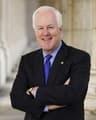 John Cornyn
Republican · Texas
 Ted Cruz
Republican · Texas
 Lindsey Graham
Republican · South Carolina
- Darline Graham
Republican · South Carolina
 Josh Hawley
Republican · Missouri
 David McCormick
Republican · Pennsylvania
 Ashley Moody
Republican · Florida
 Pete Ricketts
Republican · Nebraska
 Thomas Tillis
Republican · North Carolina