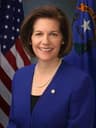
Catherine Cortez Masto (D-NV)
STOP Human Trafficking Act
A Democratic bill with 2 Republican cosponsors · See all 3 cosponsors
Last activity — Read twice and referred to the Committee on Commerce, Science, and Transportation.
In committee
Introduced and handed to a committee in the chamber it started in.
The committee holds it, and most bills are never heard from again. A hearing or a committee vote would be news; silence is the usual outcome, and it kills the bill without anyone voting against it.
Its path through Congress
- Introduced
- In Committee
What this bill would do
The STOP Human Trafficking Act focuses on improving how the Department of Transportation fights human trafficking. It requires the Secretary of Transportation to use existing research, create information-sharing databases, and update training campaigns using survivor-informed and trauma-informed practices. The bill also establishes a public awareness campaign for vulnerable routes and major events. Finally, it creates a grant program to provide funding to various transportation stakeholders for education and prevention efforts.
Yes· 3 of 26
- Scored +8
Would women be better off under this?
Strongly targets human trafficking, which disproportionately affects women.
- Scored +8
Would immigrants be better off under this?
Explicitly provides multilingual materials for displaced and vulnerable populations.
- Scored +7
Would children be better off under this?
Increases identification and prevention of trafficking, which often targets children.
The opposite
No question was scored the opposite.
Who it would affect, and how
Potential Positive Impacts for People
-
Improved Victim Support: The bill requires training and awareness campaigns to be survivor-informed and trauma-informed to prioritize safety, avoid retraumatization, and respect cultural values (Section 4(a)(1)(A)).
-
Better Identification and Reporting: The Secretary will develop standardized checklists and mode-specific indicators for employees and law enforcement to help identify both victims and suspected traffickers (Section 4(a)(2)(C)-(D)).
-
Increased Public Awareness: A public awareness campaign will use media messages to alert people to human trafficking, especially in vulnerable locations and during major events like the 2028 Summer Olympics (Section 5(a)).
-
Resources for Vulnerable Groups: The bill mandates the creation of multilingual awareness materials specifically for displaced and vulnerable populations (Section 4(a)(2)(B)).
-
Funding for Prevention: Grants will be available to nonprofit organizations and transportation operators, such as airports and rail operators, to coordinate prevention efforts within their communities (Section 6(a)).
Potential Negative Impacts for People
- No negative impacts for individuals or groups were explicitly mentioned in the provided text.
Groups and Interests Ranking
Every group the model scored this bill for, from -10 to +10. Tap or hover a score for the reason it gave.
- Demographic And Interest Groups
- Would immigrants be better off under this? — Explicitly provides multilingual materials for displaced and vulnerable populations. Would women be better off under this? — Strongly targets human trafficking, which disproportionately affects women. Would children be better off under this? — Increases identification and prevention of trafficking, which often targets children. Would households on low incomes be better off under this? — Targets vulnerable populations with multilingual materials and survivor-informed care. Would Hispanic Americans be better off under this? — Provides multilingual materials for displaced and vulnerable populations. Would LGBTQ people be better off under this? — Protects vulnerable populations through trauma-informed and survivor-informed practices. Would men be better off under this? — Improves identification and support for trafficking victims. Would people in cities be better off under this? — Focuses on hubs, cities, and multimodal transportation operations. Would people in their twenties and thirties be better off under this? — Improves identification and support for victims of trafficking. Would Black Americans be better off under this? — Protects vulnerable populations through better identification and survivor-informed care. Would Asian Americans be better off under this? — Protects vulnerable populations through better identification and survivor-informed care. Would business owners be better off under this? — Provides grants for transportation operators to implement prevention programs. Would people in middle age be better off under this? — Enhances safety in public transportation systems. Would Native Americans be better off under this? — Protects vulnerable populations through better identification and survivor-informed care. Would people with disabilities be better off under this? — Focuses on the most vulnerable populations in transit systems. Would people in rural areas be better off under this? — Provides protections along vulnerable routes. Would people over 65 be better off under this? — Enhances safety in public transportation systems. Would middle-income households be better off under this? — Increases general public safety in travel hubs. Would white Americans be better off under this? — Improves safety standards in transportation. Would high-income households be better off under this? — Increases general public safety in travel hubs.
- Governance And Ideology
- Does this make what the government does easier for the public to see? — Requires reporting to Congress and public posting of zero-tolerance policies. Does this give the federal government more power? — Expands DOT's role in setting national standards for counter-trafficking training.
- Environment Energy And Infrastructure
- Does this improve buses, trains and other public transport? — Provides grants to transit operators and airports for human trafficking prevention.
- Healthcare
- Does this put more money into medical research? — Directs the Secretary to build upon and utilize counter-trafficking research. Does this make mental health care easier to get? — Requires trauma-informed practices to avoid retraumatization of victims.
- Social Issues And Justice
- Does this narrow racial gaps in how people are treated? — Mandates multilingual materials for displaced and vulnerable populations.
- 11/5/2025
- Read twice and referred to the Committee on Commerce, Science, and Transportation.
- 3 Cosponsors added.
- Introduced in Senate
 Marsha Blackburn
Republican · Tennessee
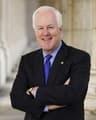 John Cornyn
Republican · Texas
 Amy Klobuchar
Democrat · Minnesota