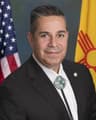
Ben Luján (D-NM)
A bill to amend section 7014 of the Elementary and Secondary Education Act of 1965 to advance toward full Federal funding for impact aid, and for other purposes.
A Democratic bill with 2 Republican cosponsors · See all 4 cosponsors
Last activity — Read twice and referred to the Committee on Health, Education, Labor, and Pensions.
In committee
Introduced and handed to a committee in the chamber it started in.
The committee holds it, and most bills are never heard from again. A hearing or a committee vote would be news; silence is the usual outcome, and it kills the bill without anyone voting against it.
Its path through Congress
- Introduced
- In Committee
What this bill would do
This bill is known as S. 2921 and was introduced in the Senate to amend section 7014 of the Elementary and Secondary Education Act of 1965.
The main goal of the legislation is to advance toward full Federal funding for impact aid.
It sets specific amounts of money that are authorized to be appropriated for fiscal years 2026 through 2031.
These funds cover payments for the Federal acquisition of real property, basic payments, and payments for heavily impacted local educational agencies.
Money is also authorized for payments regarding children with disabilities and for construction purposes.
Yes· 3 of 22
- Scored +9
Would children be better off under this?
Directly increases funding for the education of children in impacted districts.
- Scored +9
Would people with disabilities be better off under this?
Specifically increases funding for children with disabilities.
- Scored +9
Would students be better off under this?
Directly increases funding for the services and infrastructure used by students.
The opposite
- Scored -5
Does this reduce what the federal government spends?
The bill authorizes significant increases in federal funding for impact aid.
- Scored -2
Does this reduce what the federal government owes?
The bill increases federal spending authorizations through 2031.
- Scored -2
Does this make the government pay for what it commits to?
Increasing spending authorizations without specified offsets may be seen as fiscally irresponsible.
Who it would affect, and how
Potential Positive Impacts for People
-
Federal Acquisition of Real Property Funding: Section 1 (adding subsection (a)) authorizes increasing amounts of money starting at $90,313,000 for fiscal year 2026 and scaling up to $150,313,000 by fiscal year 2031 to make payments under section 7002. This is positive because it provides growing financial support over time.
-
Basic and Heavily Impacted Payments: Section 1 (adding subsection (b)) authorizes specific funding for basic payments and payments for heavily impacted local educational agencies, beginning at $1,632,476,041 for fiscal year 2026 and increasing each year to $2,453,646,246 in fiscal year 2031. This can be viewed as positive because it steadily raises the amount of money designated for these educational agencies.
-
Support for Children With Disabilities: Section 1 (adding subsection (c)) authorizes funds for making payments for children with disabilities, starting at $60,316,000 for fiscal year 2026 and reaching $120,316,000 by fiscal year 2031. This is beneficial as it provides dedicated and increasing financial resources for this specific group of students.
-
Construction Funding: Section 1 (adding subsection (d)) authorizes appropriations for carrying out section 7007 construction, starting at $22,906,000 for fiscal year 2026 and increasing annually up to $45,406,000 for fiscal year 2031. This provides a positive outcome by steadily increasing funds available for building or repair needs.
Potential Negative Impacts for People
- No Negative Impacts Identified: Based strictly on the provided text of the bill, there are no specific sections or provisions that outline negative consequences or burdens for individuals or groups of people in the United States.
Groups and Interests Ranking
Every group the model scored this bill for, from -10 to +10. Tap or hover a score for the reason it gave.
- Demographic And Interest Groups
- Would children be better off under this? — Directly increases funding for the education of children in impacted districts. Would people with disabilities be better off under this? — Specifically increases funding for children with disabilities. Would students be better off under this? — Directly increases funding for the services and infrastructure used by students. Would Native Americans be better off under this? — Native American districts are primary recipients of impact aid. Would people in rural areas be better off under this? — Rural districts are heavily reliant on impact aid for funding. Would households on low incomes be better off under this? — Increases funding for schools that often serve low-income students in impacted areas. Would Black Americans be better off under this? — Increased school funding often benefits minority students in impacted districts. Would farmers be better off under this? — Impact aid often supports schools in rural, agricultural areas. Would Hispanic Americans be better off under this? — Increased school funding often benefits minority students in impacted districts. Would middle-income households be better off under this? — General improvement in public school funding benefits middle-class families. Would Asian Americans be better off under this? — General increase in education funding is broadly beneficial. Would people in cities be better off under this? — Some urban districts may benefit from basic payments. Would white Americans be better off under this? — General increase in education funding is broadly beneficial. Would people in their twenties and thirties be better off under this? — Improved early education funding leads to better outcomes for young adults.
- Social Issues And Justice
- Does this expand the rights of people with disabilities? — The bill specifically authorizes increased funding for children with disabilities. Is this likely to lift people out of poverty? — Increased educational funding in impacted areas helps reduce long-term poverty. Does this narrow racial gaps in how people are treated? — Increased funding for impact aid often benefits districts serving marginalized populations.
- Education And Technology
- Does this put more money into public schools? — The bill significantly increases authorized funding for impact aid in public schools.
- Economy And Finance
- Is this likely to grow the economy? — Increased funding for education and construction can stimulate local economies. Does this reduce what the federal government spends? — The bill authorizes significant increases in federal funding for impact aid. Does this make the government pay for what it commits to? — Increasing spending authorizations without specified offsets may be seen as fiscally irresponsible. Does this reduce what the federal government owes? — The bill increases federal spending authorizations through 2031.
- Environment Energy And Infrastructure
- Does this invest in rural communities? — Impact aid often supports rural districts and those with federal land acquisitions. Does this better protect public land such as parks and forests? — The bill addresses payments for federal acquisition of real property.
- Governance And Ideology
- Does this give the federal government more power? — Increases the federal government's financial role in supporting local education.
- 9/24/2026
- 1 Cosponsor added.
- 9/19/2025
- Read twice and referred to the Committee on Health, Education, Labor, and Pensions.
- 3 Cosponsors added.
- Introduced in Senate
 Cory Booker
Democrat · New Jersey
 Kirsten Gillibrand
Democrat · New York
 Markwayne Mullin
Republican · Oklahoma
 Thomas Tillis
Republican · North Carolina