Bill · S. 2771· Senate(119-S-2771)
Indian Programs Advance Appropriations Act of 2025
- Introduced
- 9/11/2025
- Last activity
- 9/11/2025 — Read twice and referred to the Committee on Indian Affairs.
- Sponsored by
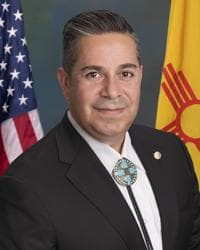
- Ben Luján
- Cosponsors
- - 5 - 2
- Introduced
- In Committee
What this bill would do
The Indian Programs Advance Appropriations Act of 2025 allows for advance appropriations for specific accounts within the Bureau of Indian Affairs, the Bureau of Indian Education, and the Indian Health Service. Starting in fiscal year 2026, budget authority can be provided for both the current fiscal year and the following one. The act requires the Secretary of the Interior and the Department of Health and Human Services to provide detailed funding estimates for these accounts in the President's budget. Additionally, it mandates annual reports on resource sufficiency and requires consultation with Indian Tribes during the budget process.
Yes· 3 of 10
Would Native Americans be better off under this?+9
Directly benefits Native American tribes through advance appropriations and improved budget participation.
Does this make health care easier to get in general?+7
Ensures more stable and predictable funding for the Indian Health Service.
Would people in rural areas be better off under this?+6
Many Indian Health Service and BIA programs serve remote rural populations.
The opposite
No question was scored the opposite.
Who it would affect, and how
Potential Positive Impacts for People
-
Advance Funding Availability: By providing advance new budget authority for the first fiscal year after the budget year, the act ensures funds are available sooner for covered accounts in the Bureau of Indian Affairs, Bureau of Indian Education, and Indian Health Service (Section 2).
-
Improved Budget Planning: The requirement for detailed estimates of funds necessary for the following fiscal year allows for better long-term planning for Indian programs (Section 2(c)).
-
Tribal Participation: The act requires the Secretary of the Interior to consult with and solicit the participation of Indian Tribes and Tribal organizations when developing budget requests for the Bureau of Indian Affairs (Section 3(b)).
-
Accountability through Reporting: The requirement for an annual report on the sufficiency of resources, including workload and demand data, ensures the government tracks if these programs have enough money to function (Section 2(d)).
-
Inflation and Population Adjustments: The Indian Health Service budget justifications must now reflect changes in the size of the population served and the cost of health services based on the Consumer Price Index (Section 3(d)).
Potential Negative Impacts for People
- No negative impacts for individuals or groups are explicitly stated in the provided text.
Groups and Interests Ranking
Every group the model scored this bill for, from -10 to +10. Hover a score for the reason it gave.
- Demographic And Interest Groups
- Good For Native Americans+9Good For Rural Residents+6Good For Children+5Good For Low Income Households+5Good For Students+5
- Healthcare
- Improves Healthcare Access+7
- Social Issues And Justice
- Improves Racial Equity+6
- Environment Energy And Infrastructure
- Improves Rural Development+5
- Governance And Ideology
- Improves Government Transparency+5
- Economy And Finance
- Improves Fiscal Responsibility+4
- 2/4/2026
- 1 Cosponsor added.
- 1/28/2026
- 2 Cosponsors added.
- 9/30/2025
- 1 Cosponsor added.
- 9/11/2025
- Read twice and referred to the Committee on Indian Affairs.
- 3 Cosponsors added.
- Introduced in Senate
One bill Congress.gov lists as related to this one — companions in the other chamber, earlier versions, and bills this one absorbed or was folded into.
 Catherine Cortez Masto
Democrat · Nevada
 Ruben Gallego
Democrat · Arizona
 Martin Heinrich
Democrat · New Mexico
 Mark Kelly
Democrat · Arizona
 Markwayne Mullin
Republican · Oklahoma
 Tina Smith
Democrat · Minnesota
 Thomas Tillis
Republican · North Carolina