Bill · S. 2666· Senate(119-S-2666)
Foreign Robocall Elimination Act
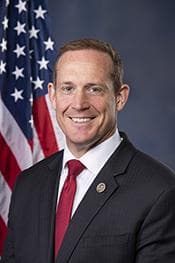
- Introduced
- 8/1/2025
- Last activity
- 8/10/2026 — Held at the desk.
- Sponsored by
- Ted Budd
- Cosponsors
- - 1 - 2
- Introduced
- Passed Senate
- Awaiting House
What this bill would do
The Foreign Robocall Elimination Act directs the FCC to establish an interagency taskforce to combat unlawful robocalls made into the United States from abroad. This taskforce includes representatives from various federal agencies and specific private sector entities. The group is required to produce a report detailing effective ways to combat international robocalls and providing recommendations to Congress and federal agencies. The bill also amends the Pallone-Thune TRACED Act regarding notice frequency and provides immunity for certain trace back information sharing. Additionally, it authorizes the FCC to require service providers to post bonds to preserve the integrity of the Robocall Mitigation Database.
Yes· 3 of 8
Does this give people more protection from unfair business practices?+6
The bill seeks to combat unlawful robocalls that cause financial loss and identity theft.
Would households on low incomes be better off under this?+3
Reducing robocalls and identity theft provides greater financial security for all households.
Would middle-income households be better off under this?+3
Protecting against fraudulent calls helps preserve the financial stability of middle-income families.
The opposite
No question was scored the opposite.
Who it would affect, and how
Potential Positive Impacts for People
-
Combating Unlawful Robocalls: The establishment of a taskforce is intended to find the most effective ways to combat unlawful robocalls made into the United States from outside the country (Section 2(d)(1)).
-
Addressing Financial Loss and Identity Theft: The bill directs the taskforce to determine the magnitude of financial loss and the number of instances of stolen identity caused by unlawful robocalls from outside the United States (Section 2(d)(2)(C)).
-
Improving Call Authentication: The taskforce is charged with examining methods to encourage the adoption of caller identification authentication technology in foreign countries (Section 2(d)(2)(E)).
-
Legal Protection for Information Sharing: The bill provides immunity to a registered consortium against legal actions for receiving, sharing, or publishing information related to suspected unlawful, fraudulent, or abusive robocalls (Section 4(a)).
-
Enhanced Accountability for Providers: The FCC is authorized to publish lists of voice service providers that refuse to participate in trace back efforts or are found to transmit substantial amounts of unlawful robocalls (Section 4(b)).
-
Ensuring Provider Integrity: The bill allows for a bond requirement of up to $100,000 to ensure providers demonstrate legitimate operations and the ability to pay fines (Section 5(b)(1) and 5(c)(1)).
Potential Negative Impacts for People
-
Potential Burden on Legitimate Providers: While the bill seeks to minimize burdens, it allows for a bond requirement that could be imposed on providers that do not demonstrate specific criteria of legitimacy (Section 5(b)(1)).
-
Impact of Public Disclosure: The taskforce must consider whether requiring public disclosure of trace back results might expose proprietary or sensitive information of legitimate providers (Section 2(d)(2)(P)).
Groups and Interests Ranking
Every group the model scored this bill for, from -10 to +10. Hover a score for the reason it gave.
- Demographic And Interest Groups
- Good For Low Income Households+3Good For Middle Class Households+3Good For Urban Residents+2
- Economy And Finance
- Improves Consumer Protection+6
- Governance And Ideology
- Improves Government Transparency+3
- National Security And Foreign Policy
- Improves International Alliances+3
- Education And Technology
- Improves Internet Access+2
- Social Issues And Justice
- Improves Poverty Reduction+2
- 8/10/2026
- Message on Senate action sent to the House.
- Held at the desk.
- Received in the House.
- 8/3/2026
- Passed/agreed to in Senate: Passed Senate with an amendment by Unanimous Consent.
- Passed Senate with an amendment by Unanimous Consent. (consideration: CR S4412-4414; text: CR S4412-4414)
- 6/1/2026
- Committee on Commerce, Science, and Transportation. Reported by Senator Cruz with an amendment in the nature of a substitute. With written report No. 119-122.
- Placed on Senate Legislative Calendar under General Orders. Calendar No. 422.
- 2/12/2026
- 2 Cosponsors added.
- 10/21/2025
- Committee on Commerce, Science, and Transportation. Ordered to be reported with an amendment in the nature of a substitute favorably.
- 8/1/2025
- Read twice and referred to the Committee on Commerce, Science, and Transportation.
- 1 Cosponsor added.
- Introduced in Senate
One bill Congress.gov lists as related to this one — companions in the other chamber, earlier versions, and bills this one absorbed or was folded into.
 Jon Husted
Republican · Ohio
 Raphael Warnock
Democrat · Georgia
 Peter Welch
Democrat · Vermont