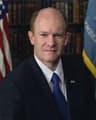
Christopher Coons (D-DE)
Energy Savings and Weatherization Reauthorization Act of 2025
A Democratic bill with 2 Republican cosponsors · See all 5 cosponsors
Last activity — Read twice and referred to the Committee on Energy and Natural Resources.
In committee
Introduced and handed to a committee in the chamber it started in.
The committee holds it, and most bills are never heard from again. A hearing or a committee vote would be news; silence is the usual outcome, and it kills the bill without anyone voting against it.
Its path through Congress
- Introduced
- In Committee
What this bill would do
This bill, known as the "Energy Savings and Weatherization Reauthorization Act of 2025," aims to amend the Energy Conservation and Production Act. Its primary purpose is to reauthorize the weatherization assistance program through the year 2030. The legislation also updates the definition of what it means for a dwelling unit to be "fully weatherized." Additionally, the bill increases specific financial assistance limits and the state average cost per unit. Finally, it grants the Secretary authority to increase financial assistance limits based on market conditions.
Yes
- Scored +6
Would households on low incomes be better off under this?
The bill significantly increases the financial assistance cap per unit available to low-income households for weatherization.
- Scored +5
Is this likely to lift people out of poverty?
Increasing financial assistance for weatherization helps low-income households reduce energy costs and improves living standards.
- Scored +4
Does this better protect air, water and wildlife?
The bill enhances energy efficiency standards for dwelling units through a new definition of 'fully weatherized'.
The opposite
- Scored -1
Does this reduce what the federal government spends?
The bill increases the financial assistance limits for the weatherization program, which increases federal outlays.
Who it would affect, and how
Potential Positive Impacts for People
-
Extended Program Longevity: By changing the date from 2025 to 2030, the bill extends the reauthorization of the weatherization assistance program (Section 2(a)).
-
Increased Financial Assistance per Unit: The bill increases the amount of financial assistance from $6,500 to $15,000 (Section 2(c)(1)(A)(i)).
-
Increased Specific Financial Limits: The bill increases a specified amount from $3,000 to $6,000 (Section 2(c)(3)).
-
Flexibility for Market Changes: The Secretary is given the authority to increase financial assistance per dwelling unit if market conditions require it to meet the program's purposes (Section 2(c)(6)).
-
Higher Standards for Weatherization: The new definition of "fully weatherized" ensures that recommended measures from an energy audit tool or priority list are installed and that the unit receives a final quality control inspection (Section 2(b)(2)).
Potential Negative Impacts for People
- No negative impacts or burdens are explicitly stated in the provided text.
Groups and Interests Ranking
Every group the model scored this bill for, from -10 to +10. Tap or hover a score for the reason it gave.
- Demographic And Interest Groups
- Would households on low incomes be better off under this? — The bill significantly increases the financial assistance cap per unit available to low-income households for weatherization.
- Social Issues And Justice
- Is this likely to lift people out of poverty? — Increasing financial assistance for weatherization helps low-income households reduce energy costs and improves living standards.
- Environment Energy And Infrastructure
- Does this better protect air, water and wildlife? — The bill enhances energy efficiency standards for dwelling units through a new definition of 'fully weatherized'.
- Economy And Finance
- Does this reduce what the federal government spends? — The bill increases the financial assistance limits for the weatherization program, which increases federal outlays.
- 12/15/2025
- 1 Cosponsor added.
- 10/6/2025
- 1 Cosponsor added.
- 7/31/2025
- Read twice and referred to the Committee on Energy and Natural Resources.
- 3 Cosponsors added.
- Introduced in Senate
 Susan Collins
Republican · Maine
 Ruben Gallego
Democrat · Arizona
 Lisa Murkowski
Republican · Alaska
 John Reed
Democrat · Rhode Island
 Jeanne Shaheen
Democrat · New Hampshire