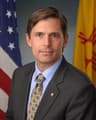
Martin Heinrich (D-NM)
Wildfire Insurance Coverage Study Act of 2025
A Democratic bill with 1 Republican cosponsor · See the cosponsor
Last activity — Read twice and referred to the Committee on Banking, Housing, and Urban Affairs.
In committee
Introduced and handed to a committee in the chamber it started in.
The committee holds it, and most bills are never heard from again. A hearing or a committee vote would be news; silence is the usual outcome, and it kills the bill without anyone voting against it.
Its path through Congress
- Introduced
- In Committee
What this bill would do
The Wildfire Insurance Coverage Study Act of 2025 directs the Comptroller General of the United States to perform a comprehensive study on wildfire insurance. This study involves consulting with the Director of the Federal Insurance Office and State insurance regulators. The investigation aims to analyze wildfire risks, the current state of insurance coverage, and various regulatory responses. It also examines the challenges private insurers face when underwriting these risks. Finally, the Comptroller General must submit a report containing the findings and conclusions to Congress within one year of the Act's enactment.
Yes· 3 of 12
- Scored +1
Would households on low incomes be better off under this?
The study assesses potential means-tested government affordability programs for lower-income homeowners.
- Scored +1
Would middle-income households be better off under this?
The study examines insurance affordability which affects many middle-income property owners.
- Scored +1
Would people in rural areas be better off under this?
The study investigates risks associated with homebuilding in remote, heavily-wooded areas.
The opposite
No question was scored the opposite.
Who it would affect, and how
Potential Positive Impacts for People
-
Risk Reduction through Mitigation: The study looks into mitigation practices that could help lower the costs and risks associated with insurance policies for wildfire damage (Section 2(a)(1)(B)).
-
Improved Risk Assessment: By analyzing the need for a national map to measure and quantify wildfire risk, the study seeks to better understand and forecast wildfire events (Section 2(a)(1)(C) and (D)).
-
Evaluation of Government Assistance: The study assesses the effectiveness of existing government programs and looks into potential government affordability programs designed to offset risk-adjusted premiums for lower-income homeowners (Section 2(a)(1)(C) and (a)(4)(F)(iv)).
-
Assessing Regulatory Protections: The bill examines how State actions, such as rate regulations, moratoria on increases, or the establishment of residual market insurance entities, affect the availability and affordability of coverage (Section 2(a)(3)).
Potential Negative Impacts for People
-
Financial Pressure on Consumers: The bill notes that increased premium rates, higher policyholder cost-sharing, or the exclusion of wildfire coverage can impact the affordability of insurance (Section 2(a)(2)(A) and (a)(4)(E)).
-
Risk to Insurance Availability: The study examines how private insurers might decline to renew policies or terminate coverage altogether, which can leave property owners without protection (Section 2(a)(2)(B) and (D)).
-
Vulnerability of Specific Communities: The research investigates how the availability and affordability of coverage affects local communities that are disproportionately vulnerable to wildfires, specifically impacting low- or moderate-income property owners and small businesses (Section 2(a)(4)(H)(i)).
-
Housing Supply Concerns: The study looks at how wildfire risks and insurance availability might affect the overall availability and affordability of the housing supply (Section 2(a)(4)(H)(iii)).
Groups and Interests Ranking
Every group the model scored this bill for, from -10 to +10. Tap or hover a score for the reason it gave.
- Demographic And Interest Groups
- Would households on low incomes be better off under this? — The study assesses potential means-tested government affordability programs for lower-income homeowners. Would middle-income households be better off under this? — The study examines insurance affordability which affects many middle-income property owners. Would people in rural areas be better off under this? — The study investigates risks associated with homebuilding in remote, heavily-wooded areas.
- Environment Energy And Infrastructure
- Does this improve help for people hit by a disaster? — The study reviews wildfire trends related to the Fire Management Assistance grant program. Does this better protect air, water and wildlife? — The study explores mitigation practices and forest management policies to reduce wildfire risks. Does this better protect public land such as parks and forests? — The research includes analyzing the role of land management authorities in wildfire mitigation.
- Economy And Finance
- Is this likely to grow the economy? — The study assesses how insurance availability impacts the housing supply and local economies. Does this make it easier to run a small business? — The study examines the impact of wildfire insurance availability on small businesses in vulnerable communities.
- Governance And Ideology
- Does this make what the government does easier for the public to see? — The bill requires a formal report from the Comptroller General to be submitted to Congress. Does this leave more decisions to the states? — The study examines the role of State insurance regulators and their regulatory responses.
- Social Issues And Justice
- Does this make housing cost less? — The study investigates the link between insurance availability and the affordability of the housing supply. Is this likely to lift people out of poverty? — The bill examines potential government affordability programs to assist low-income homeowners.
- 7/24/2025
- Read twice and referred to the Committee on Banking, Housing, and Urban Affairs.
- 1 Cosponsor added.
- Introduced in Senate
One bill Congress.gov lists as related to this one — companions in the other chamber, earlier versions, and bills this one absorbed or was folded into.
 Tim Sheehy
Republican · Montana