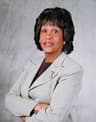
Maxine Waters (D-CA)
Wildfire Insurance Coverage Study Act of 2025
A Democratic bill with 1 Democratic cosponsor · See the cosponsor
Last activity — Referred to the House Committee on Financial Services.
In committee
Introduced and handed to a committee in the chamber it started in.
The committee holds it, and most bills are never heard from again. A hearing or a committee vote would be news; silence is the usual outcome, and it kills the bill without anyone voting against it.
Its path through Congress
- Introduced
- In Committee
What this bill would do
This bill, known as the "Wildfire Insurance Coverage Study Act of 2025," directs the Government Accountability Office to conduct a comprehensive study on wildfire insurance coverage. The study aims to analyze wildfire risks, including trends in disaster declarations and the effectiveness of current mitigation and forecasting programs. It also examines how private insurers have adjusted rates or declined to renew policies over the last ten years. Additionally, the study looks at how state regulatory responses have impacted coverage availability and affordability. Finally, it investigates the specific challenges insurers face when underwriting wildfire risk and the potential effects of different policy responses. A report containing these findings must be submitted to Congress within 12 months of the Act's enactment.
Yes· 3 of 13
- Scored +1
Would households on low incomes be better off under this?
The study investigates potential means-tested government programs to offset premium costs for lower-income homeowners.
- Scored +1
Would middle-income households be better off under this?
The study examines insurance affordability which impacts middle-income property owners.
- Scored +1
Would business owners be better off under this?
The study assesses the impacts of insurance availability on small businesses.
The opposite
No question was scored the opposite.
Who it would affect, and how
Potential Positive Impacts for People
-
Risk Reduction through Mitigation: The study seeks to identify mitigation practices that could assist in reducing costs and risks for insurance policies (Section 2(a)(1)(B)).
-
Improved Risk Assessment: The study explores the need for a national map for measuring and quantifying wildfire risk to better understand the threat (Section 2(a)(1)(D)).
-
Evaluation of Affordability Programs: The study investigates the effects of potential government responses, such as means-tested affordability programs meant to help lower-income homeowners offset high premiums (Section 2(a)(4)(F)(i)).
-
Assessment of State Protections: The study examines how state actions, such as those involving residual market insurance entities or reinsurance programs, impact the availability and affordability of coverage (Section 2(a)(3)(D)).
Potential Negative Impacts for People
-
Threat to Insurer Solvency: The study acknowledges that large wildfire losses could potentially jeopardize the solvency of insurance companies (Section 2(a)(4)(D)).
-
Financial Burdens on Consumers: The study identifies that risk-adjusted market premiums may limit the affordability or availability of coverage for consumers (Section 2(a)(4)(E)).
-
Impact on Vulnerable Communities: The study looks into how the availability and cost of wildfire coverage affects local communities that are disproportionately vulnerable, specifically mentioning low- or moderate-income property owners and small businesses (Section 2(a)(4)(H)(i)).
-
Risks from Housing Trends: There is a noted effect where the need for affordable housing may lead to increased building in remote, heavily-wooded areas that carry higher wildfire risks (Section 2(a)(4)(C)).
Groups and Interests Ranking
Every group the model scored this bill for, from -10 to +10. Tap or hover a score for the reason it gave.
- Demographic And Interest Groups
- Would business owners be better off under this? — The study assesses the impacts of insurance availability on small businesses. Would households on low incomes be better off under this? — The study investigates potential means-tested government programs to offset premium costs for lower-income homeowners. Would middle-income households be better off under this? — The study examines insurance affordability which impacts middle-income property owners. Would people in rural areas be better off under this? — The study analyzes insurance coverage for remote, heavily-wooded areas prone to wildfire risk. Would people in cities be better off under this? — The study examines housing supply trends that may involve development in remote areas.
- Economy And Finance
- Is this likely to grow the economy? — The study investigates how insurance availability affects the availability and affordability of housing supply. Does this make it easier to run a small business? — The study analyzes the effects of wildfire insurance availability and affordability on small businesses.
- Environment Energy And Infrastructure
- Does this better protect air, water and wildlife? — The study investigates mitigation practices and forest management policies to reduce wildfire risks. Does this better protect public land such as parks and forests? — The study looks at the role of forest and land management authorities in wildfire mitigation and risk reduction.
- Governance And Ideology
- Does this make what the government does easier for the public to see? — The bill requires a GAO report to be submitted to Congress regarding wildfire insurance coverage trends. Does this leave more decisions to the states? — The study examines the role of State insurance regulatory agencies and their various regulatory responses.
- Social Issues And Justice
- Does this make housing cost less? — The study examines how wildfire insurance coverage impacts the availability and affordability of housing supply. Is this likely to lift people out of poverty? — The study explores the potential for means-tested government affordability programs to help lower-income homeowners.
- 1/16/2025
- Referred to the House Committee on Financial Services.
- 1 Cosponsor added.
- Introduced in House
One bill Congress.gov lists as related to this one — companions in the other chamber, earlier versions, and bills this one absorbed or was folded into.
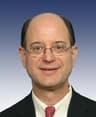 Brad Sherman
Democrat · California