Bill · S. 2321· Senate(119-S-2321)
Price Gouging Prevention Act of 2025
- Introduced
- 7/17/2025
- Last activity
- 7/17/2025 — Read twice and referred to the Committee on Commerce, Science, and Transportation.
- Sponsored by
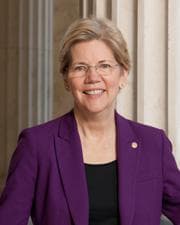
- Elizabeth Warren
- Cosponsors
- - 8 - 0
- Introduced
- In Committee
What this bill would do
The Price Gouging Prevention Act of 2025 aims to make the sale of goods or services at grossly excessive prices unlawful. It establishes specific rules for when a person is presumed to be in violation of the law, particularly during exceptional market shocks. The bill expands the enforcement powers of the Federal Trade Commission to seek injunctions, civil penalties, and consumer restitution. It also provides authority to State Attorneys General to bring civil actions to enforce these provisions. Additionally, the act requires certain companies to include specific pricing and margin disclosures in their SEC filings following market shocks. Finally, the bill appropriates $1,000,000,000 to the Commission for its work.
Yes· 3 of 6
Does this give people more protection from unfair business practices?+6
The bill provides strong protections against price gouging through FTC enforcement and consumer restitution.
Does this give the federal government more power?+5
The bill significantly expands the enforcement authority of the FTC and requires new SEC disclosures.
Would households on low incomes be better off under this?+5
Protection against price gouging during market shocks directly benefits low-income consumers.
The opposite
Would billionaires be better off under this?-5
Large-revenue entities face stricter scrutiny and much higher potential civil penalties.
Would business owners be better off under this?-4
The bill imposes new regulatory burdens and potential civil penalties on businesses.
Does this protect the right to fair treatment by the courts?-2
The bill establishes presumptions of violation that require clear and convincing evidence to rebut.
Who it would affect, and how
Potential Positive Impacts for People
-
Protection Against Excessive Pricing: The bill makes it unlawful to sell goods or services at a grossly excessive price, regardless of where the person sits in the supply chain (Section 3(a)).
-
Consumer Redress: The Federal Trade Commission is granted the power to obtain damages, restitution, or other compensation on behalf of aggrieved consumers (Section 3(f)(2)(D)(v)).
-
State-Level Enforcement: State Attorneys General can bring civil actions to obtain injunctions, civil penalties, or restitution for the residents of their state (Section 3(g)(1)).
-
Increased Transparency: Covered issuers must provide detailed disclosures in SEC filings regarding changes in sales volume, average prices, gross margins, and pricing strategies following an exceptional market shock (Section 4(b)).
Potential Negative Impacts for People
-
Burden on Smaller Entities: While there is an affirmative defense for those with less than $100,000,000 in gross revenue, entities must still demonstrate through a preponderance of the evidence that price increases were due to uncontrollable additional costs (Section 3(b)(1)).
-
Presumption of Violation: During an exceptional market shock, a person may be presumed to be in violation if they have "unfair leverage" or use the shock as a pretext to increase prices (Section 3(c)).
-
Strict Evidentiary Standards for Rebuttal: To rebut a presumption of violation during a market shock, a person must demonstrate their case by "clear and convincing evidence" regarding additional costs (Section 3(d)).
-
Regulatory Compliance Costs: Covered issuers are required to include specific, detailed tabular data and narrative disclosures in their Form 10-K or Form 10-Q filings (Section 4(b)).
Groups and Interests Ranking
Every group the model scored this bill for, from -10 to +10. Hover a score for the reason it gave.
- Governance And Ideology
- Increases Federal Power+5Improves Government Transparency+4Increase States Rights+3Improves Due Process-2
- Economy And Finance
- Improves Consumer Protection+6
- Demographic And Interest Groups
- Good For Low Income Households+5Good For Middle Class Households+3Good For Billionaires-5Good For Business Owners-4
- 7/17/2025
- Read twice and referred to the Committee on Commerce, Science, and Transportation.
- 9 Cosponsors added.
- Introduced in Senate
One bill Congress.gov lists as related to this one — companions in the other chamber, earlier versions, and bills this one absorbed or was folded into.
 Tammy Baldwin
Democrat · Wisconsin
 Richard Blumenthal
Democrat · Connecticut
 John Fetterman
Democrat · Pennsylvania
 Andy Kim
Democrat · New Jersey
 Edward Markey
Democrat · Massachusetts
 Jeff Merkley
Democrat · Oregon
 Bernie Sanders
Independent · Vermont
 Elissa Slotkin
Democrat · Michigan
 Sheldon Whitehouse
Democrat · Rhode Island