
A Democratic bill with 6 Democratic cosponsors · See all 6 cosponsors
Last activity — Read twice and referred to the Committee on Finance.
In committee
Introduced and handed to a committee in the chamber it started in.
The committee holds it, and most bills are never heard from again. A hearing or a committee vote would be news; silence is the usual outcome, and it kills the bill without anyone voting against it.
Its path through Congress
- Introduced
- In Committee
What this bill would do
The ASSIST Act aims to amend the Social Security Act regarding Medicaid. It increases the Federal medical assistance percentage to 90 percent for certain behavioral health services provided in schools or school-based health centers. This increase applies to services provided by mental health and substance use disorder care providers. Additionally, the bill authorizes a grant program to increase the number of these providers in schools and school-based health centers. The Secretary of Health and Human Services will award these grants to eligible entities.
Yes· 3 of 12
- Scored +9
Would children be better off under this?
The bill specifically targets increasing mental health and substance use disorder services for the student population.
- Scored +9
Would students be better off under this?
The bill is explicitly designed to improve the availability of mental health services for students in schools.
- Scored +9
Does this make mental health care easier to get?
The act increases funding and provider availability specifically for mental health and substance use disorder services in schools.
The opposite
No question was scored the opposite.
Who it would affect, and how
Potential Positive Impacts for People
-
Increased Federal Funding for Behavioral Health: The bill sets the Federal medical assistance percentage at 90 percent for state expenditures on specific mental health and substance use disorder services provided at schools or school-based health centers (Section 2). This provides a higher match for these services.
-
Increased Provider Availability: A grant program will be established to increase the number of mental health and substance use disorder care providers working in schools and school-based health centers (Section 3(b)).
-
Culturally Competent Care: When applying for grants, entities must describe how they will ensure providers and services are culturally competent and linguistically appropriate for the student population (Section 3(c)(2)).
-
Support for Territories: Payments made to a territory for these specific medical assistance expenditures will not be counted toward certain payment limits (Section 2(3)).
Potential Negative Impacts for People
- Restrictions on Fund Usage: Funds made available through the new grant program cannot be used for a threat assessment team (Section 3(d)).
Groups and Interests Ranking
Every group the model scored this bill for, from -10 to +10. Tap or hover a score for the reason it gave.
- Demographic And Interest Groups
- Would children be better off under this? — The bill specifically targets increasing mental health and substance use disorder services for the student population. Would students be better off under this? — The bill is explicitly designed to improve the availability of mental health services for students in schools. Would households on low incomes be better off under this? — The bill increases Medicaid resources, which primarily benefits low-income families with students. Would people with disabilities be better off under this? — Increased mental health support can benefit individuals with neurodevelopmental or behavioral disabilities. Would people in their twenties and thirties be better off under this? — Increased access to school-based health services benefits young adults in educational settings.
- Healthcare
- Does this make mental health care easier to get? — The act increases funding and provider availability specifically for mental health and substance use disorder services in schools. Does this put more money into Medicaid, the health coverage for people on low incomes? — The bill significantly increases the federal medical assistance percentage for specific behavioral health services under Medicaid. Does this do more about addiction and overdose deaths? — The bill funds substance use disorder care providers, which is a key component of addressing the opioid crisis. Does this make health care easier to get in general? — By targeting school-based settings, the bill improves access to care for students eligible for Medicaid.
- Education And Technology
- Does this put more money into public schools? — The bill provides new grant funding for providers within schools and increases Medicaid match rates for school-based services.
- Economy And Finance
- Is this likely to create jobs? — The bill provides grants specifically intended to increase the number of mental health and substance use disorder care providers in schools.
- Governance And Ideology
- Does this give the federal government more power? — The bill increases the federal role in funding and oversight of school-based behavioral health services.
- 6/12/2025
- Read twice and referred to the Committee on Finance.
- 6 Cosponsors added.
- Introduced in Senate
 Angela Alsobrooks
Democrat · Maryland
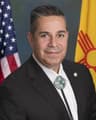 Ben Luján
Democrat · New Mexico
 Alex Padilla
Democrat · California
 Tina Smith
Democrat · Minnesota
 Ron Wyden
Democrat · Oregon
 Peter Welch
Democrat · Vermont