
Marsha Blackburn (R-TN)
Protecting Law Enforcement from Doxxing Act
A Republican bill with 4 Republican cosponsors · See all 4 cosponsors
Last activity — Read twice and referred to the Committee on the Judiciary.
In committee
Introduced and handed to a committee in the chamber it started in.
The committee holds it, and most bills are never heard from again. A hearing or a committee vote would be news; silence is the usual outcome, and it kills the bill without anyone voting against it.
Its path through Congress
- Introduced
- In Committee
What this bill would do
This bill, known as the "Protecting Law Enforcement from Doxxing Act," seeks to amend title 18 of the United States Code. It aims to create a criminal prohibition against making the names of Federal law enforcement officers publicly available. This prohibition specifically applies when the name is released with the intent to obstruct a criminal investigation or an immigration enforcement operation. The bill defines a Federal law enforcement officer as an authorized officer, agent, or employee involved in preventing, detecting, investigating, or prosecuting violations of Federal criminal or immigration law. Violators could face fines, imprisonment for up to five years, or both.
Yes· 3 of 4
- Scored +3
Does this give the federal government more power?
The bill expands federal criminal law to protect federal officers' identities.
- Scored +3
Does this tighten control of the border?
The bill provides stronger legal protections for officers conducting immigration enforcement operations.
- Scored +2
Does this protect people from being watched or searched?
The bill enhances the privacy of federal law enforcement officers.
The opposite· 3 of 6
- Scored -5
Does this make what the government does easier for the public to see?
The bill restricts the public release of officer names, which reduces government transparency.
- Scored -4
Does this protect the individual right to speak freely?
The bill creates legal risks for those sharing information that could be deemed obstructive.
- Scored -4
Does this protect what people are allowed to say in public life?
The bill restricts the public release of information which may have a chilling effect on investigative journalism or speech regarding law enforcement.
Who it would affect, and how
Potential Positive Impacts for People
- Protection of Federal Officers: The bill establishes a legal barrier against the public release of names intended to obstruct investigations (Section 2(a)(2)). This could prevent individuals from being targeted when they are performing their duties related to criminal or immigration law.
Potential Negative Impacts for People
- Criminal Penalties for Intentional Obstruction: Individuals who release an officer's name with the specific intent to obstruct a criminal or immigration operation could face fines and up to five years in prison (Section 2(a)(2)).
Groups and Interests Ranking
Every group the model scored this bill for, from -10 to +10. Tap or hover a score for the reason it gave.
- Demographic And Interest Groups
- Would immigrants be better off under this? — The bill limits the transparency of operations that directly affect immigrant communities. Would Hispanic Americans be better off under this? — The bill specifically mentions immigration enforcement operations, which may impact this demographic.
- Governance And Ideology
- Does this give the federal government more power? — The bill expands federal criminal law to protect federal officers' identities. Does this protect people from being watched or searched? — The bill enhances the privacy of federal law enforcement officers. Does this make what the government does easier for the public to see? — The bill restricts the public release of officer names, which reduces government transparency. Does this protect the individual right to speak freely? — The bill creates legal risks for those sharing information that could be deemed obstructive.
- Social Issues And Justice
- Does this tighten control of the border? — The bill provides stronger legal protections for officers conducting immigration enforcement operations. Does this protect what people are allowed to say in public life? — The bill restricts the public release of information which may have a chilling effect on investigative journalism or speech regarding law enforcement. Does this change how police departments operate? — The bill increases criminal penalties targeting information release rather than addressing systemic policing issues.
- National Security And Foreign Policy
- Does this give the government more power to monitor people inside the country? — The bill provides more legal safeguards for federal officers during investigations.
- 7/23/2026
- 1 Cosponsor added.
- 5/11/2026
- 1 Cosponsor added.
- 11/20/2025
- 1 Cosponsor added.
- 6/10/2025
- 1 Cosponsor added.
- 6/4/2025
- Read twice and referred to the Committee on the Judiciary.
- Introduced in Senate
One bill Congress.gov lists as related to this one — companions in the other chamber, earlier versions, and bills this one absorbed or was folded into.
 Lindsey Graham
Republican · South Carolina
- Darline Graham
Republican · South Carolina
 Ashley Moody
Republican · Florida
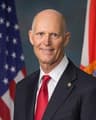 Rick Scott
Republican · Florida