Bill · S. 1731· Senate(119-S-1731)
COUNTER Act of 2025
- Introduced
- 5/13/2025
- Last activity
- 6/18/2025 — Placed on Senate Legislative Calendar under General Orders. Calendar No. 96.
- Sponsored by
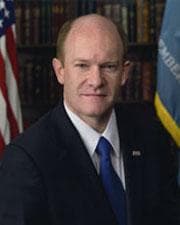
- Christopher Coons
- Cosponsors
- - 2 - 2
- Introduced
- On Calendar
What this bill would do
This bill requires the Secretary of State and the Secretary of Defense to develop a strategy to address the global basing intentions of the People's Republic of China (PRC). It mandates that the Director of National Intelligence submit an intelligence assessment regarding the risks posed by PRC global basing to the United States and its allies. The Secretary of State must also submit a formal strategy that identifies specific locations of concern and describes executive branch efforts to mitigate these risks. Following the strategy submission, an interagency task force must be established to implement these efforts. Finally, the administration is required to conduct quadrennial reviews of the strategy and report the results to Congress.
Yes
Does this strengthen ties with allied countries?+5
The bill directs the government to work with key allies and partners to respond to the PRC's pursuit of global basing.
Does this make what the government does easier for the public to see?+3
The bill mandates regular quadrennial reviews and reports to Congressional committees regarding the implementation of the strategy.
Does this increase the pay, pensions or support veterans receive?+1
The bill enhances national security through proactive strategy against foreign military expansion.
The opposite
Does this reduce what the federal government spends?-2
The bill requires the establishment of enduring organizational structures and resource requirements to address PRC basing.
Who it would affect, and how
Potential Positive Impacts for People
-
Protecting National Interests: The bill aims to ensure that the force posture, freedom of movement, and other interests of the United States and its allies are not jeopardized by the expansion of PRC bases. (Section 3, Paragraph 9)
-
Maintaining Strategic Decision Space: By requiring a proactive rather than reactive posture, the bill seeks to maximize strategic decision space for the United States. (Section 3, Paragraph 3)
-
Addressing Security Risks: The intelligence assessment is designed to analyze risks to the United States and its allies regarding their ability to project power and maintain freedom of movement. (Section 5, Subsection a)
Potential Negative Impacts for People
- Resource Requirements: The bill requires the identification of estimated programmatic and personal resource requirements on an agency-by-agency basis, which may involve significant government spending. (Section 5, Subsection b, Paragraph 2, Subparagraph B)
Groups and Interests Ranking
Every group the model scored this bill for, from -10 to +10. Hover a score for the reason it gave.
- National Security And Foreign Policy
- Improves International Alliances+5Improves Veterans Benefits+1
- Governance And Ideology
- Improves Government Transparency+3
- Economy And Finance
- Reduces Government Spending-2
- 6/18/2025
- Committee on Foreign Relations. Reported by Senator Risch with an amendment in the nature of a substitute. Without written report.
- Placed on Senate Legislative Calendar under General Orders. Calendar No. 96.
- 6/5/2025
- Committee on Foreign Relations. Ordered to be reported with an amendment in the nature of a substitute favorably.
- 5/13/2025
- Read twice and referred to the Committee on Foreign Relations.
- 4 Cosponsors added.
- Introduced in Senate
One bill Congress.gov lists as related to this one — companions in the other chamber, earlier versions, and bills this one absorbed or was folded into.
 John Cornyn
Republican · Texas
 Timothy Kaine
Democrat · Virginia
 Pete Ricketts
Republican · Nebraska
 Elissa Slotkin
Democrat · Michigan