
A Democratic bill with 1 Republican cosponsor · See all 3 cosponsors
Last activity — Read twice and referred to the Committee on Commerce, Science, and Transportation.
In committee
Introduced and handed to a committee in the chamber it started in.
The committee holds it, and most bills are never heard from again. A hearing or a committee vote would be news; silence is the usual outcome, and it kills the bill without anyone voting against it.
Its path through Congress
- Introduced
- In Committee
What this bill would do
The FORECAST Act of 2025 aims to improve weather research and forecasting handled by the National Oceanic and Atmospheric Administration. It focuses on improving subseasonal-to-seasonal forecasts for temperature and precipitation. The bill authorizes funding for research, the use of artificial intelligence, and the creation of an internet clearinghouse for forecast data. Additionally, it establishes the Weather and Earth System Modeling and Data Assimilation Workforce Innovation Program to recruit and educate next-generation researchers and engineers.
Yes· 3 of 19
- Scored +8
Would farmers be better off under this?
Subseasonal-to-seasonal precipitation and temperature forecasts are critical for agricultural planning.
- Scored +8
Does this put more money into scientific research?
Authorizes significant funding for fundamental research in weather and Earth system predictability.
- Scored +7
Does this improve help for people hit by a disaster?
Provides critical data on the severity of tornadoes, hurricanes, floods, and heat waves to improve disaster preparedness.
The opposite
- Scored -1
Does this reduce what the federal government spends?
Authorizes additional appropriations for weather research and workforce programs.
Who it would affect, and how
Potential Positive Impacts for People
-
Better Disaster Information: The bill requires providing information on how temperature and precipitation forecasts relate to the severity of natural disasters like tornadoes, hurricanes, floods, and heat waves (Section 2(a)(1)(F)).
-
Public Access to Data: The creation of an internet clearinghouse will provide national and regional forecasts and information to the public (Section 2(a)(1)(G)).
-
Educational Opportunities: The bill supports the education of new researchers and engineers through financial assistance for scholarships, fellowships, and research at institutions of higher education (Section 2(b)(a) and (b)).
-
Modernized Forecasting: The use of emerging technologies like artificial intelligence, machine learning, and unmanned systems can improve the reliability and timeliness of weather forecasts (Section 2(a)(1)(H)).
Potential Negative Impacts for People
- No negative impacts for individuals or groups are explicitly mentioned in the provided text.
Groups and Interests Ranking
Every group the model scored this bill for, from -10 to +10. Tap or hover a score for the reason it gave.
- Demographic And Interest Groups
- Would farmers be better off under this? — Subseasonal-to-seasonal precipitation and temperature forecasts are critical for agricultural planning. Would students be better off under this? — Provides financial assistance through scholarships and fellowships at institutions of higher education. Would business owners be better off under this? — Accurate subseasonal forecasts allow businesses to better manage supply chains and risk. Would people in rural areas be better off under this? — Significant benefits for rural areas prone to droughts, floods, and agricultural weather impacts. Would people in their twenties and thirties be better off under this? — Creates scholarships, fellowships, and career pathways for next-generation researchers and engineers. Would households on low incomes be better off under this? — Low-income populations are often disproportionately affected by natural disasters; better forecasting improves safety. Would high-income households be better off under this? — Improved disaster information reduces property risks. Would middle-income households be better off under this? — Improved disaster information reduces property and life risks. Would people in cities be better off under this? — Improved forecasting for urban heat waves and flooding.
- Environment Energy And Infrastructure
- Does this improve help for people hit by a disaster? — Provides critical data on the severity of tornadoes, hurricanes, floods, and heat waves to improve disaster preparedness. Does this better protect air, water and wildlife? — Improves understanding and forecasting of Earth system variables, including permafrost thaw and sea ice conditions. Does this invest in rural communities? — Enhanced precipitation and temperature forecasting directly benefits agricultural planning in rural areas. Does this better protect public land such as parks and forests? — Provides data on permafrost thaw and sea ice relevant to land and ice management.
- Education And Technology
- Does this put more money into scientific research? — Authorizes significant funding for fundamental research in weather and Earth system predictability. Does this get reliable internet to more people? — Develops an internet clearinghouse for public access to national and regional forecasts.
- Governance And Ideology
- Does this make what the government does easier for the public to see? — Creates a public internet clearinghouse for forecast data. Does this give the federal government more power? — Increases the operational scope and funding of a federal agency (NOAA).
- Economy And Finance
- Is this likely to create jobs? — Establishes a workforce innovation program to recruit and educate next-generation researchers and engineers. Is this likely to grow the economy? — Better weather forecasting reduces economic losses from natural disasters. Does this reduce what the federal government spends? — Authorizes additional appropriations for weather research and workforce programs.
- 4/10/2025
- Read twice and referred to the Committee on Commerce, Science, and Transportation.
- 3 Cosponsors added.
- Introduced in Senate
 Alex Padilla
Democrat · California
 Jacky Rosen
Democrat · Nevada
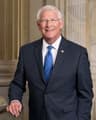 Roger Wicker
Republican · Mississippi