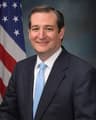
Ted Cruz (R-TX)
Education Savings Accounts for Military Families Act of 2025
A Republican bill with 2 Republican cosponsors · See all 2 cosponsors
Last activity — Read twice and referred to the Committee on Finance.
In committee
Introduced and handed to a committee in the chamber it started in.
The committee holds it, and most bills are never heard from again. A hearing or a committee vote would be news; silence is the usual outcome, and it kills the bill without anyone voting against it.
Its path through Congress
- Introduced
- In Committee
What this bill would do
This bill, known as the "Education Savings Accounts for Military Families Act of 2025," aims to amend the Elementary and Secondary Education Act of 1965. It would allow parents of eligible military dependent children to establish Military Education Savings Accounts. These accounts would receive deposits from the Secretary of Education to cover various educational expenses. The program includes specific eligibility requirements for children and a priority system for fund distribution if money runs low. Parents must agree to certain instructional standards and cannot enroll their children in public schools on a full-time basis while participating.
Yes· 3 of 9
- Scored +8
Does this make it easier to use public money at a school other than the local one?
The bill greatly expands school choice by allowing military families to use funds for private, religious, or online education.
- Scored +7
Would children be better off under this?
The bill provides dedicated educational funding for dependent children of military families.
- Scored +7
Would students be better off under this?
The bill provides financial resources for a wide variety of educational paths, including private school and higher education.
The opposite
- Scored -2
Does this put more money into public schools?
The bill directs funds toward private and specialized education rather than increasing direct funding for public school systems.
Who it would affect, and how
Potential Positive Impacts for People
-
Educational Flexibility for Military Families: Parents can use funds for a wide range of educational needs, including private schools, online learning, tutoring, summer camps, and even higher education (Section 2(e)).
-
Financial Support for Specialized Needs: Funds can be used for educational services and therapies, such as occupational, behavioral, or speech-language therapies (Section 2(e)(13)).
-
Support for Career Advancement: The account allows for payments related to apprenticeships, vocational training, and industry certification exams (Section 2(e)(16-17)).
-
Tax Advantages: Military Education Savings Accounts are exempt from taxation, and contributions or distributions are not includible in the gross income of the parent or child (Section 2(l)).
-
Protection of Educational Choice: The bill prohibits federal or state control over the curriculum or practices of private, religious, or home education providers (Section 2(p)(2)).
Potential Negative Impacts for People
-
Risk of Insufficient Funding: If funds are insufficient, the Secretary must prioritize renewing existing accounts, which may leave new applicants dependent on a lottery system (Section 2(c)(1)).
-
Strict Enrollment Limitations: To participate in the program, parents must agree not to enroll their child in a public elementary or secondary school on a full-time basis (Section 2(b)(3)(C)(ii)).
-
Financial Burden for Partial Public School Attendance: If a child attends a public school on a less than full-time basis, the parent must use account funds to pay for the cost of attendance (Section 2(k)(1)).
-
Account Termination Risks: Accounts may terminate if a child reaches certain ages, such as 22 for most or 26 for children with disabilities, or if there is a failure to use funds in accordance with the requirements (Section 2(i)).
-
Mandatory Reporting Requirements: Parents must submit expense reports to the Secretary before receiving subsequent transfers of funds (Section 2(g)(3)).
Groups and Interests Ranking
Every group the model scored this bill for, from -10 to +10. Tap or hover a score for the reason it gave.
- Demographic And Interest Groups
- Would children be better off under this? — The bill provides dedicated educational funding for dependent children of military families. Would students be better off under this? — The bill provides financial resources for a wide variety of educational paths, including private school and higher education. Would people with disabilities be better off under this? — The bill allows for the use of funds for educational services and therapies, and extends the account duration for children with disabilities. Would people in their twenties and thirties be better off under this? — The funds can be used for higher education and vocational training for young adults.
- Education And Technology
- Does this make it easier to use public money at a school other than the local one? — The bill greatly expands school choice by allowing military families to use funds for private, religious, or online education. Does this make college cost less? — The bill allows funds to be used for postsecondary education and contributions to college savings accounts. Does this put more money into public schools? — The bill directs funds toward private and specialized education rather than increasing direct funding for public school systems.
- Social Issues And Justice
- Does this expand the rights of people with disabilities? — The bill extends the age for account termination to 26 for children with disabilities, providing longer-term educational support. Does this protect the freedom to practise a religion? — The bill explicitly protects the rights of religious educational providers to participate without fear of government control or discrimination.
- Governance And Ideology
- Does this give the federal government more power? — The bill increases federal involvement in educational choice through the administration of the savings accounts by the Secretary of Education.
- 7/15/2025
- 1 Cosponsor added.
- 4/1/2025
- Read twice and referred to the Committee on Finance.
- 1 Cosponsor added.
- Introduced in Senate