
A Democratic bill with 1 Republican cosponsor · See the cosponsor
Last activity — Read twice and referred to the Committee on Energy and Natural Resources.
In committee
Introduced and handed to a committee in the chamber it started in.
The committee holds it, and most bills are never heard from again. A hearing or a committee vote would be news; silence is the usual outcome, and it kills the bill without anyone voting against it.
Its path through Congress
- Introduced
- In Committee
What this bill would do
The Tribal Energy Fairness Act of 2025 aims to amend several existing energy laws to better support Indian Tribes. It modifies the Department of Energy Tribal loan guarantee program to allow funds for financial and technical assessments for various projects. The bill also updates the Infrastructure Investment and Jobs Act to include specific application and oversight requirements for Indian Tribes regarding electric grid resilience. Additionally, it introduces a cost-sharing exemption for certain grants. These changes are intended to integrate tribal participation more deeply into energy and grid infrastructure programs.
Yes· 3 of 7
- Scored +8
Would Native Americans be better off under this?
The bill provides significant financial support and grant exemptions specifically for Indian Tribes.
- Scored +7
Does this put more money into wind, solar and other renewable power?
The bill explicitly expands the scope for renewable energy projects for Indian Tribes.
- Scored +6
Does this narrow racial gaps in how people are treated?
The bill promotes equity by providing financial and technical support for energy projects led by Indian Tribes.
The opposite
No question was scored the opposite.
Who it would affect, and how
Potential Positive Impacts for People
-
Support for Energy Projects: The Secretary of Energy may use funds to carry out financial and technical assessments for loan or loan guarantee applications, including renewable energy and transmission projects on or near Indian land or outside Indian land (Section 2(a)(1)).
-
Increased Flexibility for Tribes: Indian Tribes can apply for grants to execute projects themselves or award those grants to eligible entities (Section 2(b)(1)(A)(ii)).
-
Financial Relief via Grant Exemptions: An Indian Tribe that receives or awards a grant under specific subsections, or an entity owned by a tribe, shall not be required to match any amount of the applicable grant (Section 2(b)(3)(A)).
-
Expanded Project Eligibility: The bill expands the scope of projects to include those carried out by an Indian Tribe on or near Indian land or outside Indian land (Section 2(a)(2)(B)(iii)).
Potential Negative Impacts for People
- No specific negative impacts or burdens are explicitly stated in the provided text.
Groups and Interests Ranking
Every group the model scored this bill for, from -10 to +10. Tap or hover a score for the reason it gave.
- Environment Energy And Infrastructure
- Does this put more money into wind, solar and other renewable power? — The bill explicitly expands the scope for renewable energy projects for Indian Tribes. Does this invest in rural communities? — Enhancing the electric grid resilience provides significant benefits to rural tribal communities. Does this cut the pollution that drives climate change? — The bill supports renewable energy projects which can contribute to lower emissions.
- Demographic And Interest Groups
- Would Native Americans be better off under this? — The bill provides significant financial support and grant exemptions specifically for Indian Tribes. Would people in rural areas be better off under this? — Strengthening the electric grid and energy access benefits rural tribal communities.
- Social Issues And Justice
- Does this narrow racial gaps in how people are treated? — The bill promotes equity by providing financial and technical support for energy projects led by Indian Tribes.
- Economy And Finance
- Is this likely to grow the economy? — The bill supports economic growth by facilitating energy projects and infrastructure for Indian Tribes.
- 3/27/2025
- Read twice and referred to the Committee on Energy and Natural Resources.
- 1 Cosponsor added.
- Introduced in Senate
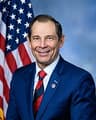 John Curtis
Republican · Utah