
A Democratic bill with 1 Republican cosponsor · See the cosponsor
Last activity — Read twice and referred to the Committee on Finance.
In committee
Introduced and handed to a committee in the chamber it started in.
The committee holds it, and most bills are never heard from again. A hearing or a committee vote would be news; silence is the usual outcome, and it kills the bill without anyone voting against it.
Its path through Congress
- Introduced
- In Committee
What this bill would do
This bill, known as the "Physicians for Underserved Areas Act," seeks to amend the Social Security Act. It focuses on improving how Medicare redistributes residency slots after a hospital closes. The legislation changes specific language regarding the timing and likelihood of utilizing available positions. These changes target the process used for hospitals that close on or after the date this Act is enacted.
Yes· 3 of 6
- Scored +2
Is this likely to create jobs?
By optimizing the redistribution of residency slots, the bill may facilitate the establishment of medical training positions that support future healthcare employment.
- Scored +1
Would people in their twenties and thirties be better off under this?
The bill may benefit young adults entering medical residency by ensuring more efficient slot redistribution.
- Scored +1
Would households on low incomes be better off under this?
Improving the distribution of physician training may lead to better healthcare access in underserved, lower-income areas.
The opposite
- Scored -3
Does this make health care easier to get in general?
While intended to improve efficiency, changes to residency slot redistribution may indirectly impact the long-term availability of medical providers in underserved areas.
Who it would affect, and how
Potential Positive Impacts for People
- Improved efficiency in filling medical positions: By changing the criteria to include the likelihood of starting to utilize positions within 2 years and filling them within 5 years, the bill aims to improve the redistribution of residency slots (Section 2(a)(1)(B)).
Potential Negative Impacts for People
- No negative impacts are explicitly stated in the text: The provided text does not list any specific negative consequences or burdens resulting from the proposed changes.
Groups and Interests Ranking
Every group the model scored this bill for, from -10 to +10. Tap or hover a score for the reason it gave.
- Demographic And Interest Groups
- Would households on low incomes be better off under this? — Improving the distribution of physician training may lead to better healthcare access in underserved, lower-income areas. Would people in rural areas be better off under this? — Improved redistribution of residency slots can help ensure medical training capacity is utilized to serve underserved areas. Would students be better off under this? — Medical students may benefit from more efficient systems for filling residency positions. Would people in their twenties and thirties be better off under this? — The bill may benefit young adults entering medical residency by ensuring more efficient slot redistribution.
- Economy And Finance
- Is this likely to create jobs? — By optimizing the redistribution of residency slots, the bill may facilitate the establishment of medical training positions that support future healthcare employment.
- Healthcare
- Does this put more money into Medicare, the health coverage for people over 65? — The bill improves the efficiency of Medicare-funded residency slot redistribution. Does this make health care easier to get in general? — While intended to improve efficiency, changes to residency slot redistribution may indirectly impact the long-term availability of medical providers in underserved areas.
- 3/13/2025
- Read twice and referred to the Committee on Finance.
- 1 Cosponsor added.
- Introduced in Senate
One bill Congress.gov lists as related to this one — companions in the other chamber, earlier versions, and bills this one absorbed or was folded into.
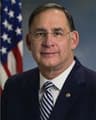 John Boozman
Republican · Arkansas