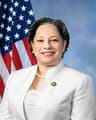
Jennifer McClellan (D-VA)
Recognizing the importance of a continued commitment to ending pediatric HIV/AIDS worldwide.
A Democratic resolution with 30 Democratic cosponsors · See all 30 cosponsors
Last activity — Referred to the Committee on Foreign Affairs, and in addition to the Committee on Energy and Commerce, for a period to be subsequently determined by the Speaker, in each case for consideration of such provisions as fall within the jurisdiction of the committee concerned.
In committee
Introduced and handed to a committee in the chamber it started in.
The committee holds it, and most bills are never heard from again. A hearing or a committee vote would be news; silence is the usual outcome, and it kills the bill without anyone voting against it.
Its path through Congress
- Introduced
- In Committee
A House resolution is the House speaking for itself: stating a position, honouring someone, or setting its own rules. Adopting it is the whole process. Once the House agrees to it, it is officially the House's word; it is not a law, so the Senate and the President have no part in it.
What this bill would do
This bill is a resolution in the House of Representatives recognizing the importance of continuing the commitment to end pediatric HIV and AIDS worldwide. It highlights statistical data regarding how HIV and AIDS disproportionately affect women, girls, and children globally, particularly in Sub-Saharan Africa. The text notes past and ongoing investments and programs by the United States and international partners, such as the President's Emergency Plan for AIDS Relief (PEPFAR) and the Global Fund. It outlines support for various evidence-based approaches, testing services, long-acting prevention methods, and medical treatments for women and children. Finally, the resolution calls on the United States leadership to maintain its priority on this issue and encourages PEPFAR to create a standalone pediatric HIV strategy.
Yes· 3 of 11
- Scored +5
Would children be better off under this?
The resolution focuses extensively on eliminating pediatric HIV and expanding life-saving medical care and testing for infants and children.
- Scored +5
Would women be better off under this?
The text emphasizes protecting pregnant women, mothers, and adolescent girls from HIV and improving prenatal care access.
- Scored +5
Does this make health care easier to get in general?
The resolution supports expanding global access to HIV testing, prevention methods, and life-saving medical treatments for women and children.
The opposite
No question was scored the opposite.
Who it would affect, and how
Potential Positive Impacts for People
-
Support for Mothers and Children: Resolution paragraph (4) supports providing women and children with HIV counseling, testing services, access to new long-acting prevention methods, and scaling up access to services and medicines that prevent mother-to-child transmission of HIV. This is considered positive because it helps pregnant women living with HIV survive and thrive while protecting their infants.
-
Expanded Treatment for Young People: Resolution paragraph (5) supports scaling up treatment for HIV for children and adolescents, including greater access to more efficacious antiretroviral drug regimens, age-appropriate services, and support for their caregivers. This is considered positive because it helps young people gain better access to life-saving medical care and support.
-
Addressing Systemic Barriers: Resolution paragraph (6)(D) supports addressing rights, gender equality, and the social and structural barriers that hinder access to services. This is considered positive because it aims to clear the roadblocks that prevent people from getting the medical care they need.
Potential Negative Impacts for People
- There are no explicit negative impacts or burdens for individuals or groups of people mentioned in the text of the bill.
Groups and Interests Ranking
Every group the model scored this bill for, from -10 to +10. Tap or hover a score for the reason it gave.
- Demographic And Interest Groups
- Would children be better off under this? — The resolution focuses extensively on eliminating pediatric HIV and expanding life-saving medical care and testing for infants and children. Would women be better off under this? — The text emphasizes protecting pregnant women, mothers, and adolescent girls from HIV and improving prenatal care access. Would people in their twenties and thirties be better off under this? — It addresses the specific high rates of HIV infections and treatment gaps among adolescent girls and young women. Would households on low incomes be better off under this? — Global health initiatives targeted by this resolution disproportionately benefit vulnerable low-income populations in high-burden countries.
- National Security And Foreign Policy
- Does this strengthen ties with allied countries? — The resolution encourages ongoing collaboration with international partners and global alliances to end pediatric AIDS. Does this send more money or help to other countries? — The resolution reaffirms United States leadership and commitment to global health programs like PEPFAR and the Global Fund. Does this favour talking over confrontation abroad? — It maintains U.S. soft power and diplomatic priorities focused on humanitarian and global health initiatives.
- Healthcare
- Does this make health care easier to get in general? — The resolution supports expanding global access to HIV testing, prevention methods, and life-saving medical treatments for women and children. Does this put more money into medical research? — The resolution acknowledges the vital role of medical research and encourages ongoing federal commitments to addressing pediatric HIV.
- Social Issues And Justice
- Does this narrow the gap between how men and women are treated? — The text explicitly supports addressing gender equality and social barriers that hinder women and girls from accessing health services.
- Education And Technology
- Does this put more money into scientific research? — The resolution acknowledges scientific breakthroughs from institutions like the National Institutes of Health.
- 1/6/2026
- 7 Cosponsors added.
- 12/17/2025
- Submitted in House
- Referred to the Committee on Foreign Affairs, and in addition to the Committee on Energy and Commerce, for a period to be subsequently determined by the Speaker, in each case for consideration of such provisions as fall within the jurisdiction of the committee concerned.
- 23 Cosponsors added.
 Yassamin Ansari
Democrat · Arizona
 Wesley Bell
Democrat · Missouri
 Steve Cohen
Democrat · Tennessee
 André Carson
Democrat · Indiana
 Troy Carter
Democrat · Louisiana
 Danny Davis
Democrat · Illinois
 Sylvia Garcia
Democrat · Texas
 Robert Garcia
Democrat · California
 Jonathan Jackson
Democrat · Illinois
 Julie Johnson
Democrat · Texas
 Robin Kelly
Democrat · Illinois
 Raja Krishnamoorthi
Democrat · Illinois
 James McGovern
Democrat · Massachusetts
 LaMonica McIver
Democrat · New Jersey
 Sarah McBride
Democrat · Delaware
 Eleanor Norton
Democrat · District of Columbia
 Mark Pocan
Democrat · Wisconsin
 Deborah Ross
Democrat · North Carolina
 Delia Ramirez
Democrat · Illinois
 Emily Randall
Democrat · Washington
 Terri Sewell
Democrat · Alabama
 Eric Swalwell
Democrat · California
 Lateefah Simon
Democrat · California
 Bennie Thompson
Democrat · Mississippi
 Paul Tonko
Democrat · New York
 Rashida Tlaib
Democrat · Michigan
 Nydia Velázquez
Democrat · New York
 Frederica Wilson
Democrat · Florida
 Bonnie Watson Coleman
Democrat · New Jersey
 George Whitesides
Democrat · California