Bill · H.Res. 856· House(119-HRES-856)
Expressing the sense of the House of Representatives that the United States Department of Agriculture should use its contingency funds and interchange authority to finance the supplemental nutrition assistance program.
- Introduced
- 11/4/2025
- Last activity
- 12/2/2025 — Referred to the Subcommittee on Nutrition and Foreign Agriculture.
- Sponsored by
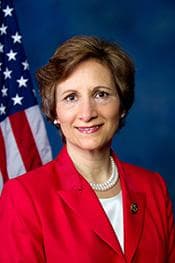
- Suzanne Bonamici
- Cosponsors
- - 51 - 0
- Introduced
- In Committee
A House resolution is the House speaking for itself: stating a position, honouring someone, or setting its own rules. Adopting it is the whole process. Once the House agrees to it, it is officially the House's word; it is not a law, so the Senate and the President have no part in it.
What this bill would do
This resolution expresses the sense of the House of Representatives that the United States Department of Agriculture should use its contingency funds and interchange authority to finance the supplemental nutrition assistance program. It highlights that Congress previously appropriated billions of dollars to the SNAP contingency fund to ensure program operations during emergencies like government shutdowns. The text notes that approximately 1 in 8 people in the United States rely on SNAP, including millions of children, seniors, people with disabilities, and veterans. It points out that the administration has both the legal obligation and the authority to use these funds and interchange powers to finance SNAP through November 2025. Finally, it urges the administration to immediately exercise this authority for the health and wellness of families experiencing hunger.
Yes· 3 of 8
Would households on low incomes be better off under this?+6
Directly benefits low-income households relying on SNAP to avoid hunger and malnutrition.
Would children be better off under this?+5
Supports continued nutrition assistance for approximately 16,000,000 children at risk of hunger.
Would people over 65 be better off under this?+5
Supports continued nutrition assistance for approximately 8,000,000 seniors.
The opposite
No question was scored the opposite.
Who it would affect, and how
Potential Positive Impacts for People
-
Continued Food Access for Vulnerable Groups: The resolution states that the administration should use its contingency funds and interchange authority to finance SNAP, which would benefit the approximately 42,000,000 people who relied on the program in 2024 to avoid hunger or malnutrition. This includes about 16,000,000 children, 8,000,000 seniors, 4,000,000 people with disabilities, and 1,200,000 veterans who are at risk of going hungry. This positive outcome is supported by the resolved clauses (1), (3), and (4).
-
Support for Program Operations During Shutdowns: The text notes that multi-year contingency funds are available for State Administrative Expenses to ensure that states can continue operations during a federal government shutdown. This helps maintain the administrative backbone required to deliver nutrition assistance. This is explicitly mentioned in the preamble citing USDA guidance and referenced in resolved clause (1).
Potential Negative Impacts for People
- No Negative Impacts Identified: Based strictly on the provided text, there are no specific sections or provisions that outline negative consequences or burdens for individuals or groups of people in the United States.
Groups and Interests Ranking
Every group the model scored this bill for, from -10 to +10. Hover a score for the reason it gave.
- Demographic And Interest Groups
- Good For Low Income Households+6Good For Children+5Good For Seniors+5Good For People With Disabilities+4Good For Retirees+4Good For Veterans+4
- Social Issues And Justice
- Improves Poverty Reduction+5
- National Security And Foreign Policy
- Improves Veterans Benefits+3
- 12/2/2025
- Referred to the Subcommittee on General Farm Commodities, Risk Management, and Credit.
- Referred to the Subcommittee on Nutrition and Foreign Agriculture.
- 11/7/2025
- 3 Cosponsors added.
- 11/4/2025
- Submitted in House
- Referred to the House Committee on Agriculture.
- 48 Cosponsors added.
One bill Congress.gov lists as related to this one — companions in the other chamber, earlier versions, and bills this one absorbed or was folded into.
 Alma Adams
Democrat · North Carolina
 Sanford Bishop
Democrat · Georgia
 Joyce Beatty
Democrat · Ohio
 Julia Brownley
Democrat · California
 Nikki Budzinski
Democrat · Illinois
 Wesley Bell
Democrat · Missouri
 Judy Chu
Democrat · California
 Gilbert Cisneros
Democrat · California
 Troy Carter
Democrat · Louisiana
 Danny Davis
Democrat · Illinois
 Suzan DelBene
Democrat · Washington
 Cleo Fields
Democrat · Louisiana
 Laura Friedman
Democrat · California
 John Garamendi
Democrat · California
 Jared Huffman
Democrat · California
 Jahana Hayes
Democrat · Connecticut
 Pablo Hernández
Democrat · Puerto Rico
 Glenn Ivey
Democrat · Maryland
 Pramila Jayapal
Democrat · Washington
 Jonathan Jackson
Democrat · Illinois
 Sydney Kamlager-Dove
Democrat · California
 Stephen Lynch
Democrat · Massachusetts
 Susie Lee
Democrat · Nevada
 Greg Landsman
Democrat · Ohio
 Summer Lee
Democrat · Pennsylvania
 George Latimer
Democrat · New York
 Seth Moulton
Democrat · Massachusetts
 Morgan McGarvey
Democrat · Kentucky
 Seth Magaziner
Democrat · Rhode Island
 Kevin Mullin
Democrat · California
 LaMonica McIver
Democrat · New Jersey
 Jerrold Nadler
Democrat · New York
 Eleanor Norton
Democrat · District of Columbia
 Johnny Olszewski
Democrat · Maryland
 Mark Pocan
Democrat · Wisconsin
 Chris Pappas
Democrat · New Hampshire
 Deborah Ross
Democrat · North Carolina
 Adam Smith
Democrat · Washington
 Haley Stevens
Democrat · Michigan
 Emilia Sykes
Democrat · Ohio
 Eric Sorensen
Democrat · Illinois
 Andrea Salinas
Democrat · Oregon
 Lateefah Simon
Democrat · California
 Dina Titus
Democrat · Nevada
 Paul Tonko
Democrat · New York
 Rashida Tlaib
Democrat · Michigan
 Ritchie Torres
Democrat · New York
 Derek Tran
Democrat · California
 Juan Vargas
Democrat · California
 Frederica Wilson
Democrat · Florida
 Bonnie Watson Coleman
Democrat · New Jersey