
Judy Chu (D-CA)
Expressing support for the recognition of September 22, 2025, to September 28, 2025, as "Asian American and Native American Pacific Islander-Serving Institutions Week".
A Democratic resolution with 1 Republican cosponsor · See all 42 cosponsors
Last activity — Referred to the House Committee on Education and Workforce.
In committee
Introduced and handed to a committee in the chamber it started in.
The committee holds it, and most bills are never heard from again. A hearing or a committee vote would be news; silence is the usual outcome, and it kills the bill without anyone voting against it.
Its path through Congress
- Introduced
- In Committee
A House resolution is the House speaking for itself: stating a position, honouring someone, or setting its own rules. Adopting it is the whole process. Once the House agrees to it, it is officially the House's word; it is not a law, so the Senate and the President have no part in it.
What this bill would do
H. Res. 749 is a resolution to recognize September 22, 2025, to September 28, 2025, as "Asian American and Native American Pacific Islander-Serving Institutions Week." It honors the 18th anniversary of these institutions and their role in providing quality education to Asian American, Native Hawaiian, and Pacific Islander students. The resolution encourages eligible schools to seek funding and create programs for these communities. It also calls on the public to observe the week with ceremonies and activities.
Yes· 3 of 9
- Scored +8
Would Asian Americans be better off under this?
Directly recognizes and promotes institutions serving Asian American students.
- Scored +8
Would Native Americans be better off under this?
Directly recognizes and promotes institutions serving Native Hawaiian and Pacific Islander students.
- Scored +7
Would students be better off under this?
Increases institutional support and funding for AAPI and NHPI students.
The opposite
No question was scored the opposite.
Who it would affect, and how
Potential Positive Impacts for People
-
Increased Educational Support: The resolution encourages eligible institutions to get funding and start programs that serve the unique needs of Asian American, Native Hawaiian, and Pacific Islander students, families, and communities. (Section 2)
-
Recognition of Specialized Institutions: It recognizes the work of these institutions in providing quality educational opportunities to the students who attend them. (Section 1)
-
Cultural Preservation: The text notes that these institutions help preserve the diverse culture, experiences, heritage, and history of Asian Americans, Native Hawaiians, and Pacific Islanders. (Whereas clause)
Potential Negative Impacts for People
- No negative impacts for people are explicitly mentioned in the provided text.
Groups and Interests Ranking
Every group the model scored this bill for, from -10 to +10. Tap or hover a score for the reason it gave.
- Demographic And Interest Groups
- Would Asian Americans be better off under this? — Directly recognizes and promotes institutions serving Asian American students. Would Native Americans be better off under this? — Directly recognizes and promotes institutions serving Native Hawaiian and Pacific Islander students. Would students be better off under this? — Increases institutional support and funding for AAPI and NHPI students. Would people in their twenties and thirties be better off under this? — Provides increased support and recognition for college-aged AAPI students. Would households on low incomes be better off under this? — Specifically targets institutions serving students overwhelmingly from low-income families. Would immigrants be better off under this? — Benefits first-generation college students who are often children of immigrants.
- Social Issues And Justice
- Does this narrow racial gaps in how people are treated? — Promotes educational opportunities and recognition for marginalized Asian American and Pacific Islander communities. Is this likely to lift people out of poverty? — By encouraging funding for low-income students' education, it indirectly supports long-term poverty reduction.
- Education And Technology
- Does this make college cost less? — Encourages eligible institutions to seek funding to serve unique needs of specific student populations.
- 10/3/2025
- 1 Cosponsor added.
- 9/30/2025
- 1 Cosponsor added.
- 9/19/2025
- Submitted in House
- Referred to the House Committee on Education and Workforce.
- 40 Cosponsors added.
One bill Congress.gov lists as related to this one — companions in the other chamber, earlier versions, and bills this one absorbed or was folded into.
 Yassamin Ansari
Democrat · Arizona
 Suzanne Bonamici
Democrat · Oregon
 Ami Bera
Democrat · California
 Nanette Barragán
Democrat · California
 Wesley Bell
Democrat · Missouri
 Ed Case
Democrat · Hawaii
 Yvette Clarke
Democrat · New York
 J. Correa
Democrat · California
 Danny Davis
Democrat · Illinois
 Suzan DelBene
Democrat · Washington
 Debbie Dingell
Democrat · Michigan
 Dwight Evans
Democrat · Pennsylvania
 Laura Friedman
Democrat · California
 Al Green
Democrat · Texas
 Jimmy Gomez
Democrat · California
 Daniel Goldman
Democrat · New York
 Josh Harder
Democrat · California
 Henry Johnson
Democrat · Georgia
 Pramila Jayapal
Democrat · Washington
 Raja Krishnamoorthi
Democrat · Illinois
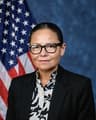 Kimberlyn King-Hinds
Republican · Northern Mariana Islands
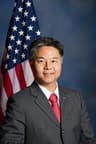 Ted Lieu
Democrat · California
 Doris Matsui
Democrat · California
 Grace Meng
Democrat · New York
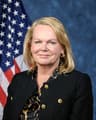 April McClain Delaney
Democrat · Maryland
 Dave Min
Democrat · California
 Jerrold Nadler
Democrat · New York
 Deborah Ross
Democrat · North Carolina
 Linda Sánchez
Democrat · California
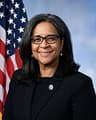 Marilyn Strickland
Democrat · Washington
 Thomas Suozzi
Democrat · New York
 Lateefah Simon
Democrat · California
 Mike Thompson
Democrat · California
 Dina Titus
Democrat · Nevada
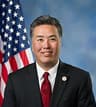 Mark Takano
Democrat · California
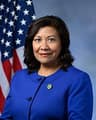 Norma Torres
Democrat · California
 Lori Trahan
Democrat · Massachusetts
 Jill Tokuda
Democrat · Hawaii
 Shri Thanedar
Democrat · Michigan
 Derek Tran
Democrat · California
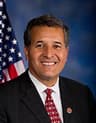 Juan Vargas
Democrat · California
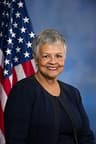 Bonnie Watson Coleman
Democrat · New Jersey