Bill · H.Res. 349· House(119-HRES-349)
Supporting the goals and ideals of Mathematics and Statistics Awareness Month.
- Introduced
- 4/24/2025
- Last activity
- 4/24/2025 — Referred to the House Committee on Education and Workforce.
- Sponsored by
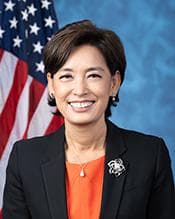
- Young Kim
- Cosponsors
- - 2 - 2
- Introduced
- In Committee
A House resolution is the House speaking for itself: stating a position, honouring someone, or setting its own rules. Adopting it is the whole process. Once the House agrees to it, it is officially the House's word; it is not a law, so the Senate and the President have no part in it.
What this bill would do
This House Resolution supports the goals and ideals of Mathematics and Statistics Awareness Month. It aims to increase the visibility of these fields of study and communicate the benefits of education in mathematics and statistics. It also recognizes the importance of mathematics and statistics to STEM disciplines and celebrates their role in everyday life.
Potential Positive Impacts for People:
-
Increasing visibility of mathematics and statistics as fields of study (Resolved, (1)): This could encourage more students to pursue careers in these fields, potentially leading to increased job opportunities and a more skilled workforce.
-
Communicating the benefits of education in mathematics and statistics (Resolved, (1)): Highlighting the importance of these subjects could lead to increased investment in education and improved mathematical and statistical literacy among the general population.
-
Recognizing the importance of mathematics and statistics to STEM (Resolved, (2)): This acknowledgment could lead to greater support for STEM education and research, benefiting students, educators, and the economy as a whole.
-
Celebrating the role of mathematics and statistics in everyday life (Resolved, (3)): Raising awareness of the prevalence of these fields could increase public appreciation for their importance and impact on society.
-
Addressing underrepresentation (Whereas clauses regarding women and minorities): By acknowledging the disparity in representation, the resolution implicitly supports efforts to create a more diverse and inclusive workforce in mathematical sciences.
Potential Negative Impacts for People:
This resolution primarily expresses support and recognition, and does not appear to have any inherent negative impacts on people.
Yes· 3 of 19
Would students be better off under this?+4
Directly supports the goals of increasing visibility and communicating the benefits of math and stats education.
Would children be better off under this?+3
Inspires future generations of talent through engagement in hands-on mathematical activities.
Would people in their twenties and thirties be better off under this?+3
Encourages students to pursue higher education and careers in mathematics and statistics.
The opposite
No question was scored the opposite.
Groups and Interests Ranking
Every group the model scored this bill for, from -10 to +10. Hover a score for the reason it gave.
- Demographic And Interest Groups
- Good For Students+4Good For African Americans+3Good For Children+3Good For Hispanic Americans+3Good For Native Americans+3Good For Women+3Good For Young Adults+3Good For Asian Americans+1Good For Business Owners+1Good For Low Income Households+1Good For Men+1Good For Middle Class Households+1Good For White Americans+1
- Economy And Finance
- Improves Economic Growth+2Increases Job Creation+2
- Social Issues And Justice
- Improves Gender Equality+2Improves Racial Equity+2
- Education And Technology
- Increases Scientific Research Funding+1
- National Security And Foreign Policy
- Improves Cybersecurity Defense+1
- 4/28/2025
- 1 Cosponsor added.
- 4/24/2025
- Submitted in House
- Referred to the House Committee on Education and Workforce.
- 3 Cosponsors added.
 Raja Krishnamoorthi
Democrat · Illinois
 Thomas Kean
Republican · New Jersey
 Michael Lawler
Republican · New York
 Paul Tonko
Democrat · New York