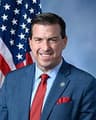
Kevin Mullin (D-CA)
Affirming the obligation of the President of the United States to comply with court orders.
A Democratic resolution with 25 Democratic cosponsors · See all 25 cosponsors
Last activity — Referred to the House Committee on the Judiciary.
In committee
Introduced and handed to a committee in the chamber it started in.
The committee holds it, and most bills are never heard from again. A hearing or a committee vote would be news; silence is the usual outcome, and it kills the bill without anyone voting against it.
Its path through Congress
- Introduced
- In Committee
A House resolution is the House speaking for itself: stating a position, honouring someone, or setting its own rules. Adopting it is the whole process. Once the House agrees to it, it is officially the House's word; it is not a law, so the Senate and the President have no part in it.
What this bill would do
This resolution addresses the obligation of the President of the United States to comply with court orders. It highlights several recent court orders and injunctions issued against the administration regarding executive orders, federal funds, Treasury Department records, and employee terminations. The text recalls historical legal standards establishing the judiciary's role and the limits of presidential power. It states that failing to comply with court orders puts the rule of law and the separation of powers in jeopardy. Finally, the resolution calls on President Donald J. Trump and his administration to immediately comply with all existing and future court orders.
Yes· 3 of 11
- Scored +7
Would immigrants be better off under this?
The resolution aims to uphold court orders protecting the citizenship rights of individuals born in the United States.
- Scored +7
Does this protect the right to fair treatment by the courts?
The resolution affirms the judiciary's role in upholding the rule of law and the legal process for challenging government actions.
- Scored +7
Does this make it easier for immigrants already here to become citizens?
The resolution seeks to ensure compliance with court orders that prevent the denial of citizenship to individuals born in the United States.
The opposite
- Scored -3
Does this give the federal government more power?
The resolution emphasizes judicial checks on executive power rather than expanding federal executive authority.
Who it would affect, and how
Potential Positive Impacts for People
-
Affirming Checks and Balances: Section (1) affirms the essential role of the judiciary in upholding checks and balances among the three coequal branches of the United States Government, which ensures accountability for our elected officials.
-
Demanding Compliance: Section (2) calls on President Donald J. Trump and his administration to immediately comply with all existing court orders and decisions going forward, protecting individuals from executive actions that have been temporarily blocked or restrained by federal courts.
-
Upholding Judicial Enforcement: Section (3) affirms the judiciary's authority to use all of the tools given to it by the Constitution and Congress to enforce its orders, ensuring that court mandates remain effective for the people.
Potential Negative Impacts for People
- No Negative Impacts Identified: Based strictly on the provided text, there are no specific sections or provisions identified that create negative consequences, burdens, or harms for individuals or groups of people in the United States.
Groups and Interests Ranking
Every group the model scored this bill for, from -10 to +10. Tap or hover a score for the reason it gave.
- Demographic And Interest Groups
- Would immigrants be better off under this? — The resolution aims to uphold court orders protecting the citizenship rights of individuals born in the United States. Would Hispanic Americans be better off under this? — The resolution protects against executive orders that would deny citizenship to those born in the United States. Would households on low incomes be better off under this? — Compliance with court orders prevents the freezing of federal financial assistance, which often supports low-income populations. Would veterans be better off under this, taking everything together? — The resolution calls for compliance with orders preventing the termination of Department of Veterans Affairs employees.
- Governance And Ideology
- Does this protect the right to fair treatment by the courts? — The resolution affirms the judiciary's role in upholding the rule of law and the legal process for challenging government actions. Does this make what the government does easier for the public to see? — The resolution supports court orders that restrict the administration from limiting access to Treasury Department payment records and systems. Does this give the federal government more power? — The resolution emphasizes judicial checks on executive power rather than expanding federal executive authority.
- Social Issues And Justice
- Does this make it easier for immigrants already here to become citizens? — The resolution seeks to ensure compliance with court orders that prevent the denial of citizenship to individuals born in the United States. Does this tighten control of the border? — By upholding judicial orders regarding citizenship, the resolution maintains current legal standards for those born in the U.S.
- Economy And Finance
- Does this make it easier to run a small business? — The resolution calls for compliance with court orders that prevent the termination of employees at the Small Business Administration.
- Environment Energy And Infrastructure
- Does this better protect air, water and wildlife? — The resolution calls for compliance with court orders preventing the termination of employees at the Fish and Wildlife Service and the Bureau of Land Management.
- National Security And Foreign Policy
- Does this increase the pay, pensions or support veterans receive? — The resolution affirms the need to comply with court orders preventing the termination of employees at the Department of Veterans Affairs.
- 3/27/2025
- 1 Cosponsor added.
- 3/21/2025
- 1 Cosponsor added.
- 3/5/2025
- 4 Cosponsors added.
- 3/4/2025
- Submitted in House
- Referred to the House Committee on the Judiciary.
- 19 Cosponsors added.
 Nanette Barragán
Democrat · California
 Jim Costa
Democrat · California
 Yvette Clarke
Democrat · New York
 J. Correa
Democrat · California
 Valerie Foushee
Democrat · North Carolina
 Raúl Grijalva
Democrat · Arizona
 Al Green
Democrat · Texas
 Robin Kelly
Democrat · Illinois
 Ro Khanna
Democrat · California
 Zoe Lofgren
Democrat · California
 James McGovern
Democrat · Massachusetts
 Betty McCollum
Democrat · Minnesota
 LaMonica McIver
Democrat · New Jersey
 Eleanor Norton
Democrat · District of Columbia
 Delia Ramirez
Democrat · Illinois
 Eric Swalwell
Democrat · California
 Darren Soto
Democrat · Florida
 Andrea Salinas
Democrat · Oregon
 Bennie Thompson
Democrat · Mississippi
 Dina Titus
Democrat · Nevada
 Norma Torres
Democrat · California
 Rashida Tlaib
Democrat · Michigan
 Shri Thanedar
Democrat · Michigan
 Nikema Williams
Democrat · Georgia
 Bonnie Watson Coleman
Democrat · New Jersey