Bill · H.Res. 1345· House(119-HRES-1345)
Providing for consideration of the bill (H.R. 8312) to establish fraud prevention and program integrity functions and data sharing authorities within the Department of Treasury and a permanent governmentwide Inspector General for Fraud, Accountability, and Recovery, and for other purposes; providing for consideration of the bill (H.R. 8464) to amend title 31, United States Code, to authorize pausing and segmenting payments, and for other purposes; providing for consideration of the resolution (H. Res. 1335) condemning actors seeking to defraud the United States Government, and expressing the sense of the House of Representatives that governmentwide fraud and improper payment prevention reforms will meaningfully improve the financial prosperity of the United States, and that Federal program eligibility should be verified before payment; and providing for consideration of the bill (S. 2) to provide for reconciliation pursuant to title II of S. Con. Res. 33.
- Introduced
- 6/8/2026
- Last activity
- 6/9/2026 — Motion to reconsider laid on the table Agreed to without objection.
- Sponsored by
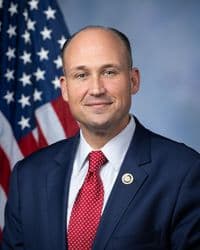
- Nicholas Langworthy
- Cosponsors
- None
- Introduced
- Adopted by the House
A House resolution is the House speaking for itself: stating a position, honouring someone, or setting its own rules. Adopting it is the whole process. Once the House agrees to it, it is officially the House's word; it is not a law, so the Senate and the President have no part in it.
What this bill would do
This text is a House resolution, specifically H. Res. 1345, which sets the rules for considering multiple other bills and resolutions in the House of Representatives. It outlines the procedures for debating and voting on H.R. 8312, a bill related to establishing fraud prevention functions within the Department of Treasury and a governmentwide Inspector General. It also sets the rules for considering H.R. 8464, which authorizes pausing and segmenting payments. Additionally, the text provides the framework for considering H. Res. 1335, a resolution condemning actors who seek to defraud the government and expressing the sense of the House regarding fraud prevention. Finally, it provides the rules for considering S. 2, a bill to provide for reconciliation.
Yes· 3 of 5
Does this make the government pay for what it commits to?+3
Establishes rules for considering legislation focused on program integrity, fraud prevention, and government accountability.
Does this make what the government does easier for the public to see?+3
Establishes rules for considering bills that create an Inspector General for fraud recovery and enhance federal financial accountability.
Does this reduce what the federal government owes?+2
The resolution provides for the consideration of measures aimed at preventing government fraud and improving financial controls.
The opposite
No question was scored the opposite.
What Congress actually voted on
2 recorded votes have been taken on this bill. One of them decided something; the rest moved it along.
- The House: the vote on whether to adopt the resolutionPassed 213–211
A resolution is one chamber speaking for itself — setting its own rules, taking a position, honouring someone — and it never goes to the President. Agreeing to it is the whole decision.
06/09/2026 · Roll call 211 · recorded as “On Agreeing to the Resolution”
Who it would affect, and how
Potential Positive Impacts for People
-
Fraud Prevention and Accountability: The text provides for the consideration of H.R. 8312, which establishes fraud prevention and program integrity functions and data sharing authorities within the Department of Treasury, along with a permanent governmentwide Inspector General for Fraud, Accountability, and Recovery. This is relevant to the people because it aims to target government fraud.
-
Payment Controls: Section 2 of the text allows for the consideration of H.R. 8464, which amends title 31 of the United States Code to authorize pausing and segmenting payments. This could be seen as a way to better manage government funds.
-
Condemning Fraud: Section 3 allows for the consideration of H. Res. 1335, which condemns actors seeking to defraud the United States Government and expresses the sense of the House that fraud and improper payment prevention reforms will improve financial prosperity, while stating that Federal program eligibility should be verified before payment. This ensures that the House goes on record against defrauding the government.
Potential Negative Impacts for People
- None Identified: The provided text explicitly outlines legislative rules and procedures for debating and voting on specific bills and resolutions. The text does not contain any specific provisions that directly impose negative consequences, burdens, or harms upon individuals or groups of people in the United States.
Groups and Interests Ranking
Every group the model scored this bill for, from -10 to +10. Hover a score for the reason it gave.
- Economy And Finance
- Improves Fiscal Responsibility+3Reduces Government Spending+2Reduces National Debt+2
- Governance And Ideology
- Improves Government Transparency+3Increases Federal Power+1
- 6/9/2026
- Motion to reconsider laid on the table Agreed to without objection.
- Passed/agreed to in House: On agreeing to the resolution Agreed to by recorded vote: 213 - 211 (Roll no. 211).
- On agreeing to the resolution Agreed to by recorded vote: 213 - 211 (Roll no. 211). (text: CR H4004-4005)
- On ordering the previous question Agreed to by the Yeas and Nays: 214 - 211 (Roll no. 210).
- Considered as unfinished business. (consideration: CR H4012-4013)
- POSTPONED PROCEEDINGS - At the conclusion of debate on H. Res. 1345, the Chair put the question on ordering the previous question and by voice vote, announced that the ayes prevailed. Ms. Scanlon demanded the yeas and nays and the Chair postponed further proceedings until a time to be announced.
- DEBATE - The House proceeded with one hour of debate on H. Res. 1345.
- Considered as privileged matter. (consideration: CR H4004-4011)
- 6/8/2026
- The House Committee on Rules reported an original measure, H. Rept. 119-690, by Mr. Langworthy.
- Placed on the House Calendar, Calendar No. 79.
- The resolution provides for consideration of H.R. 8312, H.R. 8464, H. Res. 1335, and S. 2 under a closed rule with one hour of general debate on each measure. The resolution provides for a motion to recommit H.R. 8312 and H.R. 8464 and a motion to commit S. 2.
- Bill introduced.
4 bills Congress.gov lists as related to this one — companions in the other chamber, earlier versions, and bills this one absorbed or was folded into.
- 119-HR-8312: Fraud Prevention and Accountability Act
- 119-HR-8464: Stopping Fraudulent Payments Act
- 119-S-2: Secure America Act
- 119-HRES-1335: Condemning actors seeking to defraud the United States Government, and expressing the sense of the House of Representatives that governmentwide fraud and improper payment prevention reforms will meaningfully improve the financial prosperity of the United States, and that Federal program eligibility should be verified before payment.