Bill · H.R. 8464· House(119-HR-8464)
Stopping Fraudulent Payments Act
- Introduced
- 4/23/2026
- Last activity
- 6/11/2026 — Received in the Senate.
- Sponsored by
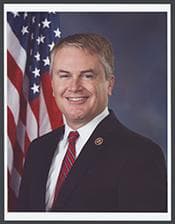
- James Comer
- Cosponsors
- - 2 - 0
- Introduced
- Passed House
- Awaiting Senate
What this bill would do
This Act, known as the "Stopping Fraudulent Payments Act," amends title 31 of the United States Code to provide federal agencies with specific authorities to manage payment risks. It allows agency heads to pause, condition, or segment disbursement requests if there is an elevated risk of fraud or improper payments. The Treasury Secretary is also granted the authority to issue corrective action orders to return certified payment vouchers. The bill establishes requirements for agency documentation, payee notification, and time limits for resolving these reviews. It includes provisions for segmenting low-risk payments to ensure routine amounts continue while high-risk portions are held. Finally, the Secretary must submit annual reports regarding the effectiveness and savings generated by these actions.
Yes
Does this reduce what the federal government spends?+5
The bill empowers agencies to pause or segment payments to prevent financial loss to the government from fraud or improper payments.
Does this make the government pay for what it commits to?+5
The bill establishes mechanisms to verify eligibility and reduce improper payments, enhancing the management of federal funds.
Does this make what the government does easier for the public to see?+3
The bill requires agencies to provide specific notifications to payees regarding the reasons for paused disbursements.
The opposite
Would households on low incomes be better off under this?-2
Potential delays in government payments could negatively impact low-income households that depend on consistent assistance.
Is this likely to lift people out of poverty?-2
The authority to pause payments could cause temporary financial hardship for individuals relying on timely federal disbursements.
What Congress actually voted on
2 recorded votes have been taken on this bill. One of them decided something; the rest moved it along.
- The House: the vote on whether to pass the billPassed 218–200
This is the real decision in this chamber. Passing here sends the bill to the other chamber, which must pass it too before it can go to the President.
06/10/2026 · Roll call 220 · recorded as “On Passage”
Who it would affect, and how
Potential Positive Impacts for People
-
Protection of Government Funds: Agencies can delay or segment payments when there is a determination of elevated risk of fraud or improper payments that result in financial loss to the Government (Section 2(a)(1)).
-
Minimizing Disruption to Consistent Payees: To the maximum extent practicable, agencies can allow routine and historically consistent payment amounts to proceed even if a specific portion of the payment is being held for review (Section 2(a)(5)).
-
Transparency and Recourse for Payees: Agencies are required to promptly notify payees when a disbursement is paused and must provide a process for the payee to contest any factual inaccuracies (Section 2(a)(4)).
-
Protection of Federal Employees: Government officers and employees are granted immunity from personal liability when acting in good faith under these new authorities (Section 2(a)(6)).
Potential Negative Impacts for People
-
Temporary Withholding of Funds: Payees may experience delays in receiving payments due to a temporary pause, condition, or segmentation of their disbursement requests (Section 2(a)(4)).
-
Administrative Burden of Contestation: While a process exists to contest inaccuracies, payees must use the established process to provide clarifying information or contest the corrective action (Section 2(a)(4)(2)).
Groups and Interests Ranking
Every group the model scored this bill for, from -10 to +10. Hover a score for the reason it gave.
- Economy And Finance
- Improves Fiscal Responsibility+5Reduces Government Spending+5
- Governance And Ideology
- Improves Government Transparency+3
- Demographic And Interest Groups
- Good For Low Income Households-2
- Social Issues And Justice
- Improves Poverty Reduction-2
| Updated | Bill | Title | Policy Area |
|---|---|---|---|
| 4 months ago | On agreeing to the Rules amendment (A001) Agreed to without objection. |
- 6/11/2026
- Received in the Senate.
- 6/10/2026
- Motion to reconsider laid on the table Agreed to without objection.
- Passed/agreed to in House: On passage Passed by the Yeas and Nays: 218 - 200 (Roll no. 220). (text of amendment in the nature of a substitute: CR H4071-4073)
- On passage Passed by the Yeas and Nays: 218 - 200 (Roll no. 220). (text of amendment in the nature of a substitute: CR H4071-4073)
- On motion to recommit Failed by the Yeas and Nays: 209 - 213 (Roll no. 219).
- Considered as unfinished business. (consideration: CR H4078-4079)
- POSTPONED PROCEEDINGS - At the conclusion of debate on H.R. 8464, the Chair put the question on motion to recommit and by voice vote, announced the ayes had prevailed. Mr. Comer demanded the yeas and nays and the Chair postponed further proceedings until a time to be announced.
- The previous question on the motion to recommit was ordered pursuant to clause 2(b) of rule XIX.
- Mr. McGarvey moved to recommit to the Committee on Oversight and Government Reform. (text: CR H4075)
- The previous question was ordered pursuant to the rule.
- DEBATE - The House proceeded with one hour of debate on H.R. 8464.
- Rule provides for consideration of H.R. 8312, H.R. 8464, H. Res. 1335 and S. 2. The resolution provides for consideration of H.R. 8312, H.R. 8464, H. Res. 1335, and S. 2 under a closed rule with one hour of general debate on each measure. The resolution provides for a motion to recommit H.R. 8312 and H.R. 8464 and a motion to commit S. 2.
- Considered under the provisions of rule H. Res. 1345. (consideration: CR H4071-4075)
- 6/8/2026
- Rules Committee Resolution H. Res. 1345 Reported to House. Rule provides for consideration of H.R. 8312, H.R. 8464, H. Res. 1335 and S. 2. The resolution provides for consideration of H.R. 8312, H.R. 8464, H. Res. 1335, and S. 2 under a closed rule with one hour of general debate on each measure. The resolution provides for a motion to recommit H.R. 8312 and H.R. 8464 and a motion to commit S. 2.
- 6/3/2026
- Reported (Amended) by the Committee on Oversight and Government Reform. H. Rept. 119-684.
- Placed on the Union Calendar, Calendar No. 597.
- 4/29/2026
- Committee Consideration and Mark-up Session Held
- Ordered to be Reported (Amended) by the Yeas and Nays: 23 - 17.
- 1 Cosponsor added.
- 4/23/2026
- Referred to the House Committee on Oversight and Government Reform.
- 1 Cosponsor added.
- Introduced in House
2 bills Congress.gov lists as related to this one — companions in the other chamber, earlier versions, and bills this one absorbed or was folded into.
- 119-S-4747: Stopping Fraudulent Payments Act
- 119-HRES-1345: Providing for consideration of the bill (H.R. 8312) to establish fraud prevention and program integrity functions and data sharing authorities within the Department of Treasury and a permanent governmentwide Inspector General for Fraud, Accountability, and Recovery, and for other purposes; providing for consideration of the bill (H.R. 8464) to amend title 31, United States Code, to authorize pausing and segmenting payments, and for other purposes; providing for consideration of the resolution (H. Res. 1335) condemning actors seeking to defraud the United States Government, and expressing the sense of the House of Representatives that governmentwide fraud and improper payment prevention reforms will meaningfully improve the financial prosperity of the United States, and that Federal program eligibility should be verified before payment; and providing for consideration of the bill (S. 2) to provide for reconciliation pursuant to title II of S. Con. Res. 33.
 Jodey Arrington
Republican · Texas
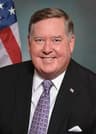 Ken Calvert
Republican · California