Bill · S. 4747· Senate(119-S-4747)
Stopping Fraudulent Payments Act
- Introduced
- 6/10/2026
- Last activity
- 6/10/2026 — Read twice and referred to the Committee on Homeland Security and Governmental Affairs.
- Sponsored by
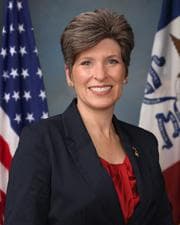
- Joni Ernst
- Cosponsors
- - 1 - 0
- Introduced
- In Committee
What this bill would do
The Stopping Fraudulent Payments Act allows government agencies and the Treasury to temporarily pause, condition, or split payments if there is an elevated risk of fraud or improper payment. Agencies must notify payees within two days of such an action and provide a way for them to contest the decision. Most paused payments must be issued within 30 days, or within 7 days if a payee successfully contests the action. The law also protects government employees from personal liability when acting in good faith under these rules.
Yes· 3 of 5
Does this make the government pay for what it commits to?+5
Enhances oversight of federal payments through fraud-risk indicators and corrective action.
Does this reduce what the federal government spends?+3
Reduces waste by stopping fraudulent or improper disbursements of federal funds.
Does this give the federal government more power?+3
Increases the Treasury's authority to order the pausing of payments across agencies.
The opposite· 3 of 9
Would households on low incomes be better off under this?-3
Low-income households are most vulnerable to temporary payment delays during fraud reviews.
Would people with disabilities be better off under this?-2
Individuals dependent on government disability payments are highly sensitive to payment delays.
Would retired people be better off under this?-2
Retirees relying on federal payments may experience hardship during temporary pauses.
Who it would affect, and how
Potential Positive Impacts for People
-
Protection of Public Funds: By allowing agencies to pause payments that present an elevated risk of fraud or improper payment, the bill aims to prevent financial loss to the Government (Sec. 2(a)).
-
Partial Payment Access: To the extent possible, agencies must allow "routine, historically consistent payment" amounts to go through while only holding the high-risk or anomalous portion of a payment (Sec. 2(e)).
-
Right to Contest: The bill requires agencies to use a process where a payee can contest factual inaccuracies or provide clarifying information during the review period (Sec. 2(d)(2)).
-
Defined Timelines: There are strict limits on how long payments can be held, requiring issuance within 30 days of the corrective action or 7 days after a payee contests the action, provided the risk is cleared (Sec. 2(d)(3)).
Potential Negative Impacts for People
-
Payment Delays: Individuals or groups may experience temporary delays in receiving funds if their payment is flagged by a "fraud-risk indicator" or identified as an improper payment (Sec. 2(a)).
-
Burden of Proof: Payees may be required to participate in a corrective action review process to provide clarifying information to receive their funds (Sec. 2(d)(2)).
Groups and Interests Ranking
Every group the model scored this bill for, from -10 to +10. Hover a score for the reason it gave.
- Demographic And Interest Groups
- Good For Low Income Households-3Good For People With Disabilities-2Good For Retirees-2Good For Farmers-1Good For Seniors-1Good For Students-1Good For Veterans-1
- Economy And Finance
- Improves Fiscal Responsibility+5Reduces Government Spending+3Reduces National Debt+2
- Governance And Ideology
- Improves Government Transparency+3Increases Federal Power+3Improves Due Process-2
- Social Issues And Justice
- Improves Poverty Reduction-2
- 8/4/2026
- 1 Cosponsor added.
- 6/10/2026
- Read twice and referred to the Committee on Homeland Security and Governmental Affairs.
- Introduced in Senate
One bill Congress.gov lists as related to this one — companions in the other chamber, earlier versions, and bills this one absorbed or was folded into.
 David McCormick
Republican · Pennsylvania