
Bill Foster (D-IL)
Expressing the sense of the House of Representatives in support of the International Atomic Energy Agency's (IAEA) nuclear security role.
A Democratic resolution with 11 Democratic cosponsors · See all 11 cosponsors
Last activity — Referred to the House Committee on Foreign Affairs.
In committee
Introduced and handed to a committee in the chamber it started in.
The committee holds it, and most bills are never heard from again. A hearing or a committee vote would be news; silence is the usual outcome, and it kills the bill without anyone voting against it.
Its path through Congress
- Introduced
- In Committee
A House resolution is the House speaking for itself: stating a position, honouring someone, or setting its own rules. Adopting it is the whole process. Once the House agrees to it, it is officially the House's word; it is not a law, so the Senate and the President have no part in it.
What this bill would do
This resolution expresses the sense of the House of Representatives in support of the International Atomic Energy Agency's nuclear security role. It notes that the IAEA helps countries develop and use nuclear technology for peaceful purposes and plays a critical part in global nuclear security. The text highlights that rogue regimes and clandestine organizations seek nuclear materials for weapons. Because the IAEA Office of Nuclear Security relies mostly on unpredictable voluntary funding, the resolution seeks to address this need. It encourages the United States and other member states to provide the resources necessary for the IAEA to fulfill its duties.
Yes· 3 of 30
- Scored +7
Does this strengthen ties with allied countries?
Supports multilateral cooperation through the IAEA to strengthen global nuclear security.
- Scored +7
Does this favour talking over confrontation abroad?
Promotes ministerial meetings and international collaboration on nuclear safety.
- Scored +5
Would children be better off under this?
Prevents nuclear proliferation and radiological threats to future generations.
The opposite
- Scored -1
Does this reduce what the federal government owes?
Encouraging increased financial contributions to the IAEA may increase government spending.
- Scored -1
Does this reduce what the federal government spends?
The resolution encourages the U.S. to provide more resources and financial support to the IAEA.
- Scored -1
Does this make the government pay for what it commits to?
Calls for more funding without specifying budget offsets.
Who it would affect, and how
Potential Positive Impacts for People
-
Strengthening global nuclear security and safety: The resolution maintains that the IAEA plays an indispensable role in these areas (Section 1).
-
Preventing the spread of nuclear weapons: The text reaffirms that the United States has a vital interest in securing nuclear materials and preventing weapon spread (Section 2).
-
Promoting political commitment: The resolution encourages supporting the IAEA in convening ministerial meetings on nuclear security (Section 3A).
-
Implementation of the Nuclear Security Plan: It encourages providing reliable and sufficient resources to implement this plan (Section 3B).
-
Financial support for nuclear protection: The resolution suggests providing political, technical, and financial support to the Nuclear Security Fund, which assists countries in protecting nuclear and radiological materials and facilities (Section 3C).
-
Encouraging private sector involvement: It encourages developing a strategy to bring in non-state, private sector contributions to the Nuclear Security Fund (Section 3D).
Potential Negative Impacts for People
- No specific negative impacts or burdens are mentioned in the provided text.
Groups and Interests Ranking
Every group the model scored this bill for, from -10 to +10. Tap or hover a score for the reason it gave.
- Demographic And Interest Groups
- Would Black Americans be better off under this? — Prevents global nuclear threats that affect all people. Would Asian Americans be better off under this? — Prevents global nuclear threats that affect all people. Would billionaires be better off under this? — Protects against catastrophic nuclear risks. Would children be better off under this? — Prevents nuclear proliferation and radiological threats to future generations. Would high-income households be better off under this? — Protects against catastrophic nuclear risks. Would people with substantial wealth be better off under this? — Protects against catastrophic nuclear risks. Would Hispanic Americans be better off under this? — Prevents global nuclear threats that affect all people. Would immigrants be better off under this? — Prevents global nuclear threats that affect all people. Would LGBTQ people be better off under this? — Prevents global nuclear threats that affect all people. Would households on low incomes be better off under this? — Protects against catastrophic nuclear risks which disproportionately affect vulnerable populations. Would men be better off under this? — Prevents global nuclear threats that affect all people. Would people in middle age be better off under this? — Protects global security and prevents nuclear conflict. Would middle-income households be better off under this? — Protects against catastrophic nuclear risks. Would Native Americans be better off under this? — Prevents global nuclear threats that affect all people. Would people with disabilities be better off under this? — Prevents global nuclear threats that affect all people. Would retired people be better off under this? — Prevents global nuclear threats that affect all people. Would people in rural areas be better off under this? — Prevents radiological contamination of lands. Would people over 65 be better off under this? — Protects global security and prevents nuclear conflict. Would students be better off under this? — Prevents global nuclear threats that affect all people. Would the very wealthiest people be better off under this? — Protects against catastrophic nuclear risks. Would people in cities be better off under this? — Prevents nuclear weapons which would devastate urban centers. Would white Americans be better off under this? — Prevents global nuclear threats that affect all people. Would women be better off under this? — Prevents global nuclear threats that affect all people. Would people in their twenties and thirties be better off under this? — Protects global security and prevents nuclear conflict.
- National Security And Foreign Policy
- Does this favour talking over confrontation abroad? — Promotes ministerial meetings and international collaboration on nuclear safety. Does this strengthen ties with allied countries? — Supports multilateral cooperation through the IAEA to strengthen global nuclear security. Does this put more money into stopping terrorism? — Strengthening nuclear security helps prevent non-state actors and terrorists from acquiring nuclear materials. Does this send more money or help to other countries? — Encourages increased financial and technical support for an international agency.
- Economy And Finance
- Does this make the government pay for what it commits to? — Calls for more funding without specifying budget offsets. Does this reduce what the federal government spends? — The resolution encourages the U.S. to provide more resources and financial support to the IAEA. Does this reduce what the federal government owes? — Encouraging increased financial contributions to the IAEA may increase government spending.
- Environment Energy And Infrastructure
- Does this better protect air, water and wildlife? — Securing radiological materials prevents environmental contamination from nuclear accidents or theft.
- Education And Technology
- Does this put more money into scientific research? — Supports the peaceful development and use of nuclear technology.
- 7/14/2026
- 1 Cosponsor added.
- 4/23/2026
- Submitted in House
- Referred to the House Committee on Foreign Affairs.
- 10 Cosponsors added.
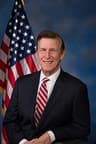 Donald Beyer
Democrat · Virginia
 Joaquin Castro
Democrat · Texas
 Ro Khanna
Democrat · California
 Raja Krishnamoorthi
Democrat · Illinois
 Rick Larsen
Democrat · Washington
 James McGovern
Democrat · Massachusetts
 Seth Moulton
Democrat · Massachusetts
 Eleanor Norton
Democrat · District of Columbia
 Janice Schakowsky
Democrat · Illinois
 Dina Titus
Democrat · Nevada
 Rashida Tlaib
Democrat · Michigan