Bill · H.Res. 1209· House(119-HRES-1209)
Recognizing the significance of "Community College Month" in April as a celebration of more than 1,000 institutions throughout the United States supporting access to higher education, workforce training, and more, broadly sustaining and advancing the Nation's economic prosperity.
- Introduced
- 4/23/2026
- Last activity
- 4/23/2026 — Referred to the House Committee on Oversight and Government Reform.
- Sponsored by
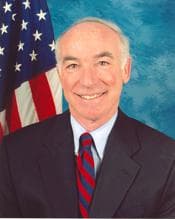
- Joe Courtney
- Cosponsors
- - 37 - 5
- Introduced
- In Committee
A House resolution is the House speaking for itself: stating a position, honouring someone, or setting its own rules. Adopting it is the whole process. Once the House agrees to it, it is officially the House's word; it is not a law, so the Senate and the President have no part in it.
What this bill would do
This resolution recognizes the significance of ``Community College Month'' in April. It celebrates more than 1,000 institutions that support higher education access and workforce training. The resolution highlights how these colleges support the Nation's economic prosperity and local needs. It notes the historical development of these institutions to meet educational and economic opportunities. Finally, it serves as an opportunity for the House of Representatives to recognize the value of these colleges in strengthening the American economy.
Yes· 3 of 8
Would people in their twenties and thirties be better off under this?+2
The resolution highlights how dual enrollment and community colleges allow students to jumpstart career exploration and save money.
Would households on low incomes be better off under this?+2
The text states that community colleges serve low-income students by providing affordable access to higher education.
Would students be better off under this?+2
The resolution highlights the benefits of dual enrollment and affordable tuition for various student populations.
The opposite
No question was scored the opposite.
Who it would affect, and how
Potential Positive Impacts for People
-
Access to Higher Education and Workforce Training: The resolution recognizes that more than 1,000 institutions support access to higher education and workforce training, which helps sustain the Nation's economic prosperity. (Resolution Text)
-
Affordability for Specific Groups: Public community colleges offer an affordable option with average annual tuition and fees of $4,050 for in-district students, serving populations such as working individuals, low-income students, parents, veterans, or those who are the first in their family to attend college. (Whereas clause 6)
-
Career Exploration and Savings: Through dual enrollment programs offered by 82 percent of public high schools, students can take college classes at their local community college, which provides an opportunity to save time and money while jumpstarting career exploration. (Whereas clause 10)
-
Economic Contribution: Community colleges serve as a primary institution for workforce development in fields like semiconductor, construction, and nursing, and their alumni generated $898,500,000,000 in added income to the national economy in fiscal year 2020. (Whereas clause 7 and 11)
Potential Negative Impacts for People
- No negative impacts are mentioned in the provided text.
Groups and Interests Ranking
Every group the model scored this bill for, from -10 to +10. Hover a score for the reason it gave.
- Demographic And Interest Groups
- Good For Low Income Households+2Good For Students+2Good For Young Adults+2Good For Veterans+1
- Economy And Finance
- Improves Economic Growth+2Increases Job Creation+2
- Education And Technology
- Improves College Affordability+2
- Social Issues And Justice
- Improves Poverty Reduction+1
- 5/13/2026
- 2 Cosponsors added.
- 5/4/2026
- 2 Cosponsors added.
- 4/29/2026
- 1 Cosponsor added.
- 4/28/2026
- 2 Cosponsors added.
- 4/27/2026
- 3 Cosponsors added.
- 4/23/2026
- Submitted in House
- Referred to the House Committee on Oversight and Government Reform.
- 32 Cosponsors added.
 Gus Bilirakis
Republican · Florida
 Suzanne Bonamici
Democrat · Oregon
 Brendan Boyle
Democrat · Pennsylvania
 Don Bacon
Republican · Nebraska
 Wesley Bell
Democrat · Missouri
 Janelle Bynum
Democrat · Oregon
 Judy Chu
Democrat · California
 Salud Carbajal
Democrat · California
 Angie Craig
Democrat · Minnesota
 Danny Davis
Democrat · Illinois
 Rosa DeLauro
Democrat · Connecticut
 Donald Davis
Democrat · North Carolina
 Maxine Dexter
Democrat · Oregon
 Dwight Evans
Democrat · Pennsylvania
 Josh Gottheimer
Democrat · New Jersey
 Adelita Grijalva
Democrat · Arizona
 Timothy Kennedy
Democrat · New York
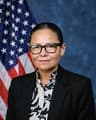 Kimberlyn King-Hinds
Republican · Northern Mariana Islands
 Stephen Lynch
Democrat · Massachusetts
 Mike Levin
Democrat · California
 Michael Lawler
Republican · New York
 Greg Landsman
Democrat · Ohio
 Seth Moulton
Democrat · Massachusetts
 Lucy McBath
Democrat · Georgia
 Kevin Mullin
Democrat · California
 LaMonica McIver
Democrat · New Jersey
 Dave Min
Democrat · California
 Richard Neal
Democrat · Massachusetts
 Eleanor Norton
Democrat · District of Columbia
 Donald Norcross
Democrat · New Jersey
 Johnny Olszewski
Democrat · Maryland
 Chellie Pingree
Democrat · Maine
 Jimmy Panetta
Democrat · California
 Mike Quigley
Democrat · Illinois
 Josh Riley
Democrat · New York
 Hillary Scholten
Democrat · Michigan
 Andrea Salinas
Democrat · Oregon
 Bennie Thompson
Democrat · Mississippi
 Mark Takano
Democrat · California
 Lori Trahan
Democrat · Massachusetts
 Robert Wittman
Republican · Virginia
 George Whitesides
Democrat · California