Bill · H.Res. 1185· House(119-HRES-1185)
Expressing the sense of the House of Representatives that the Department of Justice must comply with the Domestic Emoluments Clause of the Constitution by refusing to administratively settle the billions of dollars in legal claims filed against the United States by President Donald Trump.
- Introduced
- 4/16/2026
- Last activity
- 4/16/2026 — Referred to the House Committee on the Judiciary.
- Sponsored by
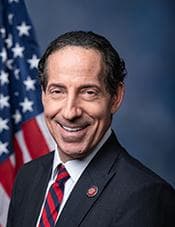
- Jamie Raskin
- Cosponsors
- - 32 - 0
- Introduced
- In Committee
A House resolution is the House speaking for itself: stating a position, honouring someone, or setting its own rules. Adopting it is the whole process. Once the House agrees to it, it is officially the House's word; it is not a law, so the Senate and the President have no part in it.
What this bill would do
This resolution expresses the sense of the House of Representatives regarding legal claims filed by President Donald Trump against the United States. It asserts that the Department of Justice must comply with the Domestic Emoluments Clause of the Constitution by refusing to administratively settle these claims. The text notes a lawsuit by the President seeking at least $10,000,000,000 from the Internal Revenue Service. It also mentions prior administrative claims regarding a search warrant at Mar-a-Lago and investigations into the 2016 election. The resolution argues that settling these claims would constitute a threat of corrupt self-dealing. Ultimately, it calls for federal agencies to be forbidden from conferring such monetary payments outside of the President's official salary.
Yes
Does this reduce what the federal government spends?+8
The resolution seeks to prevent the administrative settlement of multi-billion dollar legal claims by the President, which would preserve federal funds.
Does this make what the government does easier for the public to see?+5
The resolution aims to prevent corrupt self-dealing and ensure the President does not act as a judge in his own cause regarding financial settlements.
Would households on low incomes be better off under this?+4
Protecting taxpayer funds from large-scale administrative settlements benefits the general public, including low-income households.
The opposite
Would high-income households be better off under this?-3
The resolution restricts the ability of the President to receive large monetary settlements through administrative channels.
Who it would affect, and how
Potential Positive Impacts for People
-
Protection of Taxpayer Funds: The resolution seeks to prevent what it describes as an "unconstitutional and unconscionable plunder of the taxpayers" regarding the multi-billion dollar claims sought by the President. (Resolution text)
-
Upholding Constitutional Integrity: By requiring compliance with the Domestic Emoluments Clause, the resolution aims to ensure the President does not receive payments from the United States outside of his official compensation. (Article II, section 1, clause 7 of the Constitution)
-
Prevention of Self-Dealing: The resolution aims to prevent a situation where the President acts as a "judge in his own cause" by directing subordinates to settle personal legal claims for money. (Resolution text)
Potential Negative Impacts for People
- Restriction of Legal Recourse: While the resolution notes the President has a right to pursue disputes in State or Federal court like any other citizen, the proposed restrictions would prevent the administrative settlement of such claims. (Resolution text)
Groups and Interests Ranking
Every group the model scored this bill for, from -10 to +10. Hover a score for the reason it gave.
- Economy And Finance
- Reduces Government Spending+8
- Governance And Ideology
- Improves Government Transparency+5
- Demographic And Interest Groups
- Good For Low Income Households+4Good For High Income Households-3
- 4/22/2026
- 2 Cosponsors added.
- 4/21/2026
- 2 Cosponsors added.
- 4/16/2026
- Submitted in House
- Referred to the House Committee on the Judiciary.
- 28 Cosponsors added.
 Brendan Boyle
Democrat · Pennsylvania
 Becca Balint
Democrat · Vermont
 Steve Cohen
Democrat · Tennessee
 Joaquin Castro
Democrat · Texas
 J. Correa
Democrat · California
 Jasmine Crockett
Democrat · Texas
 Madeleine Dean
Democrat · Pennsylvania
 Maxine Dexter
Democrat · Oregon
 Maxwell Frost
Democrat · Florida
 John Garamendi
Democrat · California
 Jesús García
Democrat · Illinois
 Daniel Goldman
Democrat · New York
 Jared Huffman
Democrat · California
 Henry Johnson
Democrat · Georgia
 Pramila Jayapal
Democrat · Washington
 Jonathan Jackson
Democrat · Illinois
 Raja Krishnamoorthi
Democrat · Illinois
 Sydney Kamlager-Dove
Democrat · California
 Zoe Lofgren
Democrat · California
 Ted Lieu
Democrat · California
 Kweisi Mfume
Democrat · Maryland
 Betty McCollum
Democrat · Minnesota
 Lucy McBath
Democrat · Georgia
 Dave Min
Democrat · California
 Jerrold Nadler
Democrat · New York
 Eleanor Norton
Democrat · District of Columbia
 Joe Neguse
Democrat · Colorado
 Chellie Pingree
Democrat · Maine
 Deborah Ross
Democrat · North Carolina
 Mary Gay Scanlon
Democrat · Pennsylvania
 Rashida Tlaib
Democrat · Michigan
 Bonnie Watson Coleman
Democrat · New Jersey