Bill · H.R. 9917· House(119-HR-9917)
AI Kill Switch Act
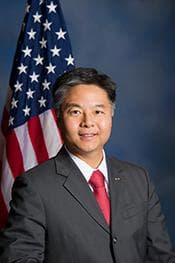
- Introduced
- 7/23/2026
- Last activity
- 7/24/2026 — Referred to the Subcommittee on Cybersecurity and Infrastructure Protection.
- Sponsored by
- Ted Lieu
- Cosponsors
- - 9 - 2
- Introduced
- In Committee
What this bill would do
The "AI Kill Switch Act" amends the Homeland Security Act of 2002 to manage high-level artificial intelligence technology. It requires certain large-scale entities to maintain the technical ability to shut down or restrict their AI systems. The Secretary of Homeland Security will define what counts as "covered technology" and "covered entities" based on factors like costs to small businesses and national security needs. If a dangerous "covered incident" occurs, the Secretary can order an entity to take specific actions, such as throttling access or shutting the technology down entirely. The bill also establishes a framework for emergency orders, civil penalties for violations, and an appeals process.
Yes· 3 of 5
Does this put more rules on large technology companies?+6
The bill imposes significant new regulatory requirements and oversight on entities operating large-scale AI technologies.
Does this give the federal government more power?+5
The bill expands federal authority through new mandates and enforcement powers over AI-related entities.
Does this better protect the country from computer attacks?+5
The bill provides mechanisms to mitigate risks associated with AI capabilities that could impact cybersecurity.
The opposite
Would business owners be better off under this?-3
Large-scale technology entities face significant new regulatory burdens and potential multi-million dollar daily fines.
Does this give the government more power to monitor people inside the country?-2
The bill expands the Secretary's authority to investigate and audit entities to ensure compliance with AI safety standards.
Does this make it easier to run a small business?-2
The bill imposes new compliance and shutdown capabilities that may unduly burden small business concerns.
Who it would affect, and how
Potential Positive Impacts for People
-
National Security and Safety: The bill aims to address entities whose activities have the potential to advance AI capabilities related to national security, specifically in areas like cybersecurity and chemical, biological, radiological, or nuclear capabilities (Section 2.a.1.A.2).
-
Risk Mitigation: The framework allows for a "graduated deployment-corrections" approach, which can include throttling user access or compute allocation to mitigate a credible risk of a "covered incident" (Section 2.b.1.A.2).
-
Protection Against Unintended Harm: The bill provides a mechanism to respond to "loss-of-control scenarios," such as when technology behaves contrary to instructions in high-stakes contexts or alters safety restrictions without authorization (Section 2.g.7).
-
Accountability for Major Incidents: The law establishes requirements for entities to report incidents that result in significant harm, such as the death of 10 or more individuals or economic damages of at least $100,000,000 (Section 2.g.5.B).
Potential Negative Impacts for People
-
Burden on Small Businesses: While the Secretary must consider these costs, the bill acknowledges that compliance requirements might "unduly burden a small business concern" (Section 2.a.1.A).
-
Disruption of Critical Infrastructure: In creating a framework for shutdown capabilities, the Secretary must consider the risk that such measures could "disrupt critical infrastructure" (Section 2.b.1.A.2.B).
-
Significant Financial Penalties: Entities found in violation of the rules regarding emergency orders can face civil penalties of up to $20,000,000 for each day the violation occurs (Section 2.d.2.B).
-
High Daily Fines for Other Violations: General violations of this section can result in civil penalties of up to $2,000,000 per day (Section 2.d.2.A).
Groups and Interests Ranking
Every group the model scored this bill for, from -10 to +10. Hover a score for the reason it gave.
- Education And Technology
- Increases Big Tech Regulation+6
- Governance And Ideology
- Increases Federal Power+5Improves Due Process+1
- Demographic And Interest Groups
- Good For Business Owners-3
- National Security And Foreign Policy
- Improves Cybersecurity Defense+5Increases Domestic Surveillance-2
- Economy And Finance
- Improves Consumer Protection+1Improves Small Business Support-2
- 10/5/2026
- 2 Cosponsors added.
- 10/1/2026
- 6 Cosponsors added.
- 9/15/2026
- 2 Cosponsors added.
- 7/24/2026
- Referred to the Subcommittee on Cybersecurity and Infrastructure Protection.
- 7/23/2026
- Referred to the House Committee on Homeland Security.
- 1 Cosponsor added.
- Introduced in House
 Ami Bera
Democrat · California
 Steve Cohen
Democrat · Tennessee
 Joe Courtney
Democrat · Connecticut
 Gilbert Cisneros
Democrat · California
 Veronica Escobar
Democrat · Texas
 Al Green
Democrat · Texas
 Anna Paulina Luna
Republican · Florida
 Nathaniel Moran
Republican · Texas
 Mike Quigley
Democrat · Illinois
 Brad Sherman
Democrat · California
 Suhas Subramanyam
Democrat · Virginia