Bill · H.R. 9914· House(119-HR-9914)
Collaboration on Adversarial Threats and Security Risks Act
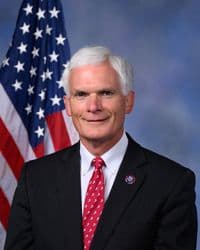
- Introduced
- 7/23/2026
- Last activity
- 7/23/2026 — Referred to the House Committee on the Judiciary.
- Sponsored by
- Robert Latta
- Cosponsors
- - 10 - 12
- Introduced
- In Committee
What this bill would do
This bill, known as the "Collaboration on Adversarial Threats and Security Risks Act," establishes an antitrust exemption for certain activities related to artificial intelligence. It allows non-Federal entities to exchange information or coordinate actions to address specific artificial intelligence security risks. These risks include threats involving national security, chemical or biological weapons, or disruptions to critical infrastructure. Entities may coordinate to delay or limit the development or release of AI, provided they give written notice to the Assistant Attorney General. The act provides an affirmative defense for such actions under antitrust laws, provided they are done in good faith and for an exclusive security purpose.
Yes· 3 of 6
Does this better protect the country from computer attacks?+7
Prevents AI from being weaponized for offensive cyber attacks and protects against theft by covered nations.
Would billionaires be better off under this?+5
Primarily benefits owners of the largest AI frontier model companies by allowing coordination without antitrust penalties.
Would business owners be better off under this?+4
Provides legal protection from antitrust lawsuits when collaborating on AI security.
The opposite· 3 of 5
Does this make what the government does easier for the public to see?-6
Specifically exempts information regarding AI release delays from public disclosure.
Does this put more rules on large technology companies?-4
Provides an antitrust exemption for large AI entities, reducing the likelihood of regulatory action against their collaboration.
Is this likely to grow the economy?-2
Potential limits on AI development and release could slow economic growth in the tech sector.
Who it would affect, and how
Potential Positive Impacts for People
-
Risk Mitigation Through Cooperation: The bill allows two or more non-Federal entities to exchange information or assistance regarding "covered artificial intelligence security risks" (Section 3(a)(1)). This could help protect against threats such as the theft or weaponization of AI by covered nations, the development of weapons, or disruptions to critical infrastructure (Section 2(6)).
-
Controlled AI Deployment: Entities can coordinate to reduce risks by delaying or limiting the release, deployment, or development of artificial intelligence (Section 3(a)(2)). This requires the entity to provide written notice to the Assistant Attorney General detailing the specific risk (Section 3(a)(2)).
-
Protection of Sensitive Information: Information submitted to the Assistant Attorney General regarding proposed restrictions is deemed voluntarily shared and is withheld from the public (Section 3(e)).
Potential Negative Impacts for People
-
Burden of Proof on Entities: If an entity uses the antitrust exemption, they bear the burden of proving by a "preponderance of the evidence" that their actions were taken in good faith and for the exclusive security purpose intended (Section 3(c)).
-
Risk of Increased Security Threats: The Attorney General can seek an injunction against these coordinated actions if it is demonstrated that the actions are "reasonably likely to result in an overall increase in covered artificial intelligence security risks" (Section 4(b)(2)).
-
Strict Limitations on Information Use: A non-Federal entity receiving information or assistance must implement "reasonable internal controls" to ensure that the information is not used for any purpose other than the specific security purpose intended (Section 3(b)).
Groups and Interests Ranking
Every group the model scored this bill for, from -10 to +10. Hover a score for the reason it gave.
- Demographic And Interest Groups
- Good For Billionaires+5Good For Business Owners+4
- National Security And Foreign Policy
- Improves Cybersecurity Defense+7
- Education And Technology
- Increases Big Tech Regulation-4
- Governance And Ideology
- Increases Federal Power+2Improves Government Transparency-6
- Healthcare
- Improves Pandemic Preparedness+4
- Economy And Finance
- Improves Consumer Protection+3Improves Economic Growth-2Improves Small Business Support-2
- Social Issues And Justice
- Improves Freedom Of Speech-1
- 9/16/2026
- 2 Cosponsors added.
- 9/15/2026
- 1 Cosponsor added.
- 9/14/2026
- 6 Cosponsors added.
- 9/8/2026
- 2 Cosponsors added.
- 9/3/2026
- 1 Cosponsor added.
- 8/31/2026
- 1 Cosponsor added.
- 7/27/2026
- 1 Cosponsor added.
- 7/23/2026
- Referred to the House Committee on the Judiciary.
- 8 Cosponsors added.
- Introduced in House
One bill Congress.gov lists as related to this one — companions in the other chamber, earlier versions, and bills this one absorbed or was folded into.
 Earl Carter
Republican · Georgia
 J. Correa
Democrat · California
 Ben Cline
Republican · Virginia
 Bill Foster
Democrat · Illinois
 Bill Huizenga
Republican · Michigan
 Chrissy Houlahan
Democrat · Pennsylvania
 Wesley Hunt
Republican · Texas
 Pat Harrigan
Republican · North Carolina
 Darrell Issa
Republican · California
 Sara Jacobs
Democrat · California
 Raja Krishnamoorthi
Democrat · Illinois
 Ted Lieu
Democrat · California
 Sam Liccardo
Democrat · California
 Seth Moulton
Democrat · Massachusetts
 Mariannette Miller-Meeks
Republican · Iowa
 Nathaniel Moran
Republican · Texas
 Jay Obernolte
Republican · California
 Lori Trahan
Democrat · Massachusetts
 Jill Tokuda
Democrat · Hawaii
 Marc Veasey
Democrat · Texas
 Randy Weber
Republican · Texas
 George Whitesides
Democrat · California