Bill · H.R. 9760· House(119-HR-9760)
National Coordination on Adaptation and Resilience for Security Act of 2026
- Introduced
- 7/16/2026
- Last activity
- 7/16/2026 — Referred to the Committee on Armed Services, and in addition to the Committees on Foreign Affairs, and Intelligence (Permanent Select), for a period to be subsequently determined by the Speaker, in each case for consideration of such provisions as fall within the jurisdiction of the committee concerned.
- Sponsored by
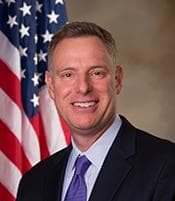
- Scott Peters
- Cosponsors
- - 0 - 2
- Introduced
- In Committee
What this bill would do
This bill, titled the "National Coordination on Adaptation and Resilience for Security Act of 2026," seeks to amend the National Security Act of 1947. It requires the Federal Government to develop and maintain a national resilience strategy to address natural hazards. To achieve this, the President will designate a Chief Resilience Officer within the National Security Council. This officer will coordinate interagency efforts and establish working groups to build resilience for the United States. Additionally, the bill creates a "Partners Council on Resilience" to provide recommendations and support for non-Federal partners. The strategy aims to improve the nation's ability to prepare for and recover from environmental threats and natural hazards.
Yes· 3 of 33
Does this better protect air, water and wildlife?+7
Establishes a national resilience strategy to address climate and natural hazard vulnerabilities.
Does this improve help for people hit by a disaster?+6
Creates a comprehensive national resilience strategy and clearinghouse for pre-disaster planning.
Would people in rural areas be better off under this?+5
Explicitly includes rural communities in technical assistance and council representation.
The opposite
No question was scored the opposite.
Who it would affect, and how
Potential Positive Impacts for People
-
Increased Community Resilience: The bill aims to build resilience to natural hazards based on the best available science, which can help protect communities and infrastructure (Section 2(a)(b)(1)).
-
Support for Vulnerable Communities: The creation of the Partners Council on Resilience is intended to help the Federal Government better support non-Federal partners, specifically targeting rural and underresourced communities, to build resilience to natural hazards (Section 2(a)(d)(2)).
-
Improved National Security Posture: The strategy intends to bolster national security by increasing resilience both domestically and abroad, specifically regarding military installations (Section 2(a)(b)(2)).
-
Better Access to Federal Resources: The bill includes provisions to clarify, simplify, and harmonize planning and application processes, making it easier for non-Federal partners to access Federal funds for resilience efforts (Section s 2(a)(e)(1)(D)(i)(II)).
-
Technical Assistance for Local Entities: The establishment of an adaptation and resilience clearinghouse is intended to increase the accessibility and utility of technical assistance for non-Federal partners (Section 2(a)(f)(2)).
Potential Negative Impacts for People
-
Increased Government Spending and Oversight: The bill establishes several new entities, including a Chief Resilience Officer, interagency working groups, a Partners Council on Resilience, and a clearinghouse, all of which require personnel and resources (Section 2(a)(b), (c), (d), and (f)).
-
Burden on Federal Agencies: Federal agencies may be required to detail employees to various working groups and provide resources as determined by agency heads in consultation with the Chief Resilience Officer (Section 2(a)(c)(3)).
Groups and Interests Ranking
Every group the model scored this bill for, from -10 to +10. Hover a score for the reason it gave.
- Demographic And Interest Groups
- Good For Rural Residents+5Good For Native Americans+4Good For Farmers+3Good For African Americans+2Good For Asian Americans+2Good For Business Owners+2Good For Children+2Good For Hispanic Americans+2Good For Middle Aged+2Good For Middle Class Households+2Good For People With Disabilities+2Good For Retirees+2Good For Seniors+2Good For Urban Residents+2Good For Veterans+2Good For Young Adults+2
- Environment Energy And Infrastructure
- Improves Environmental Protections+7Improves Disaster Relief And F E M A+6Improves Public Land Management+4Improves Roads And Bridges+4Improves Rural Development+4Increases Renewable Energy Investment+3Improves Public Transit+2
- Governance And Ideology
- Improves Government Transparency+4Increase States Rights+3Increases Federal Power+3Improves Interstate Commerce+2
- Economy And Finance
- Improves Economic Growth+3Improves Small Business Support+3Improves Fiscal Responsibility+2
- Education And Technology
- Increases Scientific Research Funding+4
- Social Issues And Justice
- Improves Poverty Reduction+2Improves Racial Equity+2
- 9/14/2026
- 1 Cosponsor added.
- 7/16/2026
- Referred to the Committee on Armed Services, and in addition to the Committees on Foreign Affairs, and Intelligence (Permanent Select), for a period to be subsequently determined by the Speaker, in each case for consideration of such provisions as fall within the jurisdiction of the committee concerned.
- 1 Cosponsor added.
- Introduced in House
One bill Congress.gov lists as related to this one — companions in the other chamber, earlier versions, and bills this one absorbed or was folded into.
 Michael Lawler
Republican · New York
 Maria Salazar
Republican · Florida