Bill · H.R. 9558· House(119-HR-9558)
21st Century Federal Writers’ Project Act
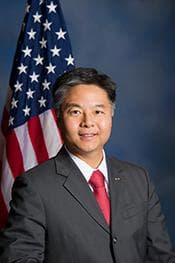
- Introduced
- 6/30/2026
- Last activity
- 6/30/2026 — Referred to the House Committee on Education and Workforce.
- Sponsored by
- Ted Lieu
- Cosponsors
- - 4 - 0
- Introduced
- In Committee
What this bill would do
H.R. 9558 establishes the 21st Century Federal Writers' Project Act to document the American experience for the 250th anniversary of the founding of the United States. The National Endowment for the Arts will run a competitive grant program to fund nonprofit organizations, state arts agencies, and commissions that hire writers, photographers, and artists. The bill creates an advisory panel and mandates an editorial framework to ensure projects cover various geographic regions and demographics. Grant recipients must submit their finished works to a public repository and the Library of Congress for permanent archiving and distribution. Finally, the Chair of the NEA must report annually to Congress on how the program is operating and spending its funds.
Yes· 3 of 25
Is this likely to create jobs?+4
The bill creates employment opportunities for writers, photographers, and documentary artists through grant funding.
Would students be better off under this?+3
Provides free public access to historical and cultural repositories for educational use.
Would people in rural areas be better off under this?+3
Directly mandates inclusion of rural areas and provides barrier-free grants to under-resourced local entities.
The opposite
Does this reduce what the federal government spends?-2
The legislation authorizes federal grant funding and allows up to 20 percent for administrative costs.
Who it would affect, and how
Potential Positive Impacts for People
-
Section 3(c)(2): This provision waives the standard matching requirement for grants. This is positive because it removes financial hurdles that often prevent smaller or under-resourced community organizations from applying for federal funding.
-
Section 3(d)(2) and Section 3(g): These sections open up eligibility to diverse groups—including nonprofit organizations, State arts agencies, Tribal communities, and rural areas—while requiring geographic and demographic balance. This ensures that historically underserved communities across the country get a fair chance to share their unique local histories and stories.
-
Section 3(h): This section directs the creation of a publicly accessible repository and an archive program within the American Folklife Center at the Library of Congress. This benefits the public by making completed books, digital media, audio recordings, and visual works freely available for future generations to study and enjoy.
Potential Negative Impacts for People
- Section 3(j): This provision allows the Chair of the National Endowment for the Arts to reserve up to 20 percent of the program's funds for administrative costs. This could be viewed as a negative because it takes a significant portion of taxpayer money away from actual writers and artists on the ground and puts it toward bureaucratic overhead.
Groups and Interests Ranking
Every group the model scored this bill for, from -10 to +10. Hover a score for the reason it gave.
- Demographic And Interest Groups
- Good For Rural Residents+3Good For Students+3Good For African Americans+2Good For Asian Americans+2Good For Hispanic Americans+2Good For Immigrants+2Good For Low Income Households+2Good For Native Americans+2Good For Young Adults+2Good For Children+1Good For Farmers+1Good For L G B T Q Community+1Good For Urban Residents+1Good For White Americans+1Good For Women+1
- Governance And Ideology
- Improves Government Transparency+3Improves Freedom Of Speech+2Increase States Rights+1Increases Federal Power+1
- Economy And Finance
- Increases Job Creation+4Improves Small Business Support+3Improves Economic Growth+1Reduces Government Spending-2
- Social Issues And Justice
- Improves Freedom Of Speech+2Improves Racial Equity+2
- Environment Energy And Infrastructure
- Improves Rural Development+3
- 6/30/2026
- Referred to the House Committee on Education and Workforce.
- 4 Cosponsors added.
- Introduced in House
 Teresa Leger Fernandez
Democrat · New Mexico
 Eleanor Norton
Democrat · District of Columbia
 Paul Tonko
Democrat · New York
 Nikema Williams
Democrat · Georgia