Bill · H.R. 9222· House(119-HR-9222)
Drain the Swamp Act
- Introduced
- 6/9/2026
- Last activity
- 6/9/2026 — Referred to the Committee on the Judiciary, and in addition to the Committees on Oversight and Government Reform, House Administration, Ways and Means, and Rules, for a period to be subsequently determined by the Speaker, in each case for consideration of such provisions as fall within the jurisdiction of the committee concerned.
- Sponsored by
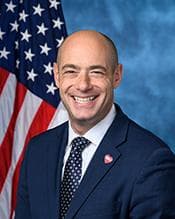
- Greg Landsman
- Cosponsors
- - 2 - 0
- Introduced
- In Committee
What this bill would do
The "Drain the Swamp Act" is a comprehensive bill designed to implement significant reforms to the federal government and its leadership. It establishes bans on stock trading and participation in prediction markets for high-ranking officials, including the President and Members of Congress. The legislation introduces term limits for both Congress and the Supreme Court while establishing new ethics and investigation requirements for the Court. Additionally, the bill aims to reform the presidential pardon power, strengthen the enforcement of emoluments clauses, and overturn the Citizens United decision. It also includes provisions to reduce the pay of Members of Congress during government shutdowns or debt limit reaches and places restrictions on government pensions and lawsuits. Finally, the bill introduces reforms regarding election transparency, judicial nominations, and redistricting.
Yes· 3 of 17
Does this protect the right to vote?+9
The bill restores and expands federal oversight of voting rights through the John R. Lewis Voting Rights Advancement Act and nonpartisan redistricting reforms.
Does this make what the government does easier for the public to see?+8
The bill mandates increased disclosure for campaign disbursements, judicial nominations, and foreign emoluments.
Does this narrow racial gaps in how people are treated?+7
The bill strengthens the Voting Rights Act to protect against racial discrimination in voting and redistricting.
The opposite· 3 of 6
Would people with substantial wealth be better off under this?-5
The bill imposes strict bans on stock trading and prediction market participation for high-ranking officials.
Would the very wealthiest people be better off under this?-5
The bill contains strict financial restrictions on prominent government officials.
Would billionaires be better off under this?-5
The bill targets political spending and transparency that may affect high-net-worth political actors.
Who it would affect, and how
Potential Positive Impacts for People
-
Financial Integrity for Officials: By banning the trade of covered investments and participation in prediction markets, the bill aims to prevent conflicts of interest among the President, Vice President, and Members of Congress (Sec. 102; Sec. 1402; Sec. 1402(a)).
-
Accountability During Government Shutdowns: The bill requires a reduction in pay for Members of Congress if a government shutdown or a reach of the public debt limit occurs, ensuring officials share the burden of fiscal standoffs (Sec. 202; Sec. 203).
-
Supreme Court Term Limits and Ethics: The bill establishes 18-year terms for Supreme Court Justices and creates an Office of Ethics Counsel and an Office of Investigative Counsel to provide guidance and investigate potential violations (Sec. 302; Sec. 502; Sec. 503).
-
Checks on Presidential Power: The legislation prohibits presidential self-pardons and requires congressional oversight for certain pardons involving specific high-level targets (Sec. 602; Sec. 604).
-
Protection of Democracy and Voting Rights: The bill includes the "John R. Lewis Voting Rights Advancement Act" to address vote dilution and denial, and a constitutional amendment designed to allow Congress and States to regulate political spending (Sec. 1102; Sec. 701).
-
Increased Transparency in Campaign Spending: The bill requires covered organizations to disclose beneficial owners and detailed information regarding campaign-related disbursements (Sec. 802).
-
Increased Transparency in Judicial Nominations: The bill requires disclosure of payments made by covered organizations for communications that support or oppose federal judicial nominees, which aims to show the public who is funding these efforts (Section 803).
-
Fairer Redistricting Processes: By establishing a specific order of priority for redistricting criteria—including population equality and compliance with the Voting Rights Act—the bill aims to ensure districts represent communities of interest more effectively (Section 1004).
-
Prevention of Partisan Gerrymandering: The bill prohibits states from using redistricting plans that have the intent or effect of materially favoring or disfavoring a political party (Section 1004).
-
Protection Against Voter Dilution and Denial: The updates to the Voting Rights Act provide more detailed factors for courts to consider when determining if a voting practice results in the dilution or denial of rights for protected classes (Section 1102).
-
Enhanced Public Information on Voting: The bill requires states to provide public notice regarding changes to polling place resources, such as the number of voting machines and poll workers, which can help voters prepare (Section 1107).
-
Expanded Voting Rights Enforcement: The bill allows "an aggrieved person" to institute actions regarding voting qualifications or prerequisites that might violate constitutional amendments or federal law (Section 1109(b)).
-
Improved Access to Voting Relief: In cases seeking equitable relief, courts are instructed to give "substantial weight to the public's interest in expanding access to the right to vote" (Section 1111(b)(1)).
-
Support for Small Jurisdictions: The Attorney General is directed to make annual grants to "small jurisdictions" to assist them in complying with notice requirements under the Voting Rights Act (Section 1117(a)).
-
Increased Accountability for Officials: The bill mandates the forfeiture of federal retirement benefits for Members of Congress and Cabinet members if they are "finally convicted" of specific felonies committed while in office (Section s 1201(a)).
-
Accountability for Former Presidents: Former Presidents convicted of certain felonies may lose their monetary allowances and are required to repay specific amounts received during the period leading up to their conviction (Section 1202(h)(1)).
-
Prevention of Unfair Financial Advantage: The PREDICT Act prohibits "covered individuals," including the President and members of Congress, from participating in transactions dependent on the occurrence of specific political events (Section 1402(a)).
Potential Negative Impacts for People
-
Financial Burdens for Officials: Members of Congress may face financial penalties or loss of pay due to trading violations or government shutdowns (Sec. 102; Sec. 203).
-
Changes to Supreme Court Service: The implementation of 18-year terms would result in current Justices being deemed to have retired from regular active service (Sec. 302).
-
Legal and Financial Risks for the Presidency: The bill introduces new restrictions on the President's ability to accept payments from Federal or State funds and prohibits certain payments from individuals receiving clemency (Sec. 631; Sec. 632).
-
Impact on Political Organizations: The bill aims to limit the authority of corporations to operate separate segregated funds for political purposes (Sec. 902).
-
Burden on Organizations for Disclosure: Organizations may face new requirements to include information in statements when making large payments related to judicial nominations (Section 803).
-
Restrictions on Corporate Political Activity: Under the "Ban Corporate PACs Act," corporations may be limited in their ability to establish or operate separate segregated funds for political purposes, restricting them primarily to nonprofit corporations (Section 902).
-
Potential Legal Complexity for States: The new redistricting rules create a detailed process where states must meet specific criteria or face lawsuits and the potential for a court to develop a replacement plan (Section 1006).
-
Increased Requirements for Local Jurisdictions: Local political subdivisions may face new obligations to provide public notice regarding changes to voting-age population data and electoral district boundaries (Section 1107).
-
Increased Burden on Defendants in Voting Cases: When considering preliminary relief, courts must consider whether the "hardship imposed on the defendant... will be less than the hardship which would be imposed on the plaintiff" (Section 1110(2)(A)).
-
Loss of Benefits for Officials: Members of Congress, Cabinet members, and former Presidents face the loss of pension and/or monetary allowances upon being "finally convicted" of specific crimes (Sections 1201 and 1202).
-
Restrictions on Lawsuits: The bill amends the Federal Tort Claims Act to include exceptions for claims brought by the President and certain relatives, and requires an ad hoc committee of Congress to approve claims brought by former Presidents (Section 1301).
-
Financial Penalties for Prediction Market Trading: Individuals classified as "covered individuals" who violate the restrictions on prediction market trading face fees equal to ten percent of the transaction value and must disgorge profits (Section 1402(c)(1)).
Groups and Interests Ranking
Every group the model scored this bill for, from -10 to +10. Hover a score for the reason it gave.
- Social Issues And Justice
- Improves Voting Rights+9Improves Racial Equity+7Improves Voting Access+6Improves Policing Reform+4
- Demographic And Interest Groups
- Good For African Americans+7Good For Asian Americans+7Good For Hispanic Americans+7Good For Native Americans+7Good For Low Income Households+5Good For People With Disabilities+5Good For Women+4Good For White Americans+1Good For Billionaires-5Good For High Net Worth Individuals-5Good For Ultra High Net Worth Individuals-5Good For Business Owners-4Good For Retirees-2
- Governance And Ideology
- Improves Government Transparency+8Improves Electoral Process+7Increase States Rights-3
- Economy And Finance
- Improves Consumer Protection+5Improves Fiscal Responsibility+5Improves Small Business Support+1
- 6/29/2026
- 1 Cosponsor added.
- 6/9/2026
- Referred to the Committee on the Judiciary, and in addition to the Committees on Oversight and Government Reform, House Administration, Ways and Means, and Rules, for a period to be subsequently determined by the Speaker, in each case for consideration of such provisions as fall within the jurisdiction of the committee concerned.
- 1 Cosponsor added.
- Introduced in House
8 bills Congress.gov lists as related to this one — companions in the other chamber, earlier versions, and bills this one absorbed or was folded into.
- 119-HR-14: John R. Lewis Voting Rights Advancement Act of 2025
- 119-HR-1973: No Pay for Congress During Default or Shutdown Act
- 119-HR-3544: Supreme Court Tenure Establishment and Retirement Modernization Act of 2025
- 119-HR-4799: Ban Corporate PACs Act
- 119-HR-6731: Restore Trust in Government Act
- 119-HR-7692: Supreme Court Ethics and Investigations Act
- 119-S-2515: Ban Corporate PACs Act
- 119-S-3914: Supreme Court Ethics and Investigations Act
 Josh Riley
Democrat · New York
 Melanie Stansbury
Democrat · New Mexico