Bill · H.R. 7692· House(119-HR-7692)
Supreme Court Ethics and Investigations Act
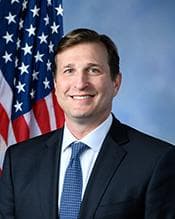
- Introduced
- 2/25/2026
- Last activity
- 2/25/2026 — Referred to the House Committee on the Judiciary.
- Sponsored by
- Daniel Goldman
- Cosponsors
- - 10 - 0
- Introduced
- In Committee
What this bill would do
This bill, known as the "Supreme Court Ethics and Investigations Act," seeks to amend title 28 of the United States Code. It proposes the creation of two new entities within the Supreme Court: an Office of Ethics Counsel and an Office of Investigative Counsel. The Office of Ethics Counsel would provide guidance to justices and their spouses regarding financial disclosures, gifts, political activity, and conflicts of interest. The Office of Investigative Counsel would be tasked with reviewing and investigating ethics complaints against justices and their families. This new office would also possess subpoena power to compel testimony and the production of documents.
Yes
Does this make what the government does easier for the public to see?+6
The act establishes clear reporting requirements and a formal process for investigating ethics complaints involving Supreme Court justices.
Does this make elections run better?+5
The bill increases transparency and accountability within the Supreme Court through mandatory ethics training and investigative oversight.
The opposite
No question was scored the opposite.
Who it would affect, and how
Potential Positive Impacts for People
-
Guidance on Ethics: The Office of Ethics Counsel would advise justices and their spouses on important matters such as financial disclosures, accepting gifts, political activity, and conflicts of interest (Section 2(a)(2)).
-
Mandatory Training: Justices would be required to take a training course on judicial ethics every two years (Section 2(c)).
-
Transparency through Reporting: The chief ethics counsel must submit an annual report to the House and Senate Judiciary Committees, detailing how often advice was sought, the topics covered, and whether the advice was followed (Section 2(d)).
-
Investigation of Complaints: The Office of Investigative Counsel can review and investigate ethics complaints against justices, including those involving their spouses and dependents (Section 3(a)(2)).
-
Accountability for Investigations: The Office of Investigative Counsel is required to report findings and recommendations to the Chief Justice or the most senior associate justice, and must inform the Attorney General if there are reasonable grounds to believe a federal criminal law was violated (Section 3(c)(4)).
Potential Negative Impacts for People
-
Potential for Subpoenas: The Chief Investigative Counsel would have the authority to issue subpoenas to compel witnesses to appear and produce books, papers, or other relevant records (Section 3(a)(2)(B)).
-
Legal Consequences for Non-compliance: If a person refuses to obey a subpoena issued by the Office, they could face a court order and potentially be punished by contempt of court (Section 3(a)(2)(B)).
Groups and Interests Ranking
Every group the model scored this bill for, from -10 to +10. Hover a score for the reason it gave.
- Governance And Ideology
- Improves Government Transparency+6Improves Electoral Process+5
- 4/27/2026
- 1 Cosponsor added.
- 2/25/2026
- Referred to the House Committee on the Judiciary.
- 9 Cosponsors added.
- Introduced in House
2 bills Congress.gov lists as related to this one — companions in the other chamber, earlier versions, and bills this one absorbed or was folded into.
 Sylvia Garcia
Democrat · Texas
 Glenn Ivey
Democrat · Maryland
 Henry Johnson
Democrat · Georgia
 Raja Krishnamoorthi
Democrat · Illinois
 Greg Landsman
Democrat · Ohio
 Jerrold Nadler
Democrat · New York
 Eleanor Norton
Democrat · District of Columbia
 Paul Tonko
Democrat · New York
 Shri Thanedar
Democrat · Michigan
 George Whitesides
Democrat · California