Bill · H.R. 8979· House(119-HR-8979)
Elementary and Secondary School Counseling Act
- Introduced
- 5/21/2026
- Last activity
- 5/21/2026 — Referred to the House Committee on Education and Workforce.
- Sponsored by
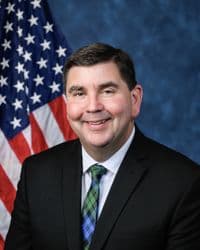
- John Mannion
- Cosponsors
- - 9 - 0
- Introduced
- In Committee
What this bill would do
The Elementary and Secondary School Counseling Act addresses mental health needs in public schools by establishing grants to increase access to providers. The bill aims to help high-need public elementary and secondary schools recruit and retain professionals like school counselors, psychologists, and social workers. It sets specific targets for student-to-provider ratios to ensure students receive adequate care and support. The Secretary of Education will award grants to States, which in turn provide competitive subgrants to local educational agencies. States and local agencies must report annually on their progress and how funds are used to improve these ratios. The legislation authorizes an appropriation of $5,000,000,000 for fiscal year 2027 to fund these efforts.
Yes· 3 of 7
Would children be better off under this?+8
The bill provides essential mental health staffing for children in elementary and secondary schools.
Does this make mental health care easier to get?+8
The bill increases access to school-based mental health services by funding the recruitment and retention of providers.
Would students be better off under this?+7
The bill aims to improve student well-being through better counselor-to-student ratios.
The opposite
Does this reduce what the federal government spends?-1
The bill authorizes $5,000,000,000 in new federal spending for school counseling services.
Who it would affect, and how
Potential Positive Impacts for People
-
Section 4(e)(1) allows local educational agencies to recruit and retain school-based mental health services providers or contract with community mental health centers in high-need schools. This provision directly benefits students by increasing their access to trained professionals who can address anxiety, depression, and other behavioral health conditions.
-
Section 4(e)(2) requires States to give priority in awarding subgrants to local educational agencies that serve a significant number of high-need schools. This ensures that federal resources are directed toward the communities and students who need mental health support the most.
-
Section 4(g)(3) mandates that progress reports from States be made available to the public on the Department of Education website and submitted to Congress. This provides accountability so that we can ensure our elected officials and agencies are actively working to improve student mental health staffing.
Potential Negative Impacts for People
- Section 4(c) requires States to provide matching funds equal to 20 percent of the federal grant amount in order to receive assistance. This could place a financial burden on State budgets, potentially forcing States to divert funds away from other critical public programs or education needs.
Groups and Interests Ranking
Every group the model scored this bill for, from -10 to +10. Hover a score for the reason it gave.
- Demographic And Interest Groups
- Good For Children+8Good For Students+7Good For Native Americans+6Good For Low Income Households+5
- Healthcare
- Improves Mental Health Access+8
- Education And Technology
- Increases Public School Funding+7
- Social Issues And Justice
- Improves Poverty Reduction+3
- Economy And Finance
- Reduces Government Spending-1
- 9/28/2026
- 1 Cosponsor added.
- 8/20/2026
- 1 Cosponsor added.
- 7/9/2026
- 1 Cosponsor added.
- 6/23/2026
- 1 Cosponsor added.
- 6/18/2026
- 1 Cosponsor added.
- 5/21/2026
- Referred to the House Committee on Education and Workforce.
- 4 Cosponsors added.
- Introduced in House
3 bills Congress.gov lists as related to this one — companions in the other chamber, earlier versions, and bills this one absorbed or was folded into.
 Julia Brownley
Democrat · California
 Angie Craig
Democrat · Minnesota
 Troy Carter
Democrat · Louisiana
 Shomari Figures
Democrat · Alabama
 Jahana Hayes
Democrat · Connecticut
 Ted Lieu
Democrat · California
 Eleanor Norton
Democrat · District of Columbia
 Linda Sánchez
Democrat · California
 Lauren Underwood
Democrat · Illinois