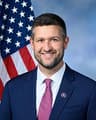
Patrick Ryan (D-NY)
Stop Sports Blackouts Act of 2025
A Democratic bill with 7 Democratic cosponsors · See all 7 cosponsors
Last activity — Referred to the House Committee on Energy and Commerce.
In committee
Introduced and handed to a committee in the chamber it started in.
The committee holds it, and most bills are never heard from again. A hearing or a committee vote would be news; silence is the usual outcome, and it kills the bill without anyone voting against it.
Its path through Congress
- Introduced
- In Committee
What this bill would do
This bill, known as the "Stop Sports Blackouts Act of 2025," seeks to amend the Communications Act of 1934. It directs the Federal Communications Commission to create new regulations regarding rebates for video programming blackouts. These regulations would require providers to issue rebates to subscribers when access to agreed-upon video programming is denied due to a covered negotiation. The Commission would also be responsible for establishing the appropriate amount for these rebates.
Yes· 3 of 4
- Scored +6
Does this give people more protection from unfair business practices?
The bill requires providers to issue rebates to subscribers when access to agreed-upon video programming is denied during negotiations.
- Scored +3
Would households on low incomes be better off under this?
The rebate requirement provides a financial remedy to all subscribers, including those on low incomes, when service is interrupted.
- Scored +3
Would middle-income households be better off under this?
Subscribers will receive rebates to compensate for lost programming access during contract negotiations.
The opposite
No question was scored the opposite.
Who it would affect, and how
Potential Positive Impacts for People
-
Rebates for lost programming: Under Section 2 (SEC. 723(a)(1)), the bill would require a provider to issue a rebate to a subscriber if they are denied access to video programming that was agreed upon at the time of subscription or renewal due to a covered negotiation. This ensures people get money back when they aren't getting the content they signed up for.
-
Established rebate amounts: Per Section 2 (SEC. 723(a)(2)), the Commission will establish the appropriate amount of the rebate, providing a standard for what a subscriber should receive.
Potential Negative Impacts for People
- There are no specific negative impacts or burdens for individuals or groups of people explicitly mentioned in the provided text of this bill.
Groups and Interests Ranking
Every group the model scored this bill for, from -10 to +10. Tap or hover a score for the reason it gave.
- Demographic And Interest Groups
- Would households on low incomes be better off under this? — The rebate requirement provides a financial remedy to all subscribers, including those on low incomes, when service is interrupted. Would middle-income households be better off under this? — Subscribers will receive rebates to compensate for lost programming access during contract negotiations. Would people in cities be better off under this? — The bill provides a mechanism for compensation to all subscribers affected by programming blackouts.
- Economy And Finance
- Does this give people more protection from unfair business practices? — The bill requires providers to issue rebates to subscribers when access to agreed-upon video programming is denied during negotiations.
- 4/23/2026
- 2 Cosponsors added.
- 2/26/2025
- 1 Cosponsor added.
- 2/21/2025
- 1 Cosponsor added.
- 1/31/2025
- Referred to the House Committee on Energy and Commerce.
- 3 Cosponsors added.
- Introduced in House
One bill Congress.gov lists as related to this one — companions in the other chamber, earlier versions, and bills this one absorbed or was folded into.
 André Carson
Democrat · Indiana
 Christopher Deluzio
Democrat · Pennsylvania
 Daniel Goldman
Democrat · New York
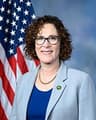 Val Hoyle
Democrat · Oregon
 Seth Magaziner
Democrat · Rhode Island
 LaMonica McIver
Democrat · New Jersey
 Eleanor Norton
Democrat · District of Columbia