Bill · H.R. 8870· House(119-HR-8870)
BUILD America 250 Act
- Introduced
- 5/19/2026
- Last activity
- 5/22/2026 — Ordered to be Reported (Amended) by the Yeas and Nays: 62 - 2.
- Sponsored by
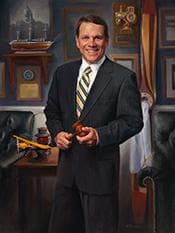
- Sam Graves
- Cosponsors
- - 3 - 2
- Introduced
What this bill would do
The BUILD America 250 Act is a legislative proposal designed to authorize funding for a wide range of national infrastructure needs, including federal-aid highways, bridges, transit, and rail programs. The bill aims to streamline environmental reviews and improve project delivery for large-scale transportation projects through various regulatory updates. It establishes new grant programs for passenger ferries, surface transportation workforce development, and commercial motor vehicle parking. Additionally, the legislation implements significant changes to federal railroad oversight, including safety standards and transparency requirements for Amtrak. The bill also addresses emerging technologies, such as automated driving systems, and provides specific protections for various transport workers. These provisions establish various funding levels and program authorizations spanning fiscal years 2027 through 2031.
Yes· 3 of 45
Does this repair or build roads and bridges?+9
The bill provides extensive authorizations and grant programs for federal-aid highways, bridge construction, and rehabilitation.
Does this improve buses, trains and other public transport?+8
The legislation authorizes substantial multi-year funding and reforms for public transportation and transit asset management.
Would business owners be better off under this?+6
Enhanced freight networks, streamlined project delivery, and reduced supply chain bottlenecks support business owners.
The opposite
Does this reduce what the federal government spends?-4
The bill provides billions in federal funding authorizations for highways, transit, rail, and safety programs.
Does this reduce what the federal government owes?-3
The legislation authorizes substantial multi-year federal funding and appropriations out of the Highway Trust Fund and General Fund.
Who it would affect, and how
Potential Positive Impacts for People
-
Increased Funding for Vital Infrastructure: The bill authorizes billions of dollars for national highway performance, bridge rebuilding, and tribal transportation programs to improve movement and safety (Sec. 1101).
-
Enhanced Safety Measures and Evaluations: Provisions include funding for the Safe Streets and Roads for All program, the Highway Safety Improvement Program, and requirements to evaluate project effectiveness using predictive analytics and telematics (Sec. 1101; Sec. 1117; Section 148).
-
Support for Disadvantaged Businesses: The Act maintains the disadvantaged business enterprise program to help small business owners overcome social and economic barriers in federally assisted transportation markets (Sec. 1101(e)).
-
Improved Bridge Safety and Reliability: Through the bridge completion program and specific state apportionment mechanisms, the bill aims to improve the safety, efficiency, and reliability of bridges (Sec. 1108).
-
Streamlined Project Delivery: The bill includes measures for efficient environmental reviews, the elimination of duplication, and the early acquisition of real property interests to speed up project decision-making (Sec. 1203; Sec. 1209; Section 5323).
-
Protection for Bus Operators and Transit Workers: There are provisions to protect bus operators from the risk of assault, including a mandate for fixed-route transit buses 30 feet or longer to be equipped with workstation barriers (Sec. 3102).
-
Improved Infrastructure for Vulnerable Users: The bill includes the All Stations Accessibility Program to upgrade legacy rail systems for individuals with disabilities and tasks the Comptroller General with assessing universal design concepts (Section 3005(h); Section 3111).
-
Increased Funding for Rural Areas: The Safe Streets and Roads for All Grant Program includes a set-aside of at least 30 percent for projects in areas with a population of 50,000 or fewer (Section 24112).
-
Support for Digital and Advanced Technology: The CMAQ program is expanded to include projects that deploy advanced transportation technologies to reduce congestion and improve air quality (Section 149).
-
Improved Commercial Driver Safety: The creation of a program for parking for commercial motor vehicles aims to provide public parking and improve driver safety (Section 180).
-
Increased Connectivity and Economic Growth: The Surface Transportation Accelerator Grant Program is designed to increase connectivity, improve safety, and generate regional economic growth (Section 173).
-
Increased Flexibility for States: The Secretary is directed to revise template programmatic agreements to include more project types, increasing flexibility for States carrying out environmental reviews (Section 1318(b)).
-
Streamlined Tribal Project Processes: The bill seeks to develop shared procedures allowing project sponsors to submit a single document to demonstrate compliance with categorical exclusion conditions (Section 1216).
-
Improved Safety Information: The Secretary is tasked with publishing a uniform checklist to help project sponsors determine if certain safety projects qualify for categorical exclusions (Section 1217).
-
Workforce Development: A new task force and national transit workforce development center are established to attract and retain individuals in the surface transportation sector through various training and education pathways (Section 1325; Section 3010, subsection (b)).
-
Financial Relief for Disaster Victims: The bill allows for emergency loan relief for TIFIA program borrowers facing major disasters, potentially resetting interest rates to a lower level (Section 2002).
-
Increased Economic Development Incentives: The Secretary may increase an economic development rating if an applicant provides evidence of local policies promoting housing development near transit routes (Section s 3007, subsection (g)(2)(D)).
-
Improved Security and Safety: New eligible expenses for security include increased lighting, camera surveillance, emergency telephone lines, and the hiring of transit support specialists (Section 3012, subsection (a)).
-
Enhanced Mobility for Seniors and Individuals with Disabilities: The bill provides formula grants specifically for the enhanced mobility of these groups (Section 3008).
-
Support for Passenger Ferry Projects: New grants are authorized to help local governments and states purchase, replace, or rehabilitate passenger ferries and related facilities (Section 3101).
-
Enhanced Emergency Preparedness: A rulemaking committee will determine if public transportation vehicles and stations should be equipped with first aid and emergency medical kits (Section 3107).
-
Improved Highway Safety Initiatives: States must use specific portions of highway safety funds to address occupant protection, impaired driving, distracted driving, and motorcyclist safety (Section 4002).
-
Improved Safety for Nonmotorists: Funds are allocated for programs to improve the safety of pedestrians and cyclists, including digital alert technology (Section 4002).
-
Improved Crash Data and Research: The bill establishes a national drug-involved crash data collection system to track the role of drugs in serious injury and fatal crashes (Section 403(j)).
-
Enhanced Driver Safety Technology: The bill focuses on research into digital infrastructure and in-vehicle technology to prevent alcohol-impaired driving (Section 403(a)(1); Section 403(b)(1)).
-
Public Safety Education: The bill mandates school bus safety and car seat safety campaigns to educate the public (Section 404(a)(f)(1); Section 404(a)(g)).
-
Protection for Commercial Drivers: Commercial drivers are granted access to restroom facilities at covered establishments and receive new oversight regarding lease-purchase agreements (Section 5102(a); Section 5101(a)).
-
Increased Transparency: The Secretary is required to make a public dashboard available displaying analyzed funded projects and state safety performance targets (Section 402(o)(3)).
-
Workforce Support for New Tech: A workforce development program is established to provide grants for training current drivers and creating new opportunities for mechanics and technicians working with new technologies (SEC. 5407).
-
Safety Standards for New Tech: The bill requires specific standards for ADS-equipped vehicles, such as digital hazard alerting (SEC. 5403 (C)(vi)).
-
Improved Accessibility for Automated Vehicles: A study will be conducted on how infrastructure can help individuals with disabilities safely access ride-hail ADS-equipped vehicles (SEC. 6012).
-
Protection of Personal Data: The Secretary is directed to protect personally identifiable information when using predictive analytics or telematics (SEC. 6010).
-
Enhanced Freight Efficiency: The FLOW Program aims to improve freight system efficiency, resilience, and supply chain visibility through data sharing (SEC. 7006).
-
Support for International Events: Assistance is provided for transportation projects to move people and goods during major international sporting events (SEC. 7104).
-
Emergency Assistance for Infrastructure: The Secretary may provide grants or contracts to help entities repair or replace rail infrastructure damaged by emergencies (Section 10108(a)).
-
Enhanced Passenger Safety and Training: Passenger rail operators must submit plans to prevent and respond to incidents of assault and harassment (Section s 10205(b)).
-
Improved Passenger Amenities: New requirements ensure that all covered passenger rail trains purchased after the Act includes a baby changing table in at least one restroom per car (Section 10206(b)).
-
Increased Safety Monitoring: A new system allows government entities to report safety concerns regarding the condition of railroad bridges (Section 10401(a)).
-
Enhanced Freight Security: The bill authorizes a pilot program for rail technology aimed at improving safety and reducing cargo theft (Section 10408(a)).
-
Protection for Safety Reporting: A confidential "close call" reporting system is established to allow railroad employees to report unsafe events without fear of identification or discipline (Section 10420(d)).
-
Employee Safety Protections: The "close call" reporting system provides de-identification of reports to protect employee identity (Section (h)(3)).
-
Protection from Retaliation: Employees reporting through the confidential system are afforded protections against adverse actions like discipline or certification revocation (Section (j)(3) and (j)(4)).
-
Enhanced Training for Engineers: The bill requires training for all certified locomotive engineers on manual operation and mandates annual refresher training (Section 10424(a)(1) and (a)(2)).
-
Increased Safety for Workers: Railroad watchmen and lookouts will be provided with task and environment warning equipment (Section 10422).
-
Expanded Economic Opportunities: A "Veteran to Supply Chain Employee Action Plan" will identify ways to help veterans enter and remain in supply chain careers (Section 10507).
-
Improved Infrastructure Through Federal Aid: Financial assistance is expanded for rail projects, including those incorporating housing (Section 10506(b)(1)(10)).
Potential Negative Impacts for People
-
Economic Burdens on Specific Entities: The bill includes a provision for a registration fee on motor vehicles (Sec. 1129).
-
Strict Obligation Limits: The bill imposes limitations on the amount of obligations that can be made for federal-aid highway and highway safety construction programs (Sec. 1102).
-
Potential Reductions in Federal Share for Non-compliant States: States failing to implement required asset management plans may face a reduced Federal share for certain projects (Sec. 1106).
-
New Fees for Vehicle Owners: The bill imposes annual registration fees on owners of covered electric vehicles ($130) and covered plug-in hybrid vehicles ($35) (Section 182).
-
Potential for Increased Project Costs: The bill includes provisions to adjust the estimated total cost of major projects to reflect inflation (Section 106).
-
Restrictions on Electric Bicycle Use: The bill allows state or local governments to restrict or prohibit the operation of electric bicycles on nonmotorized recreational trails (Section 206).
-
Limitations on the Use of Funds for Certain Activities: Under the commercial motor vehicle parking program, funds cannot be used for construction that enables charging or fueling infrastructure (Section s180(h)(3)(A)).
-
New Requirements for Roadside Safety: The Secretary is authorized to issue regulations that may require new laboratory testing and maintenance standards for roadside safety hardware (Section 1307(b)(3)(A)(i)).
-
Restrictions on Safety Hardware Reimbursements: Entities may be ineligible for Federal-aid reimbursement if new roadside safety hardware does not meet specific new regulatory requirements (Section 1307(a)(1)).
-
Potential Burden on State/Local Selection Processes: The consolidated block grant program requires States to follow specific application/selection procedures, including annual reports and audits (Section 3006).
-
Mandatory Penalties for Fare Evasion: Starting in fiscal year 2028, the Secretary must withhold 10 percent of assistance if a state or local government does not treat fare evasion as a criminal or civil offense (Section 3012, subsection (e)).
-
Restrictions on Procurement: The bill prohibits awarding funds for the procurement of certain "covered vehicles" from specific entities or nations (Section s 3019, subsection (u)).
-
Project Delivery Changes: The shift to "streamlined start" projects and alternative project delivery methods changes how projects are designed and constructed (Section 3007, subsection (h)).
-
Increased Costs for Transit Agencies: Mandating workstation barriers on buses involves costs related to procurement, installation, and retrofitting (Section 3102).
-
Potential Financial Burdens for Project Sponsors: The bill includes a study to assess costs and delays associated with data collection and reporting requirements for capital investment grants (Section 3114).
-
Administrative and Regulatory Changes for Industry: Manufacturers of autonomous driving systems must meet strict safety standards and provide detailed safety cases (Section 402(a)(2)(b)(1)).
-
Increased Obligations for Employers: Employers may need to maintain more extensive records, such as post-accident alcohol or controlled substance test records for at least five years (Section 5208(a)(1)).
-
Potential Burdens on Data Privacy: The system for linking crash data with medical, coroner, hospital, and emergency services records involves handling sensitive information (Section 403(j)(1)(B)).
-
Restrictions on Technology Sourcing: A prohibition on procuring certain LiDAR technology produced by specific foreign countries could impact technology availability (SEC. 6009).
-
Potential Workforce Impacts: A study is directed to identify negative impacts that adopting new technologies may have on the transportation workforce (SEC. 6011).
-
Cybersecurity and Physical Risks: The legislation acknowledges the need to assess physical and cybersecurity risks associated with intelligent transportation systems (SEC. 6013).
-
Financial Burdens on Railroads: Railroads must fund new mandates, such as installing image recording devices and implementing assault/harassment response plans (Section 10405; Section 10205(b)).
-
Restrictions on Equipment Use: A "50-year rule" revision involving rulemaking regarding older freight cars could impact existing operations (Section 10411).
-
Increased Costs for Research and Data: The Secretary must develop plans for increased public access to research data, which may involve specific administrative requirements (Section 10402(b)).
-
Limitations on Employee Protection: If an employee's report falls under specific exceptions, the employer may not receive protection from FRA civil enforcement (Section (e)(2)).
-
Training and Operational Burdens: Locomotive engineers must undergo annual training and follow specific manual mode operation rules, which may be subject to discipline (Section 10424(a)(1), (a)(2), and (a)(5)).
-
Potential Industry Impacts: An assessment of track safety standards will evaluate the impact of regulating excepted track on supply chains and potential track abandonment (Section 10425(b)(2)).
-
Increased Costs for Businesses: The bill establishes an annual fee for people required to file registration statements for hazardous materials, ranging from $250 to $5,000 (Section 10602).
Groups and Interests Ranking
Every group the model scored this bill for, from -10 to +10. Hover a score for the reason it gave.
- Demographic And Interest Groups
- Good For Business Owners+6Good For Farmers+6Good For People With Disabilities+6Good For Rural Residents+6Good For Native Americans+5Good For Seniors+5Good For Urban Residents+5Good For Veterans+5Good For Low Income Households+4Good For Retirees+4Good For Union Workers+4Good For African Americans+3Good For Children+3Good For Hispanic Americans+3Good For Middle Aged+3Good For Middle Class Households+3Good For Students+3Good For Asian Americans+2Good For High Income Households+2Good For Men+2Good For White Americans+2Good For Women+2Good For Young Adults+2
- Environment Energy And Infrastructure
- Improves Roads And Bridges+9Improves Public Transit+8Improves Rural Development+6Improves Disaster Relief And F E M A+5Improves Public Land Management+4Improves Environmental Protections+3Increases Renewable Energy Investment+2Reduces Carbon Emissions+2
- Governance And Ideology
- Improves Interstate Commerce+6Improves Government Transparency+5Increase States Rights+4Increases Federal Power+2
- Economy And Finance
- Improves Economic Growth+6Improves Consumer Protection+5Improves Small Business Support+5Increases Job Creation+5Reduces Government Spending-4Reduces National Debt-3
- Social Issues And Justice
- Improves Disability Rights+6Improves Racial Equity+3
- National Security And Foreign Policy
- Improves Cybersecurity Defense+4Improves Veterans Benefits+4
- Education And Technology
- Increases Scientific Research Funding+4Improves Data Privacy+3
- 5/26/2026
- 1 Cosponsor added.
- 5/22/2026
- Ordered to be Reported (Amended) by the Yeas and Nays: 62 - 2.
- 5/21/2026
- Subcommittee on Highways and Transit Discharged
- Subcommittee on Railroads, Pipelines, and Hazardous Materials Discharged
- Committee Consideration and Mark-up Session Held
- 5/20/2026
- Referred to the Subcommittee on Railroads, Pipelines, and Hazardous Materials.
- Referred to the Subcommittee on Highways and Transit.
- 5/19/2026
- Referred to the House Committee on Transportation and Infrastructure.
- 4 Cosponsors added.
- Introduced in House
7 bills Congress.gov lists as related to this one — companions in the other chamber, earlier versions, and bills this one absorbed or was folded into.
- 119-HR-265: Train FOOD Act
- 119-HR-880: Household Goods Shipping Consumer Protection Act
- 119-HR-3055: TRANSPORT Jobs Act
- 119-HR-4380: To rename the portion of United States Highway 75 between President George Bush Turnpike and United States Highway 380 as the "U.S. Congressman and Prisoner of War Sam Johnson Memorial Highway".
- 119-HR-5656: To amend title 49, United States Code, to grant the United States Virgin Islands and Puerto Rico eligibility to issue commercial driver's licenses, and for other purposes.
- 119-HR-7261: Motor Carrier Safety Screening Modernization Act
- 119-S-337: Household Goods Shipping Consumer Protection Act
 Rick Larsen
Democrat · Washington
 Eleanor Norton
Democrat · District of Columbia
 David Rouzer
Republican · North Carolina
 Michael Rulli
Republican · Ohio
 Daniel Webster
Republican · Florida