Bill · H.R. 8827· House(119-HR-8827)
ASSIMILATION Act

- Introduced
- 5/14/2026
- Last activity
- 5/14/2026 — Referred to the Committee on the Judiciary, and in addition to the Committee on Education and Workforce, for a period to be subsequently determined by the Speaker, in each case for consideration of such provisions as fall within the jurisdiction of the committee concerned.
- Sponsored by
- Andrew Ogles
- Cosponsors
- - 17 - 0
- Introduced
- In Committee
What this bill would do
The ASSIMILATION Act aims to overhaul the United States immigration system by implementing a national-interest standard for all admissions. It seeks to replace current family-chain and diversity lottery systems with a merit-based structure focused on economic self-sufficiency and cultural assimilation. The bill modifies various categories of family-sponsored immigration and eliminates the diversity immigrant category. It also reforms employment-based immigration and H-1B visa requirements to prioritize specific economic needs. Additionally, the legislation revises asylum procedures, establishes stricter public charge rules, and implements mandatory employment eligibility verification through E-Verify.
Yes· 3 of 7
Would union members be better off under this?+4
The bill aims to protect domestic wages by reforming H-1B and H-2A visa wage methodologies.
Does this tighten control of the border?+4
The bill implements stricter enforcement, mandatory E-Verify, and revised parole authority to tighten border control.
Would high-income households be better off under this?+3
The bill prioritizes high-compensation, skilled workers in the employment-based immigration system.
The opposite· 3 of 10
Would immigrants be better off under this?-8
The bill eliminates diversity visas, raises naturalization requirements, and increases burdens on asylum seekers.
Does this make it easier for immigrants already here to become citizens?-6
The bill increases the required period of continuous residence for naturalization from five to ten years.
Would children be better off under this?-5
The bill implements family detention for certain unaccompanied children and increases burdens on family-based immigration.
Who it would affect, and how
Potential Positive Impacts for People
-
Economic Priority for Skilled Workers: The bill establishes a system where employment-based immigration is tied to a national interest standard, providing clear paths for those in high-paying roles, shortage positions, or strategic federal support roles (Sec. 203).
-
Protection of United States Workers: The legislation includes provisions intended to protect the wages and labor-market opportunities of domestic workers by reforming employment-based immigration and H-1B visas (Sec. 101, Sec. 204).
-
Support for National Interest Occupations: A dedicated list of occupations associated with persistent labor shortages or strategic national needs will be maintained to guide immigration (Sec. 203).
-
Wage Protections for H-2A Workers: The bill updates the wage methodology for H-2A workers to ensure they are not paid less than rates that would adversely affect similarly employed United States workers (Sec. 602).
-
Enhanced Employment Verification: The mandate for E-Verify aims to provide a system for employers to confirm identity and work authorization, which includes an identity authentication service for fraud prevention (Sec. 601).
Potential Negative Impacts for People
-
Elimination of Diversity Visas: The bill removes the diversity immigrant category, which would end the diversity visa lottery system (Sec. 202).
-
Reductions in Family-Sponsored Immigration: The Act redefines immediate relatives and modifies the worldwide level of family-sponsored immigrants, which could impact those seeking to join family members in the United States (Sec. 201).
-
Stricter Naturalization Requirements: The bill increases the required period of continuous residence for naturalization from five years to ten years and raises English proficiency standards (Sec. 402).
-
Increased Burdens for Asylum Seekers: The bill implements a higher "credible fear" standard and introduces a $500 fee for filing asylum applications (Sec. 501, Sec. 502).
-
New Restrictions on Parole: Parole authority is restricted to a maximum of 90 days and cannot be extended or renewed without an Act of Congress (Sec. 304).
-
Stricter Public Charge Rules: The bill establishes a presumption that an alien becomes a public charge if they receive means-tested public benefits for more than 12 months in a 36-month period (Sec. 301).
-
Mandatory Employment Verification Burdens: The bill requires all employers to enroll in and use the E-Verify system for all new hires (Sec. 601).
Groups and Interests Ranking
Every group the model scored this bill for, from -10 to +10. Hover a score for the reason it gave.
- Demographic And Interest Groups
- Good For Union Workers+4Good For High Income Households+3Good For Immigrants-8Good For Children-5Good For Hispanic Americans-5Good For Low Income Households-4Good For Business Owners-2
- Social Issues And Justice
- Improves Border Security+4Improves Pathway To Citizenship-6Improves Poverty Reduction-3Improves Affordable Housing-2
- Economy And Finance
- Improves Union Protections+1Improves Small Business Support-3
- Governance And Ideology
- Improves Government Transparency+2
- Healthcare
- Improves Healthcare Access-2
- Education And Technology
- Increases Scientific Research Funding+1
- National Security And Foreign Policy
- Improves Cybersecurity Defense+1
- 7/21/2026
- 1 Cosponsor added.
- 6/9/2026
- 1 Cosponsor added.
- 6/3/2026
- 1 Cosponsor added.
- 5/29/2026
- 2 Cosponsors added.
- 5/19/2026
- 2 Cosponsors added.
- 5/15/2026
- 2 Cosponsors added.
- 5/14/2026
- Referred to the Committee on the Judiciary, and in addition to the Committee on Education and Workforce, for a period to be subsequently determined by the Speaker, in each case for consideration of such provisions as fall within the jurisdiction of the committee concerned.
- 8 Cosponsors added.
- Introduced in House
One bill Congress.gov lists as related to this one — companions in the other chamber, earlier versions, and bills this one absorbed or was folded into.
 Lauren Boebert
Republican · Colorado
 Brian Babin
Republican · Texas
 Josh Brecheen
Republican · Oklahoma
 Andrew Clyde
Republican · Georgia
 Elijah Crane
Republican · Arizona
 Warren Davidson
Republican · Ohio
 Randy Fine
Republican · Florida
 Clay Fuller
Republican · Georgia
 Brandon Gill
Republican · Texas
 Anna Paulina Luna
Republican · Florida
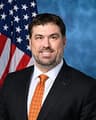 Morgan Luttrell
Republican · Texas
 Mary Miller
Republican · Illinois
 Barry Moore
Republican · Alabama
 Cory Mills
Republican · Florida
 Ralph Norman
Republican · South Carolina
 Michael Rulli
Republican · Ohio
 Keith Self
Republican · Texas