Bill · H.R. 8806· House(119-HR-8806)
Supporting Newborn Parents Act of 2026
- Introduced
- 5/13/2026
- Last activity
- 5/13/2026 — Referred to the House Committee on Ways and Means.
- Sponsored by
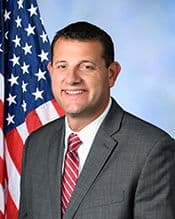
- David Valadao
- Cosponsors
- - 12 - 13
- Introduced
- In Committee
What this bill would do
This bill establishes a new tax credit for newborn children called the Supporting Newborn Parents Act of 2026. It allows eligible taxpayers to receive a $2,000 tax credit for each qualifying child born during the taxable year. The bill also provides an option for parents to receive this credit as an advance payment. Additionally, it requires the government to set up an online portal and provide plain language guidance to help taxpayers understand their elections and income estimates. The credit amount will be adjusted for inflation in future years beginning after 2026. Finally, the changes apply to taxable years beginning after December 31, 2025.
Yes· 3 of 7
Would households on low incomes be better off under this?+6
The credit provides significant cash assistance to low-income families, subject to the earned income cap.
Would children be better off under this?+5
The bill provides direct financial benefits for newborns and their parents.
Does this cut taxes for middle-income families?+5
The bill provides a $2,000 tax credit for each qualifying child, which benefits middle-income families subject to the phaseout.
The opposite
Does this reduce what the federal government spends?-2
The creation of a new tax credit increases federal revenue expenditures.
Who it would affect, and how
Potential Positive Impacts for People
-
Direct Financial Assistance: Section 2 adds a new section 36C(a) to the Internal Revenue Code, which provides a $2,000 tax credit for each qualifying child born to a taxpayer during the taxable year. This could help families offset some of the initial costs of having a newborn.
-
Advance Payments: Section 2 adds section 36C(f)(1), allowing taxpayers to elect to receive the credit as an advance payment shortly after the child's Social Security information is processed. This means families can get the financial help sooner rather than waiting until they file taxes.
-
Helpful Guidance and Tools: Section 2 adds subsections (c) and (d), requiring the government to provide plain language guidance and establish an online portal. This helps everyday people figure out their income estimates and understand how their elections affect their taxes without needing a degree in finance.
Potential Negative Impacts for People
-
Income Phaseouts: Section 2 adds section 36C(c), which reduces the credit amount by $50 for every $1,000 that a taxpayer's modified adjusted gross income exceeds a certain threshold. This means families making over a certain amount of money will see their credit reduced or eliminated entirely.
-
Earned Income Limits: Section 2 adds section 36C(d), stating that the credit cannot exceed 20 percent of the taxpayer's earned income. This could negatively impact very low-income parents or those who are not currently earning traditional wages, as they might not get the full $2,000 credit.
-
Risk of Repayment: Section 2 adds section 36C(f)(3), which requires taxpayers to pay back any advance payments if they end up exceeding the allowed credit amount for that year. If a family receives an advance based on estimated income and their actual situation changes, they could face an unexpected tax bill.
Groups and Interests Ranking
Every group the model scored this bill for, from -10 to +10. Hover a score for the reason it gave.
- Demographic And Interest Groups
- Good For Low Income Households+6Good For Children+5Good For Middle Class Households+4Good For Women+3
- Social Issues And Justice
- Improves Poverty Reduction+4
- Economy And Finance
- Reduces Middle Class Taxes+5Reduces Government Spending-2
- Governance And Ideology
- Improves Government Transparency+3
- 9/24/2026
- 4 Cosponsors added.
- 8/10/2026
- 2 Cosponsors added.
- 8/3/2026
- 2 Cosponsors added.
- 7/20/2026
- 2 Cosponsors added.
- 6/23/2026
- 4 Cosponsors added.
- 6/11/2026
- 2 Cosponsors added.
- 6/10/2026
- 2 Cosponsors added.
- 6/4/2026
- 2 Cosponsors added.
- 6/2/2026
- 2 Cosponsors added.
- 5/13/2026
- Referred to the House Committee on Ways and Means.
- 3 Cosponsors added.
- Introduced in House
 Nikki Budzinski
Democrat · Illinois
 Tom Barrett
Republican · Michigan
 Earl Carter
Republican · Georgia
 Salud Carbajal
Democrat · California
 Juan Ciscomani
Republican · Arizona
 Debbie Dingell
Democrat · Michigan
 Sharice Davids
Democrat · Kansas
 Brian Fitzpatrick
Republican · Pennsylvania
 Vince Fong
Republican · California
 Shomari Figures
Democrat · Alabama
 Andrew Garbarino
Republican · New York
 Laura Gillen
Democrat · New York
 Josh Harder
Democrat · California
 Susie Lee
Democrat · Nevada
 Michael Lawler
Republican · New York
 Greg Landsman
Democrat · Ohio
 Carol Miller
Republican · West Virginia
 Blake Moore
Republican · Utah
 Ryan Mackenzie
Republican · Pennsylvania
 Riley Moore
Republican · West Virginia
 Eleanor Norton
Democrat · District of Columbia
 Maria Salazar
Republican · Florida
 Thomas Suozzi
Democrat · New York
 Ritchie Torres
Democrat · New York
 George Whitesides
Democrat · California