Bill · H.R. 8700· House(119-HR-8700)
Protecting U.S. Farmland and Sensitive Sites From Foreign Adversaries Act
- Introduced
- 5/7/2026
- Last activity
- 5/7/2026 — Referred to the Committee on Financial Services, and in addition to the Committees on Foreign Affairs, and Energy and Commerce, for a period to be subsequently determined by the Speaker, in each case for consideration of such provisions as fall within the jurisdiction of the committee concerned.
- Sponsored by
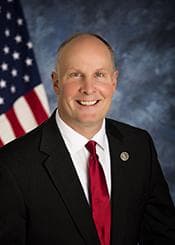
- John Moolenaar
- Cosponsors
- - 15 - 4
- Introduced
- In Committee
What this bill would do
This bill, titled the "Protecting U.S. Farmland and Sensitive Sites From Foreign Adversaries Act," aims to bolster national security and food security. It expands the jurisdiction of the Committee on Foreign Investment in the United States over specific real estate transactions. The legislation introduces new definitions for "elevated risk real estate transactions," "foreign adversary," and "sensitive sites." It specifically targets land purchases near sensitive locations like military installations, airports, and telecommunications facilities. Additionally, the bill creates a presumption that such elevated risk transactions present unresolvable national security risks. The Act also involves the Secretary of Agriculture in transactions related to the agriculture industry.
Yes· 3 of 7
Would farmers be better off under this?+7
Protects agricultural land and food security from foreign adversary acquisition.
Would people in rural areas be better off under this?+6
Increases protection of rural land and agricultural assets from adversary control.
Does this give the federal government more power?+6
Expands CFIUS jurisdiction and federal oversight over real estate transactions.
The opposite
Would immigrants be better off under this?-4
Imposes strict restrictions and risk presumptions on persons from designated foreign adversary nations.
Does this protect the right to fair treatment by the courts?-3
Creates a presumption of unresolvable risk for specific transactions, shifting the burden of proof.
Does this make trade with other countries easier?-2
Imposes stricter restrictions and presumptions of risk on real estate transactions involving specific foreign nations.
Who it would affect, and how
Potential Positive Impacts for People
-
Enhanced National Security Oversight: The bill expands the definition of "sensitive sites" to include items like military installations, airports, maritime ports, and electronic or telecommunications facilities (Section 2). This provides greater scrutiny of transactions that could expose national security activities.
-
Protection of Food Security: The bill requires consideration of the current and long-term requirements for food, water, and agricultural products, including the impact of foreign adversary acquisition of agricultural biotechnology (Section 3).
-
Increased Accountability for High-Risk Transactions: The bill establishes a requirement for "elevated risk real estate transactions" to undergo specific investigations, where the Committee must prove by clear and convincing evidence that a risk can be resolved (Section 5).
-
Preservation of State Rights: The legislation ensures that nothing in the Act supersedes state laws that restrict or prohibit the purchase of real estate or agricultural land by a foreign adversary person, provided those laws are of general applicability (Section 7).
Potential Negative Impacts for People
-
Increased Burden on Transaction Parties: Parties involved in an "elevated risk real estate transaction" are now required to submit specific declarations (Section 4).
-
Presumption of Risk: The bill creates a legal presumption that "elevated risk real estate transactions" present a risk to national security that cannot be resolved through agreements or conditions, unless the Committee proves otherwise by clear and convincing evidence (Section 5).
Groups and Interests Ranking
Every group the model scored this bill for, from -10 to +10. Hover a score for the reason it gave.
- Demographic And Interest Groups
- Good For Farmers+7Good For Rural Residents+6Good For Immigrants-4
- Governance And Ideology
- Increases Federal Power+6Increase States Rights+5Improves Due Process-3
- Environment Energy And Infrastructure
- Improves Rural Development+5
- Social Issues And Justice
- Improves Border Security+3
- National Security And Foreign Policy
- Improves Cybersecurity Defense+4Improves International Trade-2
- 9/10/2026
- 1 Cosponsor added.
- 9/1/2026
- 1 Cosponsor added.
- 8/31/2026
- 1 Cosponsor added.
- 8/3/2026
- 1 Cosponsor added.
- 6/8/2026
- 1 Cosponsor added.
- 5/19/2026
- 1 Cosponsor added.
- 5/7/2026
- Referred to the Committee on Financial Services, and in addition to the Committees on Foreign Affairs, and Energy and Commerce, for a period to be subsequently determined by the Speaker, in each case for consideration of such provisions as fall within the jurisdiction of the committee concerned.
- 13 Cosponsors added.
- Introduced in House
 Gus Bilirakis
Republican · Florida
 Julia Brownley
Democrat · California
 Ken Calvert
Republican · California
 Neal Dunn
Republican · Florida
 Randy Feenstra
Republican · Iowa
 Mike Flood
Republican · Nebraska
 Brad Finstad
Republican · Minnesota
 Josh Gottheimer
Democrat · New Jersey
 James Gallagher
Republican · California
 Ashley Hinson
Republican · Iowa
 Pat Harrigan
Republican · North Carolina
 Dusty Johnson
Republican · South Dakota
 John James
Republican · Michigan
 Nathaniel Moran
Republican · Texas
 Dan Newhouse
Republican · Washington
 Zachary Nunn
Republican · Iowa
 Jimmy Panetta
Democrat · California
 Adrian Smith
Republican · Nebraska
 Mike Thompson
Democrat · California