Bill · H.R. 869· House(119-HR-869)
Keep Our PACT Act
- Introduced
- 1/31/2025
- Last activity
- 1/31/2025 — Referred to the Committee on Education and Workforce, and in addition to the Committee on the Budget, for a period to be subsequently determined by the Speaker, in each case for consideration of such provisions as fall within the jurisdiction of the committee concerned.
- Sponsored by
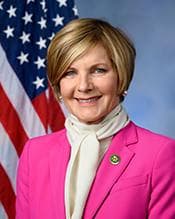
- Susie Lee
- Cosponsors
- - 27 - 0
- Introduced
- In Committee
What this bill would do
This bill is known as the Keep Our PACT Act. It requires full funding for specific federal education programs for children and students with disabilities. The legislation sets mandatory funding amounts for each fiscal year from 2026 through 2035. It targets part A of title I of the Elementary and Secondary Education Act of 1965 to address educational inequities. It also amends the Individuals with Disabilities Education Act to fund special education programs. Finally, it designates the provided amounts as emergency requirements.
Yes· 3 of 17
Would people with disabilities be better off under this?+10
The bill directly fulfills federal funding commitments for the Individuals with Disabilities Education Act.
Would children be better off under this?+9
Substantial increases in K-12 and special education funding directly benefit school-aged children.
Would students be better off under this?+9
Students across the country receive enhanced educational resources and specialized support programs.
The opposite
Does this reduce what the federal government spends?-3
The bill significantly increases mandatory federal spending for education programs over a ten-year period.
Does this make the government pay for what it commits to?-2
Designating large mandatory funding appropriations as emergency requirements bypasses standard PAYGO budget constraints.
Who it would affect, and how
Potential Positive Impacts for People
-
Increased Funding for Disadvantaged Students: Section 3 provides mandatory funding amounts for part A of title I of the Elementary and Secondary Education Act of 1965 from fiscal year 2026 through 2035. This could benefit students and school districts by helping address educational inequities and providing resources for a high-quality education.
-
Support for Students with Disabilities: Section 4 amends the Individuals with Disabilities Education Act to authorize and appropriate specific funding amounts each fiscal year from 2026 through 2035, eventually reaching 40 percent of the national average per-pupil expenditure. This is designed to benefit children with disabilities by ensuring they receive a first-rate education and necessary special education services.
Potential Negative Impacts for People
The provided text does not contain any specific sections or provisions that outline negative consequences or burdens for individuals or groups of people in the United States.
Groups and Interests Ranking
Every group the model scored this bill for, from -10 to +10. Hover a score for the reason it gave.
- Demographic And Interest Groups
- Good For People With Disabilities+10Good For Children+9Good For Students+9Good For Low Income Households+6Good For Young Adults+6Good For Union Workers+5Good For African Americans+4Good For Hispanic Americans+4Good For Middle Class Households+4Good For Rural Residents+4Good For Urban Residents+4Good For Native Americans+3
- Social Issues And Justice
- Improves Disability Rights+8Improves Racial Equity+5Improves Poverty Reduction+3
- Education And Technology
- Increases Public School Funding+9
- Economy And Finance
- Reduces Government Spending-3Improves Fiscal Responsibility-2
- Governance And Ideology
- Increases Federal Power+3
- 10/1/2026
- 3 Cosponsors added.
- 6/9/2026
- 1 Cosponsor added.
- 12/16/2025
- 1 Cosponsor added.
- 11/20/2025
- 1 Cosponsor added.
- 11/4/2025
- 4 Cosponsors added.
- 10/31/2025
- 2 Cosponsors added.
- 10/24/2025
- 7 Cosponsors added.
- 10/17/2025
- 8 Cosponsors added.
- 1/31/2025
- Referred to the Committee on Education and Workforce, and in addition to the Committee on the Budget, for a period to be subsequently determined by the Speaker, in each case for consideration of such provisions as fall within the jurisdiction of the committee concerned.
- Introduced in House
3 bills Congress.gov lists as related to this one — companions in the other chamber, earlier versions, and bills this one absorbed or was folded into.
 Yassamin Ansari
Democrat · Arizona
 Nikki Budzinski
Democrat · Illinois
 Becca Balint
Democrat · Vermont
 Emanuel Cleaver
Democrat · Missouri
 Angie Craig
Democrat · Minnesota
 Troy Carter
Democrat · Louisiana
 Danny Davis
Democrat · Illinois
 Lloyd Doggett
Democrat · Texas
 Sarah Elfreth
Democrat · Maryland
 John Garamendi
Democrat · California
 Josh Gottheimer
Democrat · New Jersey
 Daniel Goldman
Democrat · New York
 Pramila Jayapal
Democrat · Washington
 Julie Johnson
Democrat · Texas
 Zoe Lofgren
Democrat · California
 Morgan McGarvey
Democrat · Kentucky
 Robert Menendez
Democrat · New Jersey
 Sarah McBride
Democrat · Delaware
 Eleanor Norton
Democrat · District of Columbia
 Alexandria Ocasio-Cortez
Democrat · New York
 Frank Pallone
Democrat · New Jersey
 Andrea Salinas
Democrat · Oregon
 Mike Thompson
Democrat · California
 Jill Tokuda
Democrat · Hawaii
 Eugene Vindman
Democrat · Virginia
 Frederica Wilson
Democrat · Florida
 George Whitesides
Democrat · California