Bill · H.R. 8629· House(119-HR-8629)
Developing the Community Health Workforce Act of 2026
- Introduced
- 4/30/2026
- Last activity
- 4/30/2026 — Referred to the Committee on Energy and Commerce, and in addition to the Committee on Ways and Means, for a period to be subsequently determined by the Speaker, in each case for consideration of such provisions as fall within the jurisdiction of the committee concerned.
- Sponsored by
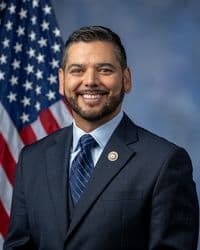
- Raul Ruiz
- Cosponsors
- - 1 - 1
- Introduced
- In Committee
What this bill would do
The Developing the Community Health Workforce Act of 2026 aims to strengthen the recruitment, training, and retention of health center workers to improve access to care in rural and underserved communities. It provides priority for health professional assignments to Federally qualified health centers (FQHCs) and rural health clinics. The bill authorizes grants for loan repayments for health professionals serving at FQHCs and for establishing workforce pipelines through partnerships with higher education institutions. It also allows for the creation of training programs specifically for behavioral health specialists. Additionally, the legislation expands graduate medical education by increasing resident limits for hospitals with significant training occurring at FQHCs. Finally, it expands coverage for behavioral health and case management services under Medicare and Medicaid.
Yes· 3 of 16
Would people in rural areas be better off under this?+8
The bill specifically prioritizes improving healthcare access and workforce in rural communities.
Does this make health care easier to get in general?+8
The bill enhances healthcare access in underserved and rural areas through loan repayments and workforce training.
Would households on low incomes be better off under this?+7
Increased access to services at FQHCs significantly benefits low-income populations.
The opposite
No question was scored the opposite.
Who it would affect, and how
Potential Positive Impacts for People
-
Priority for underserved areas: The bill requires the Secretary to give priority to applications for member assignments in health professional shortage areas that include Federally qualified health centers and rural health clinics (Section 2(a)).
-
Financial relief for health professionals: Grants may be awarded to FQHCs to make loan repayments on behalf of health care professionals serving at those centers (Section 2(b)(1)).
-
Workforce development and recruitment: The Secretary may award grants to help health centers recruit staff with necessary skills and support career advancement (Section 3(a)).
-
Apprenticeship opportunities: FQHCs would become eligible to register as apprenticeship programs (Section 3(b)).
-
Educational partnerships: Grants can be awarded to institutions of higher education to establish partnerships with health centers for training students in various health professions, including clinical and IT roles (Section 3(c)).
-
Expanded behavioral health training: Grants may be used to establish or expand training programs for behavioral health specialists, including stipends and apprenticeships (Section 3(d)).
-
Increased medical training capacity: Hospitals that have a significant portion of their graduate medical residency training occurring at an FQHC can have their resident limit increased by 3 full-time equivalent positions (Section 4(b)).
-
Expanded healthcare coverage: Medicare coverage would include services furnished by behavioral health consultants, peer support specialists, and case managers (Section 5(a)(1)).
Potential Negative Impacts for People
-
Application requirements: FQHCs seeking loan repayment grants must undergo a specific application process including providing data on regional shortages, a repayment plan, and descriptions of interdisciplinary care approaches (Section 2(b)(2)).
-
Uncertainty in state payments: State plans may face new guidance regarding how they adjust payment amounts for services furnished during a fiscal year following a Secretary-led study (Section 5(b)).
Groups and Interests Ranking
Every group the model scored this bill for, from -10 to +10. Hover a score for the reason it gave.
- Demographic And Interest Groups
- Good For Rural Residents+8Good For Low Income Households+7Good For Students+6Good For Young Adults+5Good For Retirees+4Good For Seniors+4
- Healthcare
- Improves Healthcare Access+8Improves Mental Health Access+7Increases Medicaid Funding+3Increases Medicare Funding+3
- Education And Technology
- Improves Student Loan Relief+6Improves College Affordability+3
- Economy And Finance
- Increases Job Creation+5
- Environment Energy And Infrastructure
- Improves Rural Development+5
- Social Issues And Justice
- Improves Racial Equity+4
- Governance And Ideology
- Increases Federal Power+2
- 9/16/2026
- 1 Cosponsor added.
- 4/30/2026
- Referred to the Committee on Energy and Commerce, and in addition to the Committee on Ways and Means, for a period to be subsequently determined by the Speaker, in each case for consideration of such provisions as fall within the jurisdiction of the committee concerned.
- 1 Cosponsor added.
- Introduced in House
One bill Congress.gov lists as related to this one — companions in the other chamber, earlier versions, and bills this one absorbed or was folded into.
 Gus Bilirakis
Republican · Florida
 Eleanor Norton
Democrat · District of Columbia