Bill · H.R. 8626· House(119-HR-8626)
Workforce Housing Tax Credit Act
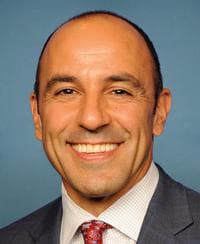
- Introduced
- 4/30/2026
- Last activity
- 4/30/2026 — Referred to the House Committee on Ways and Means.
- Sponsored by
- Jimmy Panetta
- Cosponsors
- - 1 - 4
- Introduced
- In Committee
What this bill would do
This bill, titled the "Workforce Housing Tax Credit Act," seeks to amend the Internal Revenue Code of 1986 to create a new middle-income housing tax credit. The credit is designed for qualified middle-income buildings, which include both new constructions and certain existing buildings that undergo rehabilitation. To qualify, projects must consist of rent-restricted units occupied by individuals meeting specific income limits. The bill establishes a 15-year credit period and outlines specific methods for determining the applicable percentage and eligible basis. It also defines the roles and responsibilities of housing credit agencies in allocating these funds.
Yes· 3 of 10
Does this make housing cost less?+7
The bill specifically provides financial incentives to increase the supply of rent-restricted housing for middle-income individuals.
Would middle-income households be better off under this?+6
The bill targets housing development specifically for those meeting middle-income requirements.
Would people in rural areas be better off under this?+5
The bill provides specific incentives to increase housing credit availability in rural areas.
The opposite
Does this raise the taxes companies pay?-1
The tax credit reduces the effective tax liability for developers of qualified middle-income housing projects.
Who it would affect, and how
Potential Positive Impacts for People
-
Support for Middle-Income Housing: The bill provides a tax credit to encourage the development of housing specifically for middle-income individuals (Section 2(a)).
-
Increased Credit for High-Cost Areas: The eligible basis for new buildings or rehabilitation expenditures is increased by 30 percent if the building is located in a qualified census tract or a difficult development area (Section 2(d)(5)(B)).
-
Support for Rural Development: The State housing credit ceiling can be increased by 5 percent specifically for buildings located in rural areas (Section s2(h)(7)).
-
Incentives for Rehabilitation: Rehabilitation expenditures can be treated as a separate new building to allow for additional credit opportunities (Section 2(e)(1)).
-
Flexibility for High-Cost Areas: State housing credit agencies can designate buildings as requiring an increased credit to ensure financial feasibility in difficult development areas (Section 2(d)(5)(B)(iv)).
Potential Negative Impacts for People
-
Income Restrictions on Occupants: To qualify as a middle-income housing project, at least 60 percent of the units must be occupied by individuals whose income is 100 percent or less of the area median gross income (Section 2(g)(1)(A)).
-
Rent Restrictions: Units within a qualified project must be rent-restricted, meaning gross rent cannot exceed 30 percent of the applicable imputed income limitation (Section s2(g)(2)(A)).
-
Requirement of Long-Term Commitment: To receive the credit, taxpayers must enter into an extended middle-income housing commitment, which includes various prohibitions and requirements (Section 2(h)(5)(B)).
-
Potential Loss of Credit for Non-Compliance: If a taxpayer fails to meet annual certification or reporting requirements, the credit may not be allowed (Section 2(k)(1)).
Groups and Interests Ranking
Every group the model scored this bill for, from -10 to +10. Hover a score for the reason it gave.
- Demographic And Interest Groups
- Good For Middle Class Households+6Good For Rural Residents+5Good For Business Owners+4Good For Young Adults+3
- Social Issues And Justice
- Improves Affordable Housing+7Improves Poverty Reduction+2
- Economy And Finance
- Reduces Middle Class Taxes+4Increases Job Creation+3Improves Economic Growth+2Increases Corporate Taxes-1
- Environment Energy And Infrastructure
- Improves Rural Development+5
- 10/1/2026
- 1 Cosponsor added.
- 8/31/2026
- 2 Cosponsors added.
- 4/30/2026
- Referred to the House Committee on Ways and Means.
- 2 Cosponsors added.
- Introduced in House
3 bills Congress.gov lists as related to this one — companions in the other chamber, earlier versions, and bills this one absorbed or was folded into.
 Mike Carey
Republican · Ohio
 Brian Fitzpatrick
Republican · Pennsylvania
 Michael Lawler
Republican · New York
 Zachary Nunn
Republican · Iowa
 Emilia Sykes
Democrat · Ohio