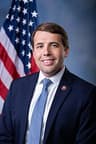
A Democratic bill with 5 Republican cosponsors · See all 9 cosponsors
Last activity — Referred to the House Committee on the Budget.
In committee
Introduced and handed to a committee in the chamber it started in.
The committee holds it, and most bills are never heard from again. A hearing or a committee vote would be news; silence is the usual outcome, and it kills the bill without anyone voting against it.
Its path through Congress
- Introduced
- In Committee
What this bill would do
This bill, known as the "Fighting Budget Waste Act," aims to amend title 31 of the United States Code. It requires the President and the Director of the Office of Management and Budget to consider specific GAO reports when preparing the annual budget. These reports focus on how to improve government efficiency and effectiveness. Specifically, they address opportunities to reduce fragmentation, overlap, and duplication to achieve financial benefits. Additionally, the Director of the Office of Management and Budget must submit a report to Congress regarding their findings on these recommendations when the budget is submitted.
Yes· 3 of 4
- Scored +6
Does this make the government pay for what it commits to?
The act enhances fiscal responsibility by requiring the President and OMB to address identified inefficiencies during budget preparation.
- Scored +5
Does this reduce what the federal government owes?
By targeting fragmentation and duplication, the bill aims to achieve billions of dollars in financial benefits through efficiency.
- Scored +5
Does this reduce what the federal government spends?
The bill mandates the consideration of GAO recommendations specifically intended to reduce overlap and duplication in government spending.
The opposite
No question was scored the opposite.
Who it would affect, and how
Potential Positive Impacts for People
-
Increased Government Efficiency: The President and the Director of the Office of Management and Budget would be required to consider information and recommendations from the GAO report titled "Additional Opportunities to Reduce Fragmentation, Overlap, and Duplication and Achieve Billions of Dollars in Financial Benefits" (Section 2, subsection j)(1). This could lead to more effective government operations.
-
Financial Benefits: By addressing fragmentation, overlap, and duplication, the government aims to achieve billions of dollars in financial benefits (Section 2, subsection j)(1).
-
Increased Accountability: The Director of the Office of Management and Budget must submit a report to Congress regarding the findings of the GAO's recommendations at the time the budget is submitted (Section 2, subsection j)(2).
Potential Negative Impacts for People
- No negative impacts are explicitly stated in the provided text.
Groups and Interests Ranking
Every group the model scored this bill for, from -10 to +10. Tap or hover a score for the reason it gave.
- Economy And Finance
- Does this make the government pay for what it commits to? — The act enhances fiscal responsibility by requiring the President and OMB to address identified inefficiencies during budget preparation. Does this reduce what the federal government spends? — The bill mandates the consideration of GAO recommendations specifically intended to reduce overlap and duplication in government spending. Does this reduce what the federal government owes? — By targeting fragmentation and duplication, the bill aims to achieve billions of dollars in financial benefits through efficiency.
- Governance And Ideology
- Does this make what the government does easier for the public to see? — The bill increases transparency by requiring a report to Congress on how GAO efficiency recommendations are addressed.
- 10/6/2025
- 1 Cosponsor added.
- 5/7/2025
- 1 Cosponsor added.
- 3/18/2025
- 2 Cosponsors added.
- 1/31/2025
- Referred to the House Committee on the Budget.
- 5 Cosponsors added.
- Introduced in House
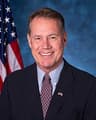 Ed Case
Democrat · Hawaii
 Angie Craig
Democrat · Minnesota
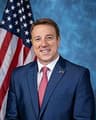 Pat Fallon
Republican · Texas
 Brian Fitzpatrick
Republican · Pennsylvania
 Michael Lawler
Republican · New York
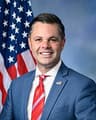 Zachary Nunn
Republican · Iowa
 Thomas Suozzi
Democrat · New York
 Eric Sorensen
Democrat · Illinois
 Daniel Webster
Republican · Florida