Bill · H.R. 8283· House(119-HR-8283)
Deterring American AI Model Theft Act of 2026
- Introduced
- 4/15/2026
- Last activity
- 4/22/2026 — Ordered to be Reported (Amended) by the Yeas and Nays: 43 - 0.
- Sponsored by
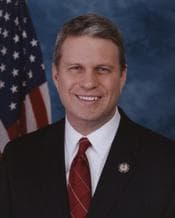
- Bill Huizenga
- Cosponsors
- - 19 - 2
- Introduced
What this bill would do
The Deterring American AI Model Theft Act of 2026 aims to protect United States national security and economic interests from foreign adversaries. It specifically targets "model extraction attacks" where entities attempt to steal technical features from closed-source, American-owned AI models. The bill seeks to identify, punish, and deter these attacks by entities of concern, such as those in the People's Republic of China or the Russian Federation. It mandates comprehensive assessments by the Secretary of State and the Secretary of Commerce to identify these threats. The legislation also establishes a public "AI Model Extraction Attackers List" to name offending individuals and entities. Finally, it provides the President with authority to impose sanctions and blocking of transactions against identified entities of concern.
Yes· 3 of 8
Does this make patent and copyright rules fairer?+7
The bill directly targets the theft of proprietary technical characteristics to protect intellectual property rights.
Does this better protect the country from computer attacks?+6
The bill protects against digital model extraction which is a component of broader cybersecurity and technical integrity.
Would business owners be better off under this?+6
The bill protects the proprietary interests and competitive edge of U.S. private sector companies.
The opposite
No question was scored the opposite.
Who it would affect, and how
Potential Positive Impacts for People
-
Protection of Intellectual Property and Economic Interests: The bill aims to protect the intellectual property rights and economic competitiveness of United States companies whose AI models are targeted by unauthorized acquisition of capabilities (Section 2).
-
National Security Safeguards: By deterring model extraction attacks, the bill seeks to prevent foreign adversaries from using "short cuts" to acquire advanced AI capabilities, thereby protecting national security and foreign policy interests (Section 2).
-
Support for Legitimate Research: The Act explicitly clarifies that authorized model training practices that follow terms of service remain a legitimate research method, ensuring that research is not unfairly targeted (Section 2, Section 3).
-
Information Sharing for Defense: The bill establishes an information-sharing mechanism so that AI model owners can voluntarily and confidentially share information about attacks with the Department of Commerce to improve defense (Section 4).
-
Public Awareness of Threats: The creation of the "AI Model Extraction Attackers List" and the publication of best practices provide transparency regarding specific entities and methods used in attacks (Section 4).
Potential Negative Impacts for People
-
Economic Restrictions through Sanctions: The President has the authority to block and prohibit all transactions involving property and interests of identified entities of concern, which could impact various economic activities (Section 5).
-
Potential for Entity Listing: Entities identified as conducting model extraction attacks or using fraudulent networks may be added to the Department of Commerce's Entity List (Section 5).
-
Broad Definitions of Entities of Concern: The definition of "entity of concern" includes any foreign person or entity operating under the direction or control of a country of concern, which may impact a wide range of foreign actors (Section 3).
Groups and Interests Ranking
Every group the model scored this bill for, from -10 to +10. Hover a score for the reason it gave.
- Education And Technology
- Improves Intellectual Property Fairness+7Increases Big Tech Regulation+4
- National Security And Foreign Policy
- Improves Cybersecurity Defense+6Improves International Alliances+3
- Governance And Ideology
- Increases Federal Power+5Improves Government Transparency+2
- Demographic And Interest Groups
- Good For Business Owners+6
- Economy And Finance
- Improves Economic Growth+5
- 9/2/2026
- 1 Cosponsor added.
- 8/3/2026
- 2 Cosponsors added.
- 7/27/2026
- 2 Cosponsors added.
- 6/8/2026
- 2 Cosponsors added.
- 6/3/2026
- 1 Cosponsor added.
- 6/2/2026
- 1 Cosponsor added.
- 5/19/2026
- 1 Cosponsor added.
- 5/12/2026
- 2 Cosponsors added.
- 5/11/2026
- 2 Cosponsors added.
- 4/29/2026
- 4 Cosponsors added.
- 4/22/2026
- Committee Consideration and Mark-up Session Held
- Ordered to be Reported (Amended) by the Yeas and Nays: 43 - 0.
- 4/21/2026
- 1 Cosponsor added.
- 4/20/2026
- 1 Cosponsor added.
- 4/15/2026
- Referred to the House Committee on Foreign Affairs.
- 1 Cosponsor added.
- Introduced in House
 Nicholas Begich
Republican · Alaska
 Sheri Biggs
Republican · South Carolina
 Eric Crawford
Republican · Arkansas
 Ben Cline
Republican · Virginia
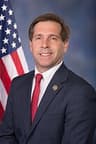 Charles Fleischmann
Republican · Tennessee
 Brian Fitzpatrick
Republican · Pennsylvania
 Josh Gottheimer
Democrat · New Jersey
 Pat Harrigan
Republican · North Carolina
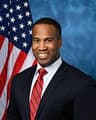 John James
Republican · Michigan
 Jennifer Kiggans
Republican · Virginia
 Sydney Kamlager-Dove
Democrat · California
 Darin LaHood
Republican · Illinois
 Michael Lawler
Republican · New York
 Michael McCaul
Republican · Texas
 John Moolenaar
Republican · Michigan
 Barry Moore
Republican · Alabama
 Max Miller
Republican · Ohio
 Nathaniel Moran
Republican · Texas
 Ryan Mackenzie
Republican · Pennsylvania
 Maria Salazar
Republican · Florida
 Derrick Van Orden
Republican · Wisconsin